
Grocery shopping can be expensive, and that's why any tips that can help us know how to save money on groceries are always welcome. Of course, there is no magic formula.
But using one or all of the following tips will help keep the cost of your groceries down. We've tested these with Listonic users and the results are consistent: small behavioral changes at the store add up to real savings over time.
- Shoppers who visited fewer aisles bought almost 20% fewer unplanned items compared to those who visited all lanes.
- Doubling the size of a grocery cart leads shoppers to spend 40% more than those using a smaller cart or basket.
- Listonic users report that shopping with a prepared list reduces unplanned purchases by up to 23%.
- Products placed at eye level in supermarkets are typically among the most expensive options in that category.
- Out-of-season fruit and vegetables can cost significantly more than in-season equivalents due to import and transport costs.
- Scientifically, shoppers who prepare a list before shopping buy fewer unplanned items than those who don't.
12 Tips on How to Save Money on Groceries
#1 Hunt Down the "Reduced" Section

The reduced section is where stores sell items close to their expiry date at heavily discounted prices, and it's one of the easiest places to cut your grocery bill. All stores offer these promotions to clear the last few items of stock before they go out of date.
Find out where reduced items get sold in your regular store (the location can change from time to time) and what time stock gets placed there.
Remember to check products closely, especially expiry dates, before putting them in your basket. Otherwise, what seems like a quick saving can actually be an extra expense if it ends up in the garbage unused.
#2 Compare the Cost per Unit

Comparing the cost per unit is the most reliable way to find the cheapest version of any product without doing math in your head. Shelf labels in most supermarkets already show the price per 100g, 1kg, 1ltr, or another standard unit of measurement — it's called "price per unit of measure".
Use it to compare different brands of the same product instantly, without reaching for your calculator.
#3 Visit Fewer Aisles

Visiting fewer aisles directly reduces the number of unplanned items that end up in your basket. Research found that consumers who visited fewer aisles bought almost 20% fewer unplanned items compared to buyers who visited all lanes.
Stick to the aisles on your list and skip the rest entirely.
#4 Avoid Aisles Filled with Temptations and Promotions

Avoiding temptation aisles is one of the simplest ways to prevent unplanned spending. If you never walk past the cookies, chocolate, candy, and cake, you never have to resist buying them.
The same applies to non-grocery sections. Supermarkets increasingly sell clothing, home, and garden products that have nothing to do with your shopping trip. Do you really need to buy a pair of sandals when you came in just for tomatoes and bread? These items quickly push the bill up.
#5 Use a Smaller Cart or Basket

Using a smaller cart or basket directly limits how much you can buy, and research backs this up: one study showed that doubling the size of a grocery cart meant shoppers spent 40% more than those using a smaller option.
Don't be scared that you won't fit all your shopping into a smaller cart or basket. The size of all of these has significantly increased over the years.
#6 Use a Shopping List or Shopping List App

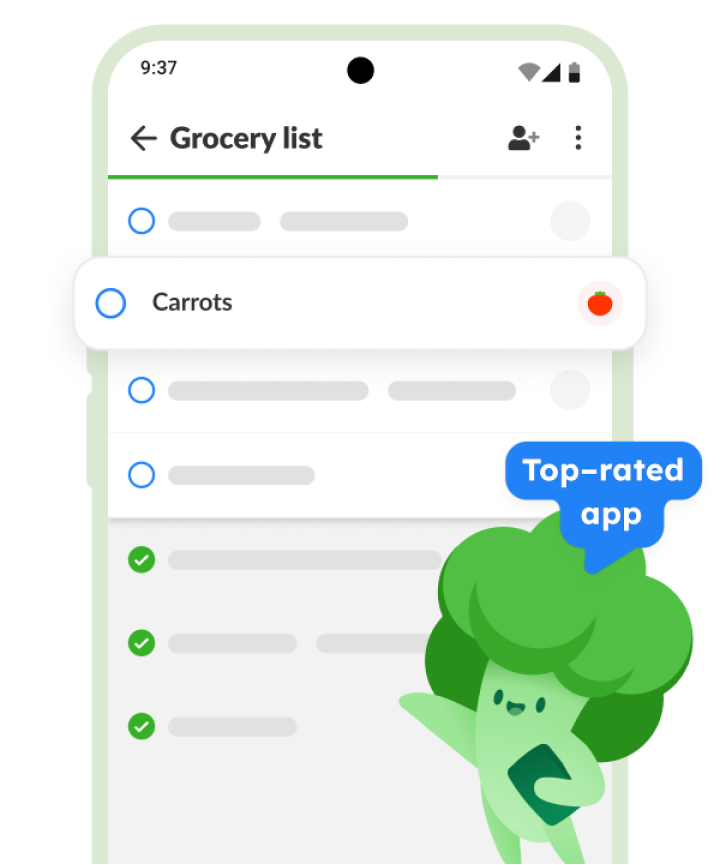
Using a shopping list is one of the most effective tools for reducing grocery spending. It keeps you focused on exactly what you need and nothing else, which means fewer unplanned purchases and less unexpected costs.
It has also been scientifically proved that those who make preparations before shopping, such as making and using a shopping list, buy fewer unplanned items. In our data, Listonic users report reducing unplanned purchases by up to 23% when shopping with a prepared list.
If you're not keen on pen and paper, download a shopping list app like Listonic. These apps go further with functions such as list sharing and the ability to add prices to calculate the total cost of your groceries, helping you budget better and save money.
#7 Don't be Taken In by Conveniently Placed "Paired" Products

"Paired" products are items placed strategically next to related food to make you spend more — and they're almost always the pricier option. Supermarkets use this as one of many sneaky psychological tricks to increase your basket size.
Think about it. Why are pie crusts placed next to apples? Why is sushi rice next to the fish? The answer is to nudge you toward a convenient but more expensive purchase.
If you planned to make sushi or apple pie, don't pick up the paired products. Take the time to visit the rice or bakery aisle and buy the cheaper product instead.
#8 Don't Buy Anything Placed Near Checkouts

Products near the checkout are placed there specifically to trigger last-minute impulse purchases, and skipping them entirely is an easy way to trim your final bill. Magazines, chocolate, chewing gum, cold drinks — none of it is there by accident.
Resist the urge to buy anything in this area while you're waiting in the queue. You really don't need it, and you really don't need to spend extra on it.
#9 Don't Buy What's at Eye Level

Products at eye level are typically the most expensive options in any category, placed there deliberately because shoppers are more likely to buy what they see first. Grocery stores are a marketing battlefield and you are the target.
Don't be afraid to stoop a little or stretch that little bit higher. The best prices are hidden on the lower and upper shelves.
#10 Take a Picture of the Inside of Your Fridge

Taking a photo of your fridge before you leave for the shop is a quick way to avoid buying duplicates or forgetting what you actually need. If you're not sure whether you're low on mayonnaise or yogurt, glancing at the picture tells you instantly.
It's a particularly useful habit if you don't use a shopping list app, and it takes less than ten seconds to do.
#11 Check Your Basket Before Going to the Checkout

Checking your basket before the checkout is your last chance to remove anything you don't actually need before paying for it. Ask yourself if you are really going to eat 5 packs of cheese, or if you really need that bag of chips.
There's often too much pressure in the queue to question your choices. Taking a few seconds before heading to the checkout to review what's in your cart is far easier than trying to remove items once you're already being served.
Remember, you always have the right to hand things over to the cashier if you decide you don't want to buy them.
#12 Stick to Seasonal Products

Seasonal fruit and vegetables are cheaper because they don't have to travel as far to reach your store. Out-of-season produce is usually grown in other countries and shipped in, which drives the price up.
When produce is in season locally, there is more of it available and the price drops. Not only will seasonal produce be tastier, but wallet-friendlier, too.
Frequently Asked Questions
What is the easiest way to save money on groceries?
The single most effective habit is shopping with a list and sticking to it. A prepared list prevents impulse purchases, keeps you out of aisles you don't need, and gives you a clear picture of what you actually need before you enter the store. Listonic users report reducing unplanned purchases by up to 23% when shopping with a prepared list.
How much can you realistically save by using a shopping list?
Research consistently shows that list users buy fewer unplanned items. Listonic users report reducing unplanned purchases by up to 23% when shopping with a prepared list. Over a month, eliminating even a few impulse purchases per trip can add up to meaningful savings.
Does buying in bulk actually save money on groceries?
It depends on the product. For non-perishables like pasta, rice, canned goods, and cleaning products, bulk buying is almost always cheaper per unit. For fresh produce or perishables, bulk buying can cost more overall if you throw food away. Always check the cost per unit before deciding.
What time of day are reduced items put out in supermarkets?
Reduced items are typically marked down in the morning when overnight stock is cleared, and again in the late afternoon or early evening as stores approach closing time. The exact timing varies by store and chain, so it's worth asking staff at your regular supermarket.
Are store-brand products as good as name brands?
In most cases, yes. Store-brand and own-label products are frequently manufactured by the same suppliers as name brands, but sold without the marketing premium. For staple items like pasta, rice, flour, canned tomatoes, and cleaning products, own-brand versions are typically just as good at a significantly lower price.
How do I stop impulse buying at the grocery store?
The most effective strategies are: shop with a list, shop on a full stomach, use a smaller basket or cart, avoid aisles you don't need, and check your basket before heading to the checkout. Each of these individually reduces impulse buying. Combined, they significantly change your spending behavior.
Is it cheaper to shop at discount supermarkets?
Generally, yes. Discount supermarkets typically offer lower prices on everyday items by stocking fewer product variants and focusing on own-brand ranges. The saving is usually largest on branded products. For fresh produce, prices are often comparable across supermarket types.
How can I save money on groceries without a meal plan?
Even without a formal meal plan, you can save money by taking a photo of your fridge before shopping, using a shopping list app to track what you need, checking the reduced section first, comparing unit prices, and sticking to seasonal produce. A shopping list alone, even without meal planning, significantly reduces overspending.
Make A Magnificent Save
As you can see, there are many ways to answer the question "how to save on groceries". We encourage you to test each of these tips and start enjoying the extra money saved on your grocery shopping.
