Shopping Guides
Become a super shopper and enhance your buying power with extraordinary shopping tips inside our shopping guides.
Shopping is actually trickier than your think. Supermarkets use sneaky psychological tricks to make you spend more, and there are even problems that are unique to men who don’t regularly do the shopping!
So, why not swot up on these shopping guides and arm yourself with your own set of shopping tricks. These will enable you to shop smart, saving money and time.
Do you know the best way to store milk? Have you ever wondered why there are no windows in supermarkets? What can you do to help you make better decisions at the grocery store? How can you do your shopping during Halloween if you hate the holiday?
Our shopping guides will let you know what to buy and how to buy it, as well containing plenty of other interesting and helpful pieces of information.

13 Cheap and Simple Halloween Ghost Decorations
First carved pumpkins appear in the neighborhood. Then you start noticing paper bats, plastic spiders, and spiderwebs in the stores. Halloween is approaching! Can’t wait to get into the Halloween vibe? Why not begin your spooky preparations with some Halloween ghost decorations?
But Halloween shopping can cost a lot and you may be concerned about the amount of money you’re spending this Halloween. In 2017, the National Retail Federation estimated that 72% Americans will spend $2.7 billion dollars on decorations. That’s a frightening fortune!
But there are lots of ways to cut down on your costs this Halloween. One way is to make your own Halloween decorations.
If you’re finding the amount of choice for DIY Halloween decorations a bit overwhelming, why not start by focusing on one type of decoration? Here, we’ll give you 13 ghoulish Halloween ghost decorations, complete with a shopping list for each one.
Cheap and Simple Halloween Ghost Decorations Shopping Dos and Don’ts
Before you start your Halloween shopping, here are some tips to help you out.
Don’ts

Don’t head to a Halloween-themed store as your first shopping destination if you have still plenty of time before the celebrations. Only go there if you really can’t find what you want anywhere else. The prices there are usually much higher than in other stores, such as supermarkets, where you can find the same or similar items.
Dos
Do plan your Halloween decorations shopping with a shopping list. You can even use a shopping list app, like Listonic, which is full of handy features like your shopping list with others. A shopping list will help you keep track of the products you bought and those you still need to buy, meaning fewer missed items and duplicates.
Do use a shopping list to you plan your expenses. There are estimated prices for each decoration at the end of each shopping list so you can be aware of how much each decoration will cost. You can also use a shopping list app with a to help you keep track of your spending when doing your shopping.
Do check out online auction sites like eBay.com, eBid.net, or Bonanza.com for materials. There’s plenty to choose from and the items you can find there are sometimes much cheaper and more unique to what you might find in stores.
Do visit a consignment store if you do any Halloween shopping at the last minute. The choice may be limited but you can still find some wicked accessories for your home decorations.
Do shop for pre-made Halloween decorations late. This way, you’ll save yourself money as most stores offer big discounts just before Halloween on items that aren’t popular and haven’t sold well. Use the opportunity to buy decorations for next Halloween, too.
#1 Cheesecloth Balloon Ghost

Creating one is pretty simple. Follow these steps:
- Inflate a white balloon
- Attach the balloon to a plastic bottle. The size of the bottle depends on the height you want for the ghost.
- Fill the bottle with a transparent liquid such as water so that the ghost stays in place
- Prepare pieces of cheesecloth to cover the balloon. It’s best when the cheesecloth is crumpled, frayed, and torn.
- Cover the balloon with cheesecloth, using pieces of double-sided adhesive tape to make the cheesecloth stick to it
- Cut out some eyes and a mouth using black paper and glue them to the ghost
Instead of inflating the balloons with air, you may use helium gas. This way, your ghost won’t need the support of a plastic bottle and will float on its own.
Cheesecloth Balloon Ghost Shopping List
- White balloon (from $1)
- Plastic bottle (from $1)
- Cheesecloth (from $3)
- Double-sided adhesive tape (from $3)
- Black paper (from $2)
Total: $11
#2 Floating Ghost

You may use the balloon ghost to create a similar kinds of Halloween ghost decorations: floating ghosts.
- Attach two plastic bottles of the same size to the left hand and right hand side of an inflated balloon
- Put some cheesecloth directly on top of the balloon
- Spray the cheesecloth with fabric stiffener
- Leave for 24 hours to dry
- Remove the balloon and the bottles from under the cheesecloth. When placed directly on the table, it’ll create the illusion of a floating ghost.
Instead of buying fabric stiffener, you can make your own. Mix a half cup of white glue with a half cup of water and stir until it’s the consistency of milk. You’ll need to immerse the fabric in the mixture and then place it on the balloon.
Floating Ghost Shopping List
- White balloon (from $1)
- Plastic bottles (from $1)
- Cheesecloth (from $3)
- Double-sided adhesive tape (from $3)
- Black paper (from $2)
- Fabric stiffener (from $4)
Total: $14
#3 Hanging Ghost

Another variation of the cheesecloth balloon ghost is a hanging ghost.
- Inflate a white balloon
- Tie a piece of string to the balloon
- Make a small hole in a piece of cheesecloth and thread the string through it to cover the balloon with the fabric
- Hang the ghost from the ceiling
You won’t need to glue the cheesecloth to the balloon as it will stay in place because the string is threaded through the cheesecloth.
Hanging Ghost Shopping List
- White balloon (from $1)
- Cheesecloth (from $3)
- String (from $1)
Total: $5
#4 Cloche Jar Ghost

This is an elegant way to decorate your house with Halloween ghost decorations.
- Find a big glass cloche
- Fill it with cotton wool
- Cut out some eyes and a mouth using a sheet of black paper
- Stick the eyes and the mouth to the cloche with double-sided adhesive tape
- Put it on a cake stand
Jar Ghost Shopping List
- Glass cloche (from $10)
- Cotton wool (from $1)
- Sheet of black paper (from $2)
- Double-sided adhesive tape (from $3)
Total: $16
#5 Milk Jug Ghost

Quick, easy, and cheap, especially as you’ll probably have a plastic milk jug in your house. If you go through a lot of milk, you can start saving these early on. Just don’t forget to clean them thoroughly our you might get a frightful pong from them!
- Find and clean an empty plastic milk jug
- Draw a scary face on it using a black marker
- Put a glow stick, flashlight, or fairy lights inside
Milk Jug Ghost Shopping List
- Empty plastic juice or milk bottle (from $3)
- Black marker (from $1)
- Glow stick, flashlight, or fairy lights (from $3)
Total: $7
#6 White Candle Ghost
These are simple Halloween ghost decorations you can add to your dining table at your party. Amuse and spook your guests with these cheap and easy candles.
- Use a white candle
- Create some eye and a mouth using a black marker
White Candle Ghost Shopping List
- White candle (from $2)
- Black marker (from $1)
Total: $3
#7 Lollipop Ghost
Create some scary lollipops this Halloween season, either as a treat or as Halloween ghost decorations.
- Cover a lollipop with a white tissue
- Secure the tissue by tying a ribbon around the lollipop
- Draw some eyes and a mouth on the tissue using a black marker
Instead of a tissue, you may use a white coffee filter.
Lollipop Ghost Shopping List
- Lollipop (from $3)
- White tissue (from $1.50)
- Ribbon (from $1.50)
- Black marker (from $1)
Total: $7

#8 Leaf Ghost
Make use of the falling leaves from the trees and recycle them for Halloween ghost decorations. You can also make collecting the leaves part of the Halloween fun with your family, by seeing who can find the biggest, bestest, leaf!
- Find a leaf and cover it with white paint
- Use a black marker to draw a face on it or attach some googly eyes
Hang the leaves you’ve found on a clothesline and use white spray paint. This will not only ensure an even coating of paint on the leaves, but means they’re less likely to break when painting them.
Leaf Ghost Shopping List
- White paint (from $2)
- Black marker or googly eyes (from $1)
Total: $3
#9 Coffee Filter Ghost

This is a good option if you had little time to prepare or even think about decorating your home for Halloween. It’s also a cheap, quick, and fun idea for a kids’ craft.
- Take a coffee filter and draw a face with a black marker on it
- Turn the filter upside down and make it into a cone shape
You may thread a string through the top of the ghost and hang it from a plant in your home or a dry branch that you put inside a tall vase.
Coffee Filter Ghost Shopping List
- White coffee filters (from $3)
- Black marker (from $1)
Total: $4
#10 Paper Hanging Ghost

It’s a very last minute option but an effective one! It’s great fun for kids to make, too.
- Take a black marker and draw a simple ghost’s face on a white sheet of paper
- Draw the shape of its head
- Make the lower part of the ghost a spiral
- Take scissors and cut out the ghost, including cutting out the spiral
- Glue string to the ghost’s head
- Hang it wherever you like
Paper Hanging Ghost Shopping List
- Black marker (from $1)
- White paper (from $2)
- Glue (from $1)
- String (from $1)
Total: $5
#11 Plastic Cup Ghost

You’ll probably already be using a lot of plastic cups for your Halloween party, so why not use some of them to create Halloween ghost decorations.
- Take a white plastic cup
- Draw some eyes and a mouth on the cup using a black marker
You may place the ghost on the table or create a garland out of it. For the latter you’ll need string to thread it through the cups. Additionally, you may glue a couple of strips of tissue paper to the cup, to make the ghost even more ghost-like.
Plastic Cup Ghost Shopping List
- White plastic cup (from $3)
- Black marker (from $1)
Total: $4
#12 Lamp Shade Ghost

Transform cheap or old lamp shades into Halloween ghost decorations. This is a good way of reusing an item you may no longer need, making this decoration eco-friendly too.
- Find an old lamp shade in a neutral colour such as white or beige
- Draw a face on it with a black marker or cut the eyes and the mouth from black paper and glue it to the lamp shade
- Place a flashlight or fairy lights underneath it
Lamp Shade Ghost Shopping List
- Lamp shade (from $1)
- Black marker (from $1)
- Black paper (from $2)
- Glue (from $1)
- Flashlight or fairy lights (from $3)
Total: $8
#13 Trash Bag Ghost

Why not create extra cheap, homemade Halloween ghost decorations which also make sounds?
- Use a white trash bag
- Hold the bag upside down
- Place a white balloon or a messy ball made of other white plastic bags underneath the bag
- Attach the ball to the bag using double-sided adhesive tape
- Draw a ghost’s face with a black marker or glue the one that you cut out of black paper
- Attach some string to the bag and hang it outside close to a window
If it’s windy the bag will make spooky noises and will move like a ghost!
Trash Bag Ghost Shopping List
- White trash bag (from $4)
- White balloon (from $6)
- Double-sided adhesive tape (from $3)
- Black marker (from $1)
- Black paper (from $2)
- String (from $1)
Total: $17
Have a Fa-BOO-lous Halloween!

Remember, creating Halloween ghost decorations should be fun. Even if they don’t turn out perfect, focus on enjoying yourself whilst making them. Grab your family and have your kids help you in making them, or use this opportunity to spend time with your friends while preparing these spectral centrepieces.
Happy Halloween!
Shopping Guides
Shopping List Ideas
Blog

13 Cheap Halloween Costumes for Less Than $50/£40
The leaves are turning yellow and orange. The air is getting chillier. It can only mean one thing: Winter Halloween is coming. If you’re going to, or throwing your own, Halloween costume party, you’ll want to look fantastic. But there’s a problem: you’re a bit strapped for cash this year. So, let us give you 13 chillingly cheap Halloween costumes for you to look great this Halloween.
Even if you’re not one to celebrate the holiday, you can’t avoid noticing it. Not only do the stores noticeably start pedaling more and more Halloween wears, you’ll no doubt have at least one friend on social media who hasn’t shut up about the super spooky holiday since mid-August.
But Halloween also means big business.
In 2017, people in the UK spent on Halloween, which is £10 ($13) million more than they spent in 2016. But if you think that’s scary, the USA spent a petrifying $9.1 (£6.9) billion!
Jinkies!
Costumes are a big expenditure when it comes to Halloween costs. Last year, out of that staggering $9.1 billion spent on Halloween overall in the USA, , was on adult costumes alone.
Never fear! We’ve got 13 lighthearted cheap Halloween costumes that will help you make an impact without having to break the bank, starting from as little as $9/£6.
But first, lets go over some dos don’ts for when it comes to shopping for your cheap Halloween costumes.
Cheap Halloween Costume Ideas Shopping Dos and Don'ts
Don’ts

Don’t leave your cheap Halloween costume shopping until the last minute! Not only will lines at costume stores and shops be long, but many things may start to run out. Shops may even increase the price of in-demand goods.
Don’t buy Halloween themed versions of everyday goods. Sometimes, slapping a scary witch or a creepy ghost on the side of the packaging or on the product gives stores an excuse to charge more. You might be able to make a spooky version yourself using the standard version for less than the markup of the Halloween version.
Don’t just shop in the most obvious shops for Halloween items. Some larger stores which you might not instantly associate with Halloween, like hardware stores, may have a Halloween section too. Here, you might find things that you won’t get in other stores. Or they might have a better availability of stock because fewer people are buying Halloween goods from there. It’s worth checking them out if you’re finding certain items difficult to get hold of, or even for some unique inspiration.
Do
Do buy more materials than you need. Nobody’s perfect, and sometimes mistakes might be made when making a your cheap Halloween costumes. Try to have some extra materials handy just in case you need to start over. Worse, sometimes you can unexpectedly run out of materials despite being sure you bought what should have been the exact amount needed.
Do raid your wardrobe and see what items of clothing you already have. The most expensive costume in this list is $47 (£39), but that’s because it assumes that you don’t have all the necessary items. These can be made significantly cheaper if you’ve already got some of the items of clothing to hand.
Do get your friends to help you. Not only can this save time making your cheap Halloween costume, your friends might be better at doing certain things than you are. Helping each other out can also be a fun social activity to really get you in the Halloween spirit.
Do keep checking store offers regularly. Sometimes, the things you need might come up on offer before you start making your cheap Halloween costumes. Keep checking your local stores’ offers to see if you can pick up materials extra cheap. This can also apply to any other aspect of your Halloween preparation.
Do have fun with your cheap Halloween costumes. Many in the list below won’t be as impressive as someone who has spent 100s on their costume. Some even verge towards funny Halloween costumes rather than be anything too serious. Enjoy the joke or reference, and be proud of your DIY handiwork.
Cheap Halloween Costumes
#1 Error 404: Costume Not Found

This is one for the computer geeks among you. A “404 Error” is what is displayed when a web page you’re looking for cannot be found. In its most basic form, you’ll get a white screen with a message saying “Error 404: Page not found”. So why not adapt this for you or your group's cheap Halloween costumes?
- Use a plain white t-shirt
- Write/print “Error 404: Costume Not Found” across it
Use fabric pens to write it in your own delicate hand. However, if your handwriting is not the best, you can also buy some printable t-shirt transfer sheets, print out the message in a nice font (preferably not Comic Sans or Times New Roman), and iron it onto your t-shirt.
Either way, you can either go for just the plain text, or unleash your creativity to add some extra details.
404 Error: Costume Not Found Shopping List
- Plain white t-shirt (from $5/£3)
- Fabric pens (from $10/£7)
- T-shirt transfer paper (from $12/£9)
Total: $15-17/£10-12
#2 Frankenstein
This one’s for the literary pedants. For this costume, you’re not going need a lot of green face paint or a trip to the hardware store for extra large bolts. Why?
Because you’re not the monster.
Mary Shelley’s iconic novel is actually named after the doctor who created the monster: Victor Frankenstein. The monster has no name and is simply referred to by several monikers, including “the creature”, “the monster”, and “the wretch”.
- Purchase a lab coat
- Create an ID using a plastic ID badge holder reading “Dr. Victor Frankenstein”
- Use safety pins to attach ID if needed
You can accessorize your costume with many other things, such as a stethoscope, a mad scientist wig, or maybe even splash it with some fake blood. Just keep showing people your name badge to remind them that you're Frankenstein the doctor, not the monster.
Frankenstein Shopping List
- Lab coat (from $12/£10)
- Plastic ID badge holder (from $6/£4)
- Safety pins (from $5/£3)
Total: $23/£17
#3 Fake News

Honestly, what’s scarier than fake news. Misinformation is rife among our media. Lies are being spread daily in our newspapers and on our social media pages.
The horror of it all!
So why not put the unreliable-news-source willies up your friends this year by going as fake news. If you’re lucky enough to live somewhere that offers free newspapers on public transport, then this costume can be very cheap indeed.
- Using a red marker pen, carefully write “fake” across pieces of newspaper
- Put strips of double sided tape all over your clothes
- Stick prepared sheets of newspaper to them
Please be aware that newspaper catches fire easily, so we really wouldn’t recommend this costumes if you’re planning on being anywhere near a bonfire. You should also execute caution around candles.
Fake News Shopping List
- Newspaper ($1/£0.50)
- Double sided tape ($6/£4)
- Red marker pen ($2/£1.50)
Total: $9/£6
#4 The Invisible Man

Become the transparent scientist with a penchant for violence from the novel by H.G. Wells, made iconic by the 1933 film directed by James Whale. This costume relies on you already having a suit, jacket, or other formal wear. Otherwise, buying a formal outfit will significantly rack up the cost of this costume. However, you don’t have to be overly formal, and this costume can still work by making it fit around the clothes you already own.
The only extras items of clothing you might need to buy are the gloves and sunglasses. These items do make it one of the more expensive costumes on our list if you don’t already own them, but these can be used again for other occasions.
- Warp your head and neck area with gauze dressing/bandages, leaving gaps for your eyes
- Secure bandages with safety pins
- Put on your formal wear
- Don some sunglasses or goggles
- Wear some gloves
You can also wear a black hat, like the character is sometimes depicted in. But it’s not necessary, so you don’t need to splash out on buying one if you can’t afford to.
We certainly recommend using gloves instead of wrapping up your hands. This will make it easier to hold your drink. Don’t forget to leave the area around your mouth loose enough to stick a straw through, and ensure the bandages are not so tight that it makes it difficult to breathe.
The Invisible Man Shopping List
- Gauze dressing/bandages (from $8/£6)
- Safety pins (from $5/£3)
- Sunglasses or goggles (from $15/£12)
- Gloves (from $10/£8)
Total: $38/£29
#5 Rosie The Riveter

Whilst there’s nothing “scary” about this iconic look, it’s a great way to channel your inner female strength at your Halloween Party.
Rosie the Riveter is the nickname for the female figure that appeared on World War II propaganda posters in the USA, calling for women to take on the jobs of men who had to fight in the army. These were often manual labor jobs, such as riveting. In the classic poster image, she flexes her arm muscles to the caption “We can do it!” Since, Rosie has become an iconic image for female empowerment.
- Wear some blue coveralls
- Tie a red polka dot head scarf around your head
If you don’t own a pair of blue coveralls, the same effect can be achieved with a blue or denim shirt and some jeans. If you don’t own a red polka-dot head scarf, any red scarf will do. You can make this costume fit around your wardrobe as long as you keep the signature red headscarf, and remember to keep periodically showing off those muscles (grrrrr).
Rosie the Riveter Shopping List
- Blue coveralls (from $25/£20)
- Red polka dot head scarf (from $10/£8)
Total: $35/£28
#6 Son of Man

Art lovers will definitely want to try out this cheap Halloween costume idea, inspired by René Magritte’s famous self-portrait. Again, this does require you to already own some of the clothing to keep costs down, namely a black overcoat or jacket.
- Put on a white shirt
- Wear a red tie
- Get into a black overcoat or jacket
- Sport a stylish black hat
- Hang a picture of a green apple from the brim of the hat using a safety pin
We recommend printing out the same apple used in the painting and attaching it using safety pins. Hanging an actual apple can make the hat awkward to wear, although it can come in handy as a post-party snack. If you want a more 3D object hanging in front of your face, you can always use a plastic or a wax apple which would be considerably lighter than the real deal.
If you are going to print one out, use good quality heavy printing paper/card so it doesn’t flap about too much. Alternatively, you can paint your own using cardboard and green paint for something a little sturdier, or use face paint to paint the green apple directly onto your face.
Son of Man Shopping List
- White shirt (from $10/£8)
- Red tie (from $10/£8)
- Black hat (from $15/£12)
- Apple materials (from $5/£3)
Total: $40/£31
#7 Sim
On the subject of green objects floating around one’s person, why not got as a Sim? The Sims, created by Will Wright, is the best selling video game series of all time, selling a whopping 10 million copies across it’s series since it’s release in 2000. Whilst players can make characters of any shape and size, the game’s signature is the floating plumbob above their head.
- Wear whatever you want!
- Create a plumbob and attach it to an Alice band using some crafting wire
You can make a plumbob out of paper using templates from the internet. Alternatively, you can make one using pipe cleaners or any other materials. As it’s Halloween, instead of a green plumbob, you could make a red one; in the game this means your Sim is angry!
You can up your Sim costume game by cosplaying as one of the game’s memorable characters, such as a member of the Goth family, or even adding some flesh-colored pixilation to your outfit as if you’re nude! Don’t forget to brush up on your Simlish. “Sul Sul!”
Sim Shopping List
- Alice band (from $3/£2)
- Crafting wire (from $4/£3)
- Plumbob materials (around $5/£4)
Total: $12/£9
#8 M’n’Ms/Skittles

This are great cheap Halloween costumes if you’re going out with a group of friends or as a family. Become some of the world’s favorite confectionery with minimal cost and fuss.
- Use a plain colored t-shirt in a bold colour that matches one used for the candy
- Put a letter (“M” or “S”) on the front of it using fabric pens or t-shirt transfer paper in the style of the chosen’s candy’s lettering
M’n’Ms/Skittles Shopping List
- Plain colored t-shirt (from $5/£3)
- Fabric pens (from $10/£7)
- T-shirt transfer paper (from $12/£9)
Total: $15-17/£10-12
#9 Dominos

No, not the pizza, but the classic tabletop game. This is another great cheap Halloween costume idea if you’re going to a party as a group of friends, co-workers, or family.
- Cut white iron-on fabric to form the dots and lines you’d find on dominos
- Using an iron, stick these onto a black t-shirt and black jeans.
Alternatively, you can use white duct tape. However, trying to make circles out of strips of duct tape can be quite tricky (and sticky).
Dominos Shopping List
- White iron-on fabric (from $8/£7)
- Black t-shirt (from $5/£3)
- Back jeans (from $17/£15)
Total: $30/£25
#10 Duct Tape Skeleton

This idea is easy to and cheap to make, using just black clothes and white duct tape. You can also accessorize and add to this costume using face paint of any other bone-related paraphernalia.
- Use a black t-shirt and black jeans
- Put strips of white duct tape on your clothes to resemble a skeletal system
Duct Tape Skeleton Shopping List
- Black t-shirt (from $5/£3)
- Back jeans (from $17/£15)
- White duct tape (from $5/£3)
Total: $27/£21
#11 Jellyfish

These sea creatures may be oddly elegant, but they can be painful should you come into contact with one. Some can even be deadly! Scary, right? So why not go as one of these dastardly denizens of the deep? You’ve got the added bonus of being able to keep yourself dry should it rain whilst trick or treating.
- Use a clear umbrella
- Make tendrils using string, ribbon, crepe paper, or strips of bubble wrap
- Attach tendrils to umbrella using sticky tape
You can be as creative as you want making the tendrils. Bubble wrap works very well if you’re in a hurry or aren’t confident enough in your crafting skills. Otherwise, you can go to town using different materials and colors. If you’re feeling really flush, you can use some battery-powered fairy lights! You can and even coordinate your clothes to match your oceanic masterpiece.
Jellyfish Shopping List
- Clear umbrella (from $8/£6)
- Tendril materials (from $8/£6)
- Sticky tape ($3/£2)
Total: $19/£14
#12 Waldo

Where’s Waldo? (originally named Where’s Wally? in the UK) is the much loved children’s picture-book series created by British artist, Martin Handford. Kids would have to search for the titular character, dressed in red and white stripes, in manic and overcrowded scenes.
To create Waldo’s look is pretty easy, and one that works particularly well if you already happen to wear glasses.
- Put on some blue jeans
- Wear a red and white striped sweater
- Get yourself a red and white beanie hat
- Add glasses to your outfit
If you really want to make an extra effort, you can get yourself a brown walking cane, and even add a backpack overflowing with camping accessories like what Waldo has been depicted with in some of the books. You could also adjust the costume to go as Waldo’s female companion, Wilma, by wearing a blue denim skirt with some red and white stockings or knee-length socks.
Waldo Shopping List
- Blue jeans (from $17/£15)
- Red and white striped sweater (from $15/£13)
- Red and white beanie hat (from $10/£8)
- Glasses (from $5/£3)
Total: $47/£39
#13 Bunch of Grapes

This costume is for the wino or grape juice-lover in your life. Celebrate the tasty fruit by dressing up as it.
- Blow up some green, red, or purple balloons
- Attach them to your clothes using safety pins
Bunch of Grapes Shopping List
- Red, green, or purple balloons ($4/£3)
- Safety pins (from $5/£3)
Total: $9/£6
Spooktacular!

You’re all set! You’ve got some great Halloween costume ideas for bargain prices. Go and have a horrifying holiday rocking your cheap Halloween costumes.
Shopping Guides
Shopping List Ideas
Blog
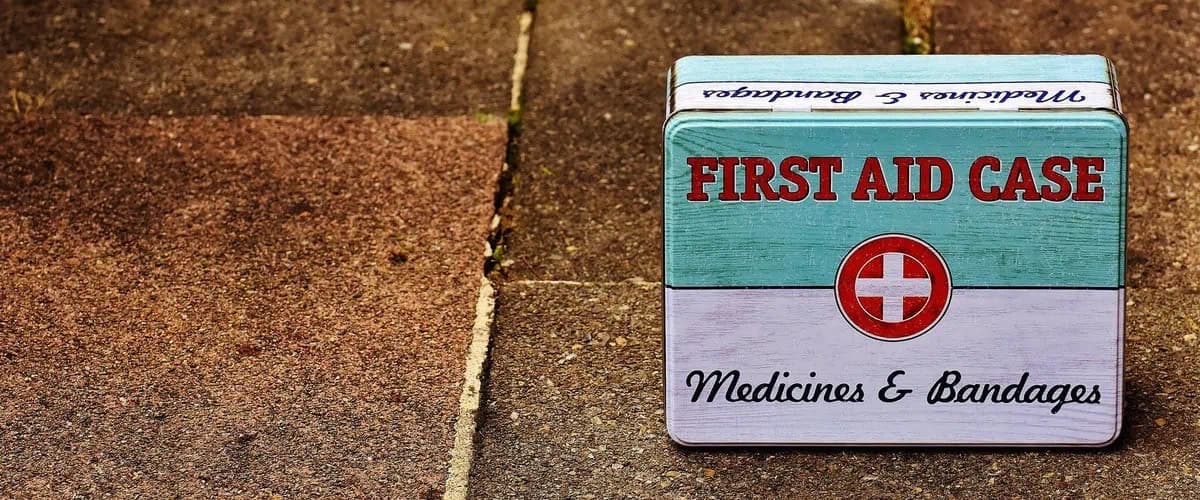
First Aid Kit List For A Safer Home
Not many people are aware of the importance of thorough preparation for minor injuries at home, or at least not enough, and you may be one of those people. The home is the most common place for accidents, followed by the workplace. In Europe, . of accidents occurred at home in 2014. As it’s important to be prepared for these minor injuries and illnesses, having a complete home first aid kit is key to home safety. So what should a first aid kit list for your home?
Equipment and Instruments
Begin with your own safety and be prepared to put on protective equipment first, starting with gloves. It’s important to include these on your first aid kit list to prevent cross contamination while cleaning a wound or putting on a dressing, as hand sanitizer is not always protective enough. Buy more than one pair so you’ll always have some handy.
Choose gloves made of nitryle or vinyl. Many people are allergic to latex gloves, so it’s better not to put them into a first aid kit.
Other pieces of equipment that may help protect you and the patient from diseases are:
- Goggles or other eye protection - to protect from potential bodily fluids entering through your eyes
- Surgical mask - to protect from airborne infection transmission
Equipment that should always be in on your home's first aid kit list is a thermometer. This can be a digital, temporal artery, or mercury thermometers. However, mercury ones are no longer recommended as when they break toxic mercury may escape.
So which thermometer to choose?
- Digital thermometer - safe for adults, newborns, infants, and children. The temperature can be measured from the mouth, armpit, or rectum. The time for temperature is also short: around a minute or even less.
- Temporal artery thermometers - appropriate for adults, children, and infants older than 3 months. Taking temperature is quick and the most accurate. It’s often in a form of a forehead thermometer.
When the temperature of a victim is too low, a thermal blanket, also known as emergency, first aid, safety, or space blanket, will reduce the loss of body heat. It’s also lightweight and very small in size when folded.
Depending on the injury, you may need some instruments to help you to treat the wound:
- Tweezers - to remove any small pieces of glass, splinters, or stings that are stuck in the wound
- Cotton swab - to help to clean the wound and to help apply any treatment
- Penlight - to examine eyes, ears, and throat, and to help give treatment in dark or low light areas
Home First Aid Kit List: Equipment and Instruments
- Gloves
- Tweezers
- Cotton swab
- Penlight
- Thermometer
- Thermal blanket
- Goggles
- Surgical mask
Specific injuries
Cuts and Scrapes

On every home first aid kit list should always be products to help treat small cuts and scrapes.
First make sure you’re wearing gloves, or washed your hands thoroughly with water and soap or hand sanitizer. Then clean the wound with running water.
Additionally, you may want to use hydrogen peroxide to prevent infection and to help remove dead skin from the wound. It works best in case of minor cuts, scrapes, or even burns. But it shouldn’t be used for deep wounds, serious burns, or animal or human bites. Instead of hydrogen peroxide, you may choose a saline wound wash. For these to be most effective, you need to remember to clean the wound with water before using these antiseptics.
Once you’ve cleaned and treated the wound you need to dress it.
For smaller cuts and scrapes, you can use an adhesive bandage. Adhesive bandage multipacks are a good choice as they consists of a variety of dressings in different shapes and sizes for use on different body parts. But you may also want to get adhesives bandages for specific locations of the body, such as for knees, elbows, and even knuckles and fingertips.
Your family members or the guests that visit your home may need a specific kind of adhesive bandage, depending on the situation and whether they have any allergies to the materials some bandages are made of. To make sure there’s plenty of what is best for your family or visitors, have as many varieties as you can:
- Waterproof
- For children
- Extra flexible
- Hypoallergenic
- Sensitive
But what about which types of materials you should use? Plastic, fabric, or silicone?
- Plastic - easily applicable but are most suited for flat and hairless areas on the body
- Fabric - these are elastic and stretchable but the outer surface of these get dirty pretty quickly
- Silicone - best for painless removal, and manufacturers claim that silicone bandages also stick to skin despite repositioning
You may want to have blue adhesive bandages, which are used in restaurants and food processing factories. They use a strong adhesive, are water resistant, and suitable for handling food. Additionally, their color means they’re easy to find should they come off.
Instead of adhesive bandages in the form of patches, there are other alternatives:
- Woven elastic bandage - for larger and more flexible areas of the body, such as a wrist or an elbow
- Butterfly closure bandage - for deeper but smaller wounds
- Spray plaster - for areas on the body which are difficult to reach. The sprayed-on film is flexible, transparent, and waterproof. It’s suitable only for minor cuts and grazes.
For woven elastic bandage, bandage scissors are needed. These have blades that are positioned at a 45 degrees angle, making it easier to safely cut bandages on a patient and not leave any marks on the skin or create any further injuries. This is because their tips are blunt and wide so they can slide across the skin without causing harm when cutting the bandage.
Home First Aid Kit List: Cuts and Scrapes
- Hand sanitizer
- Hydrogen peroxide or saline wound wash
- Adhesive bandages
- Woven elastic bandage
- Butterfly closure bandage
- Spray plaster
- Bandage scissors
Bleeding

What do you do when someone is bleeding? The first step you need to follow is to identify the severity of bleeding. You should call your country’s emergency number if:
- There’s an object in the wound
- The bleeding is severe
- There’s an abdominal or chest wound
- The bleeding continues for more than 10 minutes after treatment
- There is bleeding from the head, neck, or torso
Otherwise, use accessories in your well-stock aid kit to stop the bleeding.
Put on gloves first to prevent the injured person and yourself from catching potential diseases. Use a clean dressing pad or dressing to apply pressure to the wound. Continue to apply pressure until the bleeding stops. You may need another pad to press down on the wound and absorb blood if bleeding doesn’t stop quickly.
If it stops, you’ll need to dress it with a sterile gauze dressing and a bandage. To secure the dressing, use medical grade tape and small scissors.
Home First Aid Kit List: Bleeding
- Dressing pad or dressing
- Gauze dressing
- Bandage
- Medical grade tape
- Small scissors
Burns & Scalds

What to do when someone burns or scalds themselves? The most basic and the best form of first aid for these is to treat it with warm (around 37℃/98.6℉) running water over it for up to 20 minutes.
Why warm and not cold?
A led by a plastic surgeon in Switzerland, found that warm water effectively cools the burn whilst preventing the most amount of tissue damage compared to cool water (17℃/62.6℉). Warm water enabled the affected area to be cooled whilst ensuring the blood flow in the area isn’t compromised, promoting better healing.
You should never use ice to treat a burn or a scold. This is because it can to the skin tissue and even cause frostbite or .
Alternatively, you can use a cooling gel.
After initial treatment of the burn, you then need to cover it with a dressing.
If you’ve not got a dressing to hand, or if the burn covers too large an area for a dressing, a great alternative is cling film. This should be laid loosely on the burn rather than wrapped around the limb. Then secure the cling film on the wound with a medical grade tape. Its advantages are that it’s waterproof, elastic, and transparent so that you can see the burn’s condition and healing process. It also keeps the moist which not only reduces pain but also helps to .
You may use a clean sterile cotton sheet, if you don’t have access to cling film.
To relieve the pain from a burn, take paracetamol or ibuprofen.
After treating, can you use a topical cream or an oily lotion?
Only water-based moisturizing cream is recommended as other cream may contribute to skin dryness, which is detrimental for the healing process. But this should only be applied on non-blistered skin. In the first months after the burn, oily lotions as they are not absorbed easily into the skin, but they may relieve itching later on.
Home First Aid Kit List: Burns & Scalds
- Cooling gel
- Cling film
- Medical grade tape
- Cotton sheet
- Paracetamol or ibuprofen
Sprain & Strain
Most of these can be treated at home without consulting a specialist. All you need to do is put some a cold compress on the affected area and keep it elevated to help reduce the swelling.
For supporting the sprained elbow, have a triangular bandage in your emergency kit. To do so:
- Place the longest edge of the triangular bandage underneath the harmed arm
- Tie the two ends of the bandage across the opposite shoulder and the other two across the harmed shoulder
- Make sure that the bandage is not too tight and not too loose
- Check the circulation in victim’s fingers
To secure a torn ligament or a sprained joint, you should wrap a crepe rolled bandage around the affected area and secure it with safety pins. Make sure that the size of the bandage is large enough to cover the full area of the sprain as these come in different sizes for different body parts. Remember that the bandage can’t be applied too firmly or too loosely.
To apply a rolled bandage properly, the rolled part of it should always be placed above the injury and the unrolled one below the injury. Each layer should be covered by one-third of the new one.
Home First Aid Kit List: Sprains & Strains
- Triangular bandage
- Crepe rolled bandage
- Safety pins
Eye Injuries
Eye injuries can be very serious. If you’re in any doubt about the severity of an eye injury you should seek emergency help as soon as possible. Injuries that definitely require immediate attention are any injuries where:
- A foreign object has pierced the eyeball
- There is a significant loss of vision
- There is clouding of part of the eyeball
If you’re confident that an eye injury is not severe, you may be able to treat some injuries at home.
One of the most common injuries is where a tiny foreign object has caused a scratch to the surface of the eye, also known as a corneal abrasion. These can be objects in the eye like sand or dust. Symptoms of this include:
- A feeling of pressure or discomfort
- A sensation that something is in your eye
- Eye pain
- Extreme tearing
- Pain when you look at light
- Excessive blinking
- Redness or a bloodshot eye
If you’re experiencing any of these symptoms you must not rub your eye, no matter how tempting it is. This can cause further or more severe scratches to the surface of your eye. In short, it can make it a lot worse.
First check the eye, using a penlight to see if there is a foreign object in the eye. If there is, you will need to do is flush out the eye with a sterile eye wash or warm running water.
Once you’re confident that the foreign object has been removed, simply treat any discomfort with paracetamol or ibuprofen. If symptoms become worse after treatment, seek immediate medical attention.
What you shouldn’t do is put an eye patch over the affected eye. Why? Because bacteria love dark and warm places, and this could cause the eye to become infected.
If any chemicals have been splashed into your eye, you should immediately flush it with a sterile eye wash or warm running water for 15 minutes. Then you must seek immediate medical attention. If you have the container of the chemical you got in your eye, try to bring it with you so medical staff are aware of exactly what chemical they’re dealing with.
For a black eye you’ll only need an ice pack to apply to the affected area to reduce swelling, and take painkillers. However, you shouldn’t take aspirin as it may increase the bleeding.
Another minor eye injury you might experience is slight leakage of blood from the eye, technically known as subconjunctival hemorrhaging. Whilst these can look a little frightening, they’re usually painless and should not result in any loss of vision. Unfortunately, there is no treatment for these, and it may take a couple of weeks to heal on its own. However, if you are concerned, seek medical attention.
Home First Aid Kit List: Eye Injuries
- Penlight
- Sterile eye wash
- Paracetamol or ibuprofen
Stings and Bites

According to statistics, more than visited hospitals to report non-canine bites and stings between 2001-2010. 67.5% of these were caused by insects.
Stings and bites from many insects, arachnids, and jellyfish won’t be life-threatening, unless you’re allergic to any of them. But they still require some treatment.
What’s important is that you should get rid of the stinger and and the venom. Remove the stinger removal with a straightedge object or tweezers. Then clean the sting or bite with water and soap to wash out as much of the venom as possible.
Then you’ll need:
- Antiseptic - to prevent infection from germs in the venom
- Hydrocortisone cream or calamine lotion - to relieve inflammation
- Dressing or bandage - to protect the sting or bite area
- Cold compress - to reduce swelling
- Antihistamine - to reducing swelling, itching, and hives. It provides relief from mild allergic reactions, too.
- Aspirin - to relieve pain
Remember not to ignore bad and severe symptoms of insect stings or bites and seek medical attention immediately should any of these occur:
- Fever
- Difficulty breathing and/or rapid heartbeat
- Nausea and vomiting
- Swelling of the lips and throat
- Confusion
- Loss of consciousness
First Aid Kit List: Stings and Bites
- Tweezers
- Soap
- Antiseptic
- Hydrocortisone cream or calamine lotion
- Antihistamine
- Aspirin
Colds and Flu

These are very common illnesses so it’s important to always be ready for them. At home, you want to choose medications to relieve the symptoms of cold or flu.
So, what should you have to hand?
You can use decongestants in tablet form to help widen the nasal passage to make it easier to breath. These shouldn’t be used for more than 3 days.
Nasal sprays are effective for treating nasal congestion. You may choose one of two types:
- Saline sprays - to loosen up the mucus in your nose
- Steroid nasal sprays - to help widen the nasal passage but also prevent sinus infection
If you want to get rid of a cough or help with a sore throat, you’ll need benzydamine in the form of spray or mouth rinse. Cough lozenges may be preferred by some people but
Aspirin, paracetamol or ibuprofen can be used to bring down the fever and treat pain and inflammation. You should be cautious about giving aspirin to children and teenagers as it’s associated with in minors, which can be lethal.
Home First Aid Kit List: Colds and Flu
- Nasal spray
- Benzydamine spray or mouth rinse
- Aspirin, paracetamol, or ibuprofen
Gastric Issues

In case of these, make sure you have some loperamide or diphenoxylate on your first aid kit list to help control diarrhea.
If diarrhea is severe, it’s vital to replenish fluids in your body. But drinking plain water is not effective here. You will also need to drinking plenty of electrolytes to restore sodium and potassium lost through the diarrhea. That’s why you should also include plenty of oral rehydration solution as part of your first aid supplies.
Home First Aid Kit List: Gastric Issues
- Loperamide or diphenoxylate
- Oral rehydration solution
What Do You Need to Remember When Making a Home First Aid Kit List?
Buying and gathering all necessary first aid products is not everything. You’ll need to pack it all in a proper container. Use a metal or plastic box with a handle that is easy to carry. It’s best when it has lots of compartments for well-organized storage.
Use a pill box for putting together a mini first aid kit to carry in a bag. Adjust the compartment sizes to fit adhesive bandages or small scissors.
Don’t forget:
- Check the expiration dates of all first aid kit contents every month and replace the expired medication and accessories with the new ones
- Always refill your home first aid kit after you use any product from it. Don’t wait till you need to use it again
- Keep your home first aid kit in an easily accessible place but out of reach of small children
- Take your emergency box with you when you travel. Pack a mini version of necessities whilst travelling by plane, although remember to ensure you remove scissors and any other sharp objects, and that fluids are less than 200ml
Home First Aid Kit List
Home First Aid Kit List: Equipment and Instruments
- Gloves
- Tweezers
- Cotton swab
- Penlight
- Thermometer
- Thermal blanket
- Goggles
- Surgical mask
Home First Aid Kit List: Cuts and Scrapes
- Hand sanitizer
- Hydrogen peroxide or saline wound wash
- Adhesive bandages
- Woven elastic bandage
- Butterfly closure bandage
- Spray plaster
- Bandage scissors
Home First Aid Kit List: Bleeding
- Dressing pad or dressing
- Gauze dressing
- Bandage
- Medical grade tape
- Small scissors
Home First Aid Kit List: Burns & Scalds
- Cooling gel
- Cling film
- Medical grade tape
- Cotton sheet
- Paracetamol or ibuprofen
Home First Aid Kit List: Sprains & Strains
- Triangular bandage
- Crepe rolled bandage
- Safety pins
Home First Aid Kit List: Eye Injuries
- Penlight
- Sterile eye wash
- Paracetamol or ibuprofen
Home First Aid Kit List: Stings and Bites
- Tweezers
- Soap
- Antiseptic
- Hydrocortisone cream or calamine lotion
- Antihistamine
- Aspirin
Home First Aid Kit List: Colds and Flu
- Nasal spray
- Benzydamine spray or mouth rinse
- Aspirin, paracetamol, or ibuprofen
Home First Aid Kit List: Gastric Issues
- Loperamide or diphenoxylate
- Oral rehydration solution

5 Reasons You Should Be On A Flexitarian Diet
1 October is World Vegetarian Day, followed swiftly by World Vegan Day on 1 November which also marks the start of Vegan Month. Then, there’s Veganuary where people try to be vegan for the entire month to raise money for charity. Veguary, in February, is the same but for vegetarian-based philanthropy. But what if you like meat? Well, how about going on a flexitarian diet?
To V, or Not to V?
Whilst there is a lot of worth in both vegetarianism and veganism, it can be surprisingly difficult to cut meat and dairy out of your new healthy diet.
Why?
Well, for starters, some foods are addictive! Bacon, cheese, fried chicken, and cheeseburgers are among the list of foods that are as “addictive as heroin or cocaine” according to . Therefore, it’s no wonder that bacon has stereotypically been the Achilles heel of wannabe vegetarians and vegans.
Elsewhere, a study found that . Some cite giving in to the usual irresistible urges that follow giving up anything. Others claim to have “Meatmares” where they dream about meaty foods!
Some tell of the social stigma surrounding vegetarianism and veganism having pressured them back into eating meat. There are even claims of returning to meat because of declining health.
In short: being vegetarian or vegan can be hard work. But what if there was an alternative?
Well, let us introduce you to the flexitarian diet.
What is a Flextarian?

Flexitarian is a combination of two words: “flexible” and “vegetarian”.
But it doesn’t refer to a set of vegetarians that are particularly supple, neither are flexitarians people who eat only bendy foods. Instead, it refers to being able to enjoy the odd bit of meat now and then, but prioritizing plant-based healthy eating.
Think of it as vegetarianism, but cheating a little, or being semi-vegetarian.
This may sound a little mean-spirited, but it’s actually the whole point of a flexitarian diet. You eat a majority of vegetarian/vegan meals but you’re still allowed meat should you want it.
In fact, you could consider it the reverse of the McCartneys’ famous “Meat Free Mondays”: an initiative started by world-famous vegetarian and his daughters to get people to consume less meat. A flexitarian diet is more like “Meat Only Allowed On Mondays (Or Any Other Chosen Day of the Week)”, which admittedly isn’t as catchy.
As long as you’re making food choices that see you eating more vegetarian or vegan meals than meat ones, you can consider yourself on a flexitarian diet! It really is as simple as that.
Why Go On A Flexitarian Diet?
There are 5 main reasons people might choose to go on a flexitarian diet which are very similar to why people choose to go vegetarian or vegan: ethical, environmental, health, weight loss, and financial.
Reason #1: Ethics

This is the main reason most people want to reduce the amount of animal products and meat consumption from their diet. The meat and dairy industry are quite notorious for the mistreatment of animals. Even if some practices are considered “humane”, the animals are still being slaughtered or exploited whether they’re being pampered or not!
Although you won’t be withdrawing your custom completely from these industries, eating less meat means you will be creating less demand by being on a flexitarian diet. If you only ate dairy, egg, meat or poultry meals for only 1 day a week instead of 7, that’s an 85% decrease in the demand you create. If everyone went on a flexitarian diet, this would dramatically affect demand, and therefore the industries’ practices.
Reason #2: Environment

The meat and dairy industry are also starting to draw a lot of concern due to their impact on the environment. Infamously, the creation of grazing grounds for beef cattle has been a big concern contributing to . In recent years deforestation for soy production has also become an issue, especially as 80% of soybeans end up as feed for beef cattle. And that’s just one area of the meat industry!
Greenhouse gases produced by these industries is also under scrutiny with being attributed to animal agriculture alone. Animal agriculture also consumes 150% more water per gram of protein compared to other crops such as legumes.
Undeniably, the meat industry has a massive impact on the environment. Reducing the amount of meat and switching to a flexitarian diet means can help lessen the damage to our ecosystems.
Reason #3: Health

Saturated fat has been traditionally seen as a major detriment to our health, being said to cause heart disease and high cholesterol. Meat contains a lot of saturated fat. However, as more and more evidence comes to light, a more complicated picture is starting to emerge. The negative effects of refined sugar and salt in our diet is also being placed under more scrutiny as a result. Therefore, a flexitarian diet can also help prevent or decrease the risk of type 2 diabetes.
Either way, fruits and vegetables are still seen as much healthier food to eat. They're naturally lower in fat and salt than meat and contain only natural sugar. Eating more fruit and veg is generally seen as a good thing. In the UK and other countries, there’s been a massive push for people, whatever their dietary choice, to eat at least 5 portions of fruit and veg a day.
Some suggest that being on a flexitarian diet may be better for your health than vegetarianism or other plant-based diets. This is because plant-based proteins aren’t “complete” like those you would find in meat. We need the have an intake of the full range of proteins to stay healthy, meaning a fully vegetarian diet or vegan diet makes it difficult to ensure this. By eating meat now and again, you’re not missing out on the animal proteins your body needs.
Reason #4: Weight Loss

When it comes to wanting to lose weight, a flexitarian diet is actually a viable option. US News, who comprehensively rank popular diets each year, rates a flexitarian diet as 3rd best diet in the world. Its research shows that flexitarians are 15% slimmer than meat eaters, and their life expectancy is 3.5 years longer on average.
Reason #5: Money
Food prices are rising around the world. But vegetables are still generally cheaper than meat. So not only is switching to a more plant-based meal plan healthier, but it’s also easier on your bank balance.
What To Buy and Eat?
So, you’ve decided to go on a flexitarian diet. Hooray for you.
But what should be on a flexitarian diet food list?
Being vegetarian or vegan is far more than eating just salads every day of the year. One thing you certainly shouldn’t do is make your meals so plain and repetitive that eating becomes a chore: they should be delicious and enjoyable. Vegetarian and vegan meals are surprisingly varied. Be sure to check out the countless vegetarian and vegan ideas and recipes on the internet to help kick-start your healthy diet.
But you can start by taking your favorite meals and removing the meat and/or dairy and replacing them with vegetables.
Loopy for lasagne? Try a Mediterranean roast vegetable one. Barmy for burgers? Go for a tasty 3-bean patty instead.
But if you’re feeling more adventurous and want to widen your variety of meals in your eating plan, there are two food groups we highly recommend you make an essential part of your flexitarian diet.
Legumes

Also known as "pulses", these include:
- Peas
- Beans
- Lentils
- Nuts
The best thing about these is that they’re high in protein, so these are a great way to replace the loss of protein from not eating meat and dairy.
One of the main benefits of eating legumes regularly is that it can help you lose weight. In a , a group of men were given a meal that consisted of 19% meat protein where another group had a meal with the same amount of protein but made up from legumes. The group who had the legume meal ended up eating 12% fewer calories in their next meal.
Why?
Because legumes are full of fiber. Fiber will help keep your digestive tract nice and healthy. It can also keep you feeling full for longer.
Legumes are also high in B-vitamins, which are vital to your everyday health such as supporting your metabolism and immune system. Some legumes, like soybeans, are full of
All in all, legumes are brilliant for replacing meat and should certainly be a cornerstone of your newfound flexitarian diet. Even making a change like putting peanut butter on your toast instead of jelly/jam can help you up your protein and fiber intake.
Grains and Cereals

Vegetarian zombies want to eat your grains! And you should eat them too as part of a flexitarian diet. Grains and cereals include food such as:
- Wheat
- Oats
- Rice
- Buckwheat
- Corn
Like legumes, they’re also full of fiber and B-vitamins, although they’re not as packed with proteins.
But the thing to remember is that you don’t want to be eating just any old type. You want to be looking for wholegrain or wholewheat varieties.
“Wholegrain” means that the entirety of the grain is present, including the outer shell known as the kernel. Refined grains and cereals remove the kernels before use. It’s the absence of kernels that gives white flour is colorless property.
But why should you eat wholegrain and whole wheat?
Because there’s far more fiber in these. In fact, according to Health.com, they contain around 3x more fiber than their refined counterparts.
As well as keeping you full and cleaning out your colon, fiber is claimed to:
- Lower cholesterol
- Reduce the risk of heart disease
- Regulate your blood sugar
You don't need to completely shun food such as white bread and white pasta. These still contain fiber and aren’t bad for you at all. But you should be trying to opt for foods that contain wholegrain or wholewheat instead.
Flexitarian Diet FAQ
So, you're planning on getting legumes and grains into your healthy diet plan. Great! But you may want to know the answers to some other questions about going on a flexitarian diet.
Should I buy frozen or fresh fruit and vegetables?

Fresh is best, right?
Fresh vegetables are indeed great. Buying fresh is seen as the most nutritious and healthiest way to consume them.
But they do have their own share of issues. The problem is that as soon as you start to prepare them, they start to lose their nutrients. If you’re not using a whole piece of fruit or veg in one go, what’s left behind is not going to be as good for you when you finally get around to finishing it. What’s more, they can go bad unexpectedly, scuppering your best-laid plans for a rather nice meal.
So, what’s the alternative?
Buying frozen, of course. But is frozen produce really as good as fresh fruit and vegetables?
With regards to nutrients, there’s . As frozen products don’t lose much, if any, nutrients compared to their fresh counterparts. This is because they're frozen as soon on the production line as possible.
What’s more, they keep for longer. If you need prepared (chopped etc) fruit and veg, frozen can also be very convenient. You can cook them straight from the freezer, saving you a lot of time.
The main drawback is that frozen fruit and vegetables can be up to 50% more expensive in weight than their fresh counterparts.
Should I go organic?

“Organic” has been a real buzzword for the past decade and beyond, and it is generally considered the epitome of ethical eating.
But what even is organic food?
Organic food is grown mainly without using any synthetic pesticides or fertilizers, or genetically modified organisms (GMOs). Conventional farmers use these to increase the amount of fruit and veg grown as well as ensuring they don’t get eaten by bugs and insects.
It actually doesn’t mean that organic farmers don’t use pesticides or fertilizers at all. It’s just that they’re very restricted to what they can use and the amounts of such. For example, a pesticide that many organic farmers use includes a natural one called Spinosad.
You only need to do a cursory search on the internet to find a gaggle of articles praising organic food as the Holy Grail of produce:
- They have higher levels of nutrients
- You don't consume residual synthetic chemicals, which are linked to diseases such as some cancers and asthma
However, some research suggests that the increased levels of nutrients claimed aren’t significantly more than conventionally grown produce. In the UK, the Food Standards Agency concluded that organic foods have no additional health benefits at all. What’s more, the levels of residual chemicals on conventionally grown food are considered safe, and similar levels can sometimes be found on organic produce.
But organic farming does have some positive environmental impacts. Organic farming helps to maintain soil quality and prevents the runoff of harmful synthetic chemicals into the water system.
But the main problem with organic food is the cost. Consumer Reports in the USA found that, on average, organic food is 47% more expensive. Whilst this doesn’t seem like a massive mark up, the report itself mentions that the range around this average is rather sizable. For example, courgettes from one store were 3x more expensive than it’s conventionally produced counterpart.
In short: if you can afford to shop organic, why not? But if you’re going on a flexitarian diet due to trying to reduce costs, chances are there’s going to be a bigger detrimental impact on your wallet than there is a positive one on your health.
Should I buy dried or canned legumes?
Much like buying fresh or frozen produce, there’s a choice for your legumes too: dried or canned.
The biggest advantage of dried legumes is price. They are much much cheaper in terms of weight meaning you can really stock up on the protein-packed power food! The Bean Institute found that dried beans can cost 3x less in weight than canned.
However, dried legumes will need to be soaked for several hours or overnight before they can be cooked. This means you’ll really need to plan your meals. But many claim they are tastier, so the effort, should you have the time, can really pay off.
Canned legumes are much quicker to cook with. All you have to do is heat them up and put them in your meal. The result is that they’re much quicker to use as you completely eliminate the soaking time. But people using canned legumes should be wary of the amount of sodium present in these.
Too much sodium in your diet can result in health issues such as high blood pressure. However, proper draining and rinsing of canned legumes can dramatically reduce the levels. Alternatively, you can simply look for “reduced sodium” labels.
Should I use meat and dairy substitutes?

You absolutely can if you want to use these to scratch that meat or dairy itch. But remember, with a flexitarian diet you’re absolutely free to eat the real deal.
Regardless, it could be fun to try as many substitutes to meat and dairy as possible to see which ones you like and which you don’t. This might eventually enable you to indulge in your meat and dairy urges without actually resorting to the real thing. This means you could eventually end up completely vegetarian or vegan.
But which ones taste the best? Well, it really is a matter of personal taste. So, try alternatives in small amounts first to see if you like it or not before you buy in bulk.
Flexitarians Are Go!
Hopefully, you now have some good reasons to go on a flexitarian diet, and some practical ways to practice flexitarianism. If you want more information, you should seek out Dawn Jackson Blatner's book on flexitarianism that is considered the diet's bible. Who knows, maybe a flexitarian diet can be the gateway to becoming fully vegetarian or vegan.
Overall, a flexitarian diet can have some great benefits on your health, the environment, and maybe even your finances.

College Dorm Essentials Everyone Must Have
If you’re just about to start your university life, you probably decided to move into a dorm room. Living in dorms is undoubtedly an unforgettable experience, with a focus on social interaction and being independent for the first time. To get the most out of this experience, you're going to need a killer college dorm essentials checklist. So, why not check out our comprehensive shopping list for students?
Whilst studying at the University of Łódź in Poland, I spent 5 years living in dorm rooms. During this time I learned many tricks and hacks about how to get the most out of dorm life, especially what to bring to your dorm room to make the best out of the minimal space you’ll have.
This is particularly important when it comes to banned items such as personal ovens, air conditioning units, and even candles. You might have wanted to take these either for convenience or to make your room feel a little more like home, but suddenly find you’re not allowed to.
So, let’s go through this big checklist of what to bring and what to prepare you for your big university adventure.
College Dorm Essentials Checklist
Let’s be honest. Settling into a new place may not be an easy thing to do, especially when it’s a new room in a dorm. To make sure you’ll be able to get a proper rest and a good night’s sleep, and be able to fit everything you need or want to bring with you into your new room, you’ll need to organize your bedroom well.
Bedroom Essentials

Bedding is usually provided by the dorm, but it depends on the place. Regardless, you may want to bring your own bed sheets, pillow, duvet, pillowcases and duvet cover. These can help you feel more at home, or at least more a little comfortable than what the dorm might provide you with.
Add a mattress pad to your bed. It helps just in case the mattress provided is worn-out and uncomfortable. It will also provide more warmth during cold weather.
If you’re someone who feels cold easily, you might want to bring an extra blanket. It may be handy when you decide to take a 30-minute nap between your study sessions or if you’re really cold at night. It may also serve as a bedspread, helping to keep your bedding nice and clean.
What if you can’t sleep in a dorm room because it’s too noisy or too bright?
Use a sleeping mask and earplugs. Foam earplugs are soft and cheap, but wax ones are easy to mold to your ears making them more comfortable to use. Silicone ones also mold to your ears but have the added benefit of being reusable. Both a sleeping mask and earplugs may help you to fall asleep when your roommate(s) decides to stay up late and have the lights still on or create a bit of noise.
Instead of earplugs, you can use its opposite to fall asleep: sound. Calming music may actually help you have better quality sleep and make you feel less tired in the morning. White noise can also have a similar effect. Search Spotify or Youtube for bedtime or white noise playlists.
But what if you have problems with waking up?
You probably use the alarm clock on your smartphone but it may still be useful to have a physical alarm clock on your nightstand. This can be the classic mechanical clock with bells attached or a digital alarm clock with a built-in radio. But don’t overdo it! You don’t want to become unpopular with your roommate(s) because your alarms create too much noise early in the morning!
To save space on a nightstand, you can get rid of a nightstand lamp and get an LED alarm clock with a built-in bedside light and sunrise imitating light. It can make your mornings more pleasant and provide some light at your bedside without taking up extra space.
Bedroom Essentials
- Bed sheets
- Pillow
- Duvet
- Pillowcases
- Duvet cover
- Mattress pad
- Blanket
- Sleeping mask
- Earplugs
- Alarm clock
Storage Essentials
Your dorm bedroom is not just the place where you sleep. It’s also the room where you keep your belongings. That’s why it’s so important to know some ways to create a well-organized dorm room and make clever use of the limited space.
The question is: how do you do it?
Use plenty of storage boxes, stackable crates, and stackable drawers to maximize space in your dorm room. Get a variety of sizes of these because you can never tell what can and what can’t fit into those little nooks and crannies until you get there.
Stick washi tape or duct tape on the side of your storage boxes, or paint them with chalkboard paint. This enables you to write the names of items on them to find things easier.
You can store more items under your bed if you have bed risers. In which case, you may also need a step stool to get into bed.
To organize your dorm room space even better, it’s also good to have:
- Clothes hangers - these are necessary if you don’t want your clothes to be all crumpled
- Closet organizer set - this will provide lots of space for clothes, shoes, and accessories in your wardrobe
- Over-the-door hooks - to hang your bathrobe or jacket
It’s usually forbidden to put nails or screws into your wall in your dorm room. Instead, use adhesive hooks. They’re easy to put up and won’t leave holes in the wall. However, make sure they’re paint friendly, as any damage to paint may see you charged for repairs at the end of the year.
If you wear jewelry, there’s a couple of ways to store them in a smart way:
- Hang necklaces and bracelets on a cork board using thumb tacks, or adhesive hooks on your wall
- Put your rings in an ice cube tray or a pill box
- Store rings, necklaces, and bracelets in a cupcake tray
- Put your jewelry in zip lock plastic bags and hide them away
Think twice about taking any expensive watches or jewelry. They may easily be stolen and there may be no chance of getting them back. show that in 2016 there were more than 6,000 burglaries reported on university campuses across the US, which is around 4,000 more compared to 2011.
If you share your room but you’re lucky to have enough space between your two areas, you may bring a room divider to provide a little bit of extra privacy.
Storage Essentials
- Storage boxes
- Stackable crates
- Stackable drawers
- Bed risers
- Step stool
- Clothes hangers
- Closet organizer set
- Over-the-door hooks
- Cork board
- Adhesive hooks
- Ice cube tray
- Pill box
- Cupcake tray
- Zip lock plastic baggies
- Room divider
Clothing Essentials

You may think that everything in your wardrobe will be useful for your time at university and you should take them all.
But don’t!
Dorm rooms are usually cramped and have little space for storage, which is a key factor that you should consider when packing.
You might want to consider only packing for 1 season at a time, rather than all 4. Then, if you’re able to visit family, you can swap 1 season’s clothes for another. You can also do this if family members come to visit you.
This is particularly important regarding winter clothes as they take up more space because they’re thicker, warmer, and sturdier. But do plan to have these sooner rather than later. You don’t want to get caught out by sudden changes in the weather!
Otherwise, pack only about a week or two’s worth of seasonal clothes, plus only a couple of sets of “going-out” wear. This will save a lot of space compared to bringing your entire wardrobe with you.
Whatever the season, there are some items of clothing that are good to have at all times:
- Swimsuit
- Workout clothes
- Trainers
Not only having these to hand will encourage you to hit the gym and keep healthy (maybe), but they are also quite versatile pieces of clothing that you can wear whether you’re pumping iron or not. A swimsuit can be a substitute for underwear in an emergency. And no-one’s really going to bat an eyelid if you turn up to lectures in sweatpants, a sweater, and sneakers. Chances are, they’ll be dressed similarly too.
Hang scarves, belts, and hats on shower hooks, which can be attached to a clothes hanger inside your wardrobe. This will ensure you keep all of these accessories in one place.
Don’t forget about a bag or backpack.
You’ll be carrying around lots of notes, books, and maybe even a laptop and some food every day. Bring one that is not only spacious but also comfortable. You don’t want to do your back any damage by using one that’s too heavy and uncomfortable.
Clothing Essentials
- Week or two’s worth of seasonal clothes
- Swimsuit
- Workout clothes
- Trainers
- Bag or backpack
Bathroom Essentials

Living in dorms means you most likely won’t have your own private bathroom area. So, bringing a proper set of toiletries is crucial. But it’s also important to think about how you organize them.
You need flip-flops, a bath towel, a hand towel, a bathrobe, and a shower tote to carry all your toiletries.
If you are lucky enough to have your own bathroom in your dorm room, it’s good to have a shower caddy to put all your shower products in one place, and also save precious space.
Regardless, the following are the bathroom essentials that you’re going to want to be sure you’ve packed:
- Shampoo
- Conditioner or hair mask
- Body wash
- Soap
- Shaving cream/foam and razor
- Deodorant/antiperspirant
- Toothpaste
- Toothbrush
- Mouthwash
- Dental floss
Cotton buds or pads are also useful, especially when removing makeup with makeup cleanser. But you may use cleansing wipes instead.
Don’t forget a mirror, especially if you’re going to be spending time shaving or doing your makeup.
What else you should take?
- Nail clippers or nail scissors and tweezers - easy to forget but extremely necessary for grooming
- Hair dryer, and optionally a curling iron and/or hair straighteners
- Hair brush or comb
- Eye drops and glasses case or contact lens case - if you wear glasses or contact lenses
- Toilet paper and facial tissues
- Medication - starting with first aid basics such as plasters, and ending on any medication you take regularly
Bathroom Essentials
- Flip-flops
- Bath towel
- Hand towel
- Bathrobe
- Shower tote
- Shower caddy
- Shampoo
- Conditioner or hair mask
- Body wash
- Soap
- Shaving cream/foam and razor
- Deodorant/antiperspirant
- Toothpaste
- Toothbrush
- Mouthwash
- Dental floss
- Cotton buds or pads
- Makeup cleanser or cleansing wipes
- Mirror
- Nail clippers/scissors
- Tweezers
- Hair dryer
- Curling iron
- Hair straighteners
- Hair brush or comb
- Eye drops
- Glasses case
- Contact lens case
- Toilet paper
- Facial tissues
- Medication
Cleaning and Laundry Essentials

Even if you decide to lead a wild party life as a student, or do the complete opposite and study all night and day, you’re probably going to have little time for cleaning.
But it’s a necessity.
Your dorm may have a regular cleaning service. But even then you can’t rely on them to do everything. You’ll still need to do some basic cleaning in between cleaning visits, and at some universities, cleaning staff will refuse to clean your dorm room or common areas if they are too dirty and untidy.
For the kitchen you’ll need:
- Dish soap
- Cleaning wand/sponge
- Tea towel
- Mini drying rack
You’ll also want extra garbage bags and perhaps an extra waste paper basket for your room.
Whilst you can buy garbage bags for small bins and waste paper baskets, it’s cheaper to reuse plastic shopping bags as bin liners. The handles also make them easier to tie up.
Laundry can be overwhelming, especially if this is your first time doing your own! But having the following essentials will mean you’re more prepared for it:
- Laundry detergent
You might want to consider laundry detergent capsules rather than powder or liquid. Using these mean you want have to measure out your detergent which can be tricky and messy. You might also want to use capsules that are a combination of both detergent and fabric softener. However, whilst these are more convenient, they’re also more expensive.
- Fabric softener
- Stain remover
- Washing capsules
- Laundry hamper/laundry bag
Make it easier to carry your laundry to a laundry room and choose a laundry hamper on wheels. Alternatively, you can use a backpack. Depending on how far away the laundry room is, carrying a basket might not be as easy or as comfortable as you think!
You shouldn’t need to bring an iron and an ironing board as it’s possible that your dorm room will supply these. However, these are unlikely going to going to be top of the range. So, it’s up to you whether what’s supplied will suffice or if you really want to have your clothes crisply ironed. If the latter is the case, you might want to consider a mini steam iron and a tabletop ironing board as these will save a lot of space in your room compared to their full-sized counterparts.
Lastly, if you’re unable to use or there are no dryers in the laundry room, get a clothes horse to dry your clothes on. This will save you hanging your wet clothes over every conceivable piece of furniture in your room!
Cleaning and Laundry Essentials
- Dish soap
- Cleaning wand/sponge
- Tea towel
- Mini dryer rack
- Garbage bags
- Waste paper basket
- Laundry detergent
- Fabric softener
- Stain remover
- Laundry hamper/bag
- Mini steam iron
- Tabletop ironing board
- Clothes horse
Kitchen Essentials

Not every dorm has separate kitchens for each room. Some of them have one communal kitchen for everyone in your dorm apartment or on your floor. Even then, some universities will not provide anything other than some small appliances such as a refrigerator and a microwave. You might not be able to add your own extra appliances either.
So, how can you deal with this?
First of all, focus on what you’re actually allowed to have. Firstly, you’re going to want a plate and a bowl to eat from, as well as some cutlery. You only need to bring one set just for you to save on space. Also bring some plastic or glass containers to help store and stack your food in the fridge to save space. You might also want to bring a fridge thermometer too, to check that your refrigerator is operating at a safe temperature (4c/40f).
Remember that any food containers, plates and bowls you use should be suitable for using in a microwave.
If you are allowed to bring other small appliances to your kitchen, use this opportunity to take a mini oven and a toaster. Safety is absolutely vital so remember to always check whether you unplugged your cooking devices after you’ve used them.
If you’re bringing an electric kettle, think about a stainless steel one for less stains, and one with a 360 degree power based for easier use. With a kettle you’ll be able to make some coffee, oatmeal, or instant noodles.
It’s good to have water filter too. Why? Some tap water might not be suitable for drinking and buying bottled water can be cumbersome and expensive. But remember you will have to buy extra filters if you are using one.
Don’t bring lots of cups, mugs and glasses. Like your plates and cutlery, one of each is enough.
If you have access to a communal stove or you are allowed to bring your own portable one, make sure you have a regular frying pan and two small pans. These alone will be enough for cooking, so don’t bring anything else as there’ll be too little space to store them in. But what you'll also need are utensils: remember to take plastic or wooden ones, which won’t damage the surface of your frying pan.
What about preparing your food?
Along with a chopping board, you only need these three essential knives:
- Chef’s knife
- Paring knife
- Bread knife
To be extra safe, make sure you have safety covers for them. Also, you may want to take a knife sharpener as some cheap knife sets can become dull quite quickly.
Other kitchen items you may find useful are:
- Strainer - for straining pasta, which you will eat very often
- Can opener - a large portion of your food will probably be canned, so it’s best to have one
- Bottle opener - having one that’s portable and handy can also make you popular at parties
- Pizza cutter - you’ll probably eat a lot of pizza during your time at university
- Bag clips - for sealing all those bags of food
- Ziploc bags - perfect for storing sandwiches, fruit, or nuts
- Oven mitt - if you have access to an oven, this will help protect your hands when taking hot food out of it
Kitchen Essentials
- Plate
- Bowl
- Cutlery
- Plastic or glass food containers
- Fridge thermometer
- Mini oven
- Toaster
- Electric kettle
- Water filter and extra filters
- Cup
- Mug
- Glass
- Frying pan
- 2 small pans
- Utensils
- Chopping board
- Chef’s knife
- Paring knife
- Bread knife
- Knife sharpener
- Strainer
- Can opener
- Bottle opener
- Pizza cutter
- Bag clips
- Ziploc bags
- Oven mitt
Food Essentials
What do university students eat? That’s probably one of the most frequent questions that you or your parents will ask.
The answer is: it’s highly dependable. There’s no need to drastically change your eating habits when studying at university.
You may have a meal plan, or even plan to eat out more often than not. But the most cost effective way to feed yourself is to cook in your dorm.
Your personal tastes means the food you will be buying can be very different from other students. However, we suggest having the following staples on your college grocery shopping list:
- Condiments - sugar, salt, and pepper
- Herbs and spices - to add extra flavor to your meals
- Cooking oil - any oil that you prefer: olive oil is best for salads whilst vegetable oil is better for frying
- Pasta - spaghetti, penne, farfalle, pappardelle; white/whole wheat/vegan. There’s plenty to choose from but choose the ones you actually eat the most often. Also, think about getting whole wheat pasta as it’s .
- Grains - rice, whole oats, quinoa, bulgur, couscous or any other that you like. These are easy to cook, will keep you full for many hours, and are very nutritious.
- Legumes - either dry or canned and ready to put to your dish
- Dried fruit, nuts and seeds - easy to store, and are always ready for a quick, healthy snack
Eat nuts on regular basis. They have a great impact on memory and learning, which is what a student needs.
- Canned food - it’s always good to have canned veg, tuna, or soup to make your cooking easier and quicker
- Ready meals - these may not be the healthiest kind of food but it will definitely keep you from being hungry if you’re in a rush
But here’s the most important part:
Snacks.
They don’t require any equipment and you can make or buy them easily. What every university student should have on hand are healthy snacks.
Fresh fruit, oatmeal, hummus with carrots and celery, granola bars, yogurt, smoothies, rice cakes with avocado and trail mix are excellent examples of healthy and quick to make snacks. These are great on daily basis as they contain many nutritious values, vitamins and minerals.
Other choices are snack classics:
- Popcorn, chips, and pretzels for movie nights
- Crackers with cheese or string cheese for cheese lovers
- Chocolate and all sorts of candy for those with a sweet tooth
Keep your snacks in one place in a hanging shoe rack that goes on the back of your door. This will give you easy access to snacks in case you’re in a hurry and you need to take some with you.
Food Essentials
- Spices
- Herbs
- Cooking oil
- Pasta
- Grains
- Legumes
- Dried fruit, nuts, and seeds
- Canned food
- Ready meals
- Snacks
Study Essentials

One of the most important spaces in your dorm room is your study area. How you decide what’s on and around your desk may influence your learning process so it’s best to organize it well.
So, what do you need on your dorm shopping list to help you get the most out of studying?
Sometimes you may stay up late and study all night and it’s important not to strain your eyes, or at least as little as possible. Therefore proper lighting is vital. Either get a standard desk lamp, a clip desk lamp, or an LED lamp. Do some research on what lamp is best for you, taking into account things such as: adjustable brightness and colour temperature, distribution of light, and impact on the environment. It might be a good idea to check whether you need additional light bulbs and extension cords, too.
Another item which might improve your comfort while studying in a dorm room is a desk chair. Although a chair is usually provided, you can bring your own, more comfortable one. But be aware that if you do, you might need to find somewhere to put the spare chair!
Use folders and binders to help arrange your study materials. This will keep all your notes in one place. A stapler, staples and staple remover will help you even more with doing that. Also, if you have stackable drawers or magazine files you can store notebooks, note paper, and textbooks neatly too.
Another way to store your notebooks and books is to put them in a storage cart. These are shelves on wheels so they will be easy to take out from wherever you’ve chosen to put them.
What you may find useful when studying are:
- Pens and pencils - bring lots of them unless you use a laptop or tablet for taking notes
- Pencil sharpener - to have your pencils always sharp and ready
- Highlighters - for marking important pieces of information in your notes
Use empty jars or cans to create a pen and pencil station on your desk. Glue them together, decorate them with ribbon, or paint them with spray paint to make them fit your style.
- Correction fluid - to remove errors
- Tape and scissors - useful when you decide to decorate your room or fix a broken notebook
- Paper clips and binder clips - to bring notes together
Use binder clips to keep your cords in order. Clip them on the edge of the desk and thread the cords through them. Other way for organizing cords is to create a charging station out of an old shoe box. Thread the cords through holes in the box and hide all the chargers inside.
- Sticky notes - for leaving notes and bookmarking pages in textbooks
- Calculator - if your studies include math
- Hole punch - to be able to put notes into binders
- Small boxes or containers - to put all your pencils, pens, highlighters, paper clips etc
Change the colour of boxes, containers and other accessories such as stapler using spray paint. It’s easy to do and saves a lot of time and money if you can’t find the ones which match your desk design.
Other items for your study area might be a calendar and a fan. A calendar on or near your desk enables you to keep track of all you deadlines, exam dates, and important events. As it’s on your desk you’ll always see it, meaning those crucial dates won’t slip your mind. Air conditioning units are typically banned in dorms, so take a fan instead. It’s better than nothing!
Study Essentials
- Desk lamp, clip lamp, or LED lamp
- Light bulbs
- Extension cord
- Desk chair
- Folders
- Binders
- Stapler
- Staples
- Staple remover
- Magazine files
- Notebooks
- Note paper
- Textbooks
- Pens
- Pencils
- Pencil sharpener
- Highlighters
- Correction fluid
- Tape
- Scissors
- Paper clips
- Binder clips
- Sticky notes
- Calculator
- Hole punch
- Small boxes or containers
- Tackle box
- Calendar
- Fan
Technology Essentials

Tech essentials for university may be limited to three devices:
- Smartphone
- Laptop
- USB flash drive
You probably don’t need to be told to take your smartphone. Of course, you can use it to call and text your family and your new friends, as well as checking Facebook, uploading your party pics to Instagram, and watching cat videos between lectures. But there are plenty of other things you can use your smartphone to:
- Create messaging groups to help you and your classmates study together
- Check your university email for important information
- Use a shopping list app to help you tackle your reading list
Your university or student union might even have their own app!
There are plenty of other ways you can use your smartphone to make studying more convenient, so don’t limit yourself to the more common uses: be creative!
As for what type of computer you should bring: a laptop is the best.
Why?
Desktop computers are useful for students whose studies require more powerful devices, such as those studying graphic design or music technology. But it’s not portable. If you decide to use a desktop computer, you’ll need to take all the peripherals, such as a monitor, a keyboard, a mouse, headphones or speakers and all cables that go with these.
Tablets are portable, being small in size and light, but they’re usually far less powerful than a desktop computer or a laptop.
A laptop is a great compromise on both power and portability. That’s why a small, light laptop is probably the best option for your learning and creating projects, or for simply surfing the internet and using social media.
If you prefer laptop or tablet, don’t forget about the charger.
To save space on your desk, put a monitor on a box or a low shelf. This way, you’ll be able to store accessories or notebooks underneath it.
As for a USB drive, having one is very handy. Whilst you’ll mostly be saving your files to the university’s cloud or network, backing up and using a USB drive makes them more portable and accessible.
However, I strongly suggest you don’t keep all your work only on a USB: use it as a backup or to simply transport your files from place to place. If you lose or damage your USB drive, you don’t want to lose all of your notes and work!
During the first few weeks of university, many companies will be giving away free stuff to new students. It’s highly likely you’ll end up with a free USB drive, or even several! However, these might not be as secure, spacious, or as reliable as buying your own.
You don’t necessarily need to bring a printer. There will be lots of printing spots at your university. But, if you’d rather have your own printer, remember about ink and paper. This will certainly be useful if something does go wrong with the university printers.
What about entertainment?
Being a student is difficult and studying is tiring and that’s why study breaks are important. If you have enough space in your dorm, you might consider taking a TV, DVD player, stereo or video games console. They’re also good options for inviting people to your dorm room to socialize.
Technology Essentials
- Smartphone
- Desktop computer, laptop, or tablet
- USB flash drive
- Lap desk
- Monitor, keyboard, mouse, headphones, speakers, cables
- Charger
- Printer
- Ink
- Paper
- TV
- DVD player
- Stereo
- Video games console
Document Essentials

Starting university means a lot of changes, including learning to be independent. Part of being independent is being able to look after you important documents and making sure they’re kept safe.
So what are these documents you need to have?
You’ll most likely keep your ID and student ID in your wallet, along with your debit/prepaid card and social security card. But if you’re going on holiday, take only what you need. Do you really need to take your student ID with you down Las Ramblas in Barcelona? Because if it gets stolen along with your wallet, you’re going to have to pay to replace it when you could have just left it secure in your dorm room.
If you have a car and you take it to university, you’ll also need driving license and car registration, and motor insurance documents.
Depending on what country you’re studying in, you may also need to being your medical insurance card to be able to go to the doctor that is closest to your dorm.
Keep your bank account information, financial aid forms and renters’ insurance in one folder, so you don’t lose them or throw them away accidentally.
Document Essentials
- ID
- Student ID
- Debit/prepaid card
- Social security card
- Driving license
- Car registration
- Motor insurance documents
- Medical insurance card
- Bank account information
- Financial aid forms
- Renters’ insurance
Other College Dorm Essentials

These are other items you should have on your college checklist that may well come in handy.
Think about having a flashlight and a powerbank just in case electricity cuts out without warning. Duct tape, safety pins, and a sewing kit can help you repair or patch up various broken objects so you can use them for longer. A first aid kit will be great for dealing with any minor injuries. It may be also a good idea to have some spare batteries and light bulbs in your room just in case you suddenly need to replace either.
A weekend bag/suitcase, umbrella and sunglasses - these you can’t forget if you want to travel or just come back home for the weekend.
Speaking of weekends, take a board game or two. It’s good for socializing and having fun without technology or alcohol.
Other College Dorm Essentials
- Flashlight
- Powerbank
- Duct tape
- Safety pins
- Sewing kit
- First aid kit
- Batteries
- Light bulbs
- Weekend bag/suitcase
- Umbrella
- Sunglasses
- Board games
All Packed and Ready to Move

The dorm shopping list we’ve given you might seem pretty long, but don’t think you have to bring everything on them.
They’re there to give you an idea of how to prepare yourself for one of the biggest changes and challenges you’re going to face. Therefore, edit them to fit your needs, budget, and travel situation.
But the main thing to remember is your dorm room is going to be small, so:
- Don’t take too many things
- Use storage boxes, drawers, shelves and carts to store all your items
It’s also a good idea not to take all of the items on the list right away and see what you might be able to share with your new roommate(s).
After all, sharing is caring.
College Dorm Essentials Checklist
Bedroom Essentials
- Bed sheets
- Pillow
- Duvet
- Pillowcases
- Duvet cover
- Mattress pad
- Blanket
- Sleeping mask
- Earplugs
- Alarm clock
Storage Essentials
- Storage boxes
- Stackable crates
- Stackable drawers
- Bed risers
- Step stool
- Clothes hangers
- Closet organizer set
- Over-the-door hooks
- Cork board
- Adhesive hooks
- Ice cube tray
- Pill box
- Cupcake tray
- Zip lock plastic baggies
- Room divider
Clothing Essentials
- Week or two’s worth of seasonal clothes
- Swimsuit
- Workout clothes
- Trainers
- Bag or backpack
Bathroom Essentials
- Flip-flops
- Bath towel
- Hand towel
- Bathrobe
- Shower tote
- Shower caddy
- Shampoo
- Conditioner or hair mask
- Body wash
- Soap
- Shaving cream/foam and razor
- Deodorant/antiperspirant
- Toothpaste
- Toothbrush
- Mouthwash
- Dental floss
- Cotton buds or pads
- Makeup cleanser or cleansing wipes
- Mirror
- Nail clippers/scissors
- Tweezers
- Hair dryer
- Curling iron
- Hair straighteners
- Hair brush or comb
- Eye drops
- Glasses case
- Contact lens case
- Toilet paper
- Facial tissues
- Medication
Cleaning and Laundry Essentials
- Dish soap
- Cleaning wand/sponge
- Tea towel
- Mini dryer rack
- Garbage bags
- Waste paper basket
- Laundry detergent
- Fabric softener
- Stain remover
- Laundry hamper/bag
- Mini steam iron
- Tabletop ironing board
- Clothes horse
Kitchen Essentials
- Plate
- Bowl
- Cutlery
- Plastic or glass food containers
- Fridge thermometer
- Mini oven
- Toaster
- Electric kettle
- Water filter and extra filters
- Cup
- Mug
- Glass
- Frying pan
- 2 small pans
- Utensils
- Chopping board
- Chef’s knife
- Paring knife
- Bread knife
- Knife sharpener
- Strainer
- Can opener
- Bottle opener
- Pizza cutter
- Bag clips
- Ziploc bags
- Oven mitt
Food Essentials
- Spices
- Herbs
- Cooking oil
- Pasta
- Grains
- Legumes
- Dried fruit, nuts, and seeds
- Canned food
- Ready meals
- Snacks
Study Essentials
- Desk lamp, clip lamp, or LED lamp
- Light bulbs
- Extension cord
- Desk chair
- Folders
- Binders
- Stapler
- Staples
- Staple remover
- Magazine files
- Notebooks
- Note paper
- Textbooks
- Pens
- Pencils
- Pencil sharpener
- Highlighters
- Correction fluid
- Tape
- Scissors
- Paper clips
- Binder clips
- Sticky notes
- Calculator
- Hole punch
- Small boxes or containers
- Tackle box
- Calendar
- Fan
Technology Essentials
- Smartphone
- Desktop computer, laptop, or tablet
- USB flash drive
- Lap desk
- Monitor, keyboard, mouse, headphones, speakers, cables
- Charger
- Printer
- Ink
- Paper
- TV
- DVD player
- Stereo
- Video games console
Document Essentials
- ID
- Student ID
- Debit/prepaid card
- Social security card
- Driving license
- Car registration
- Motor insurance documents
- Medical insurance card
- Bank account information
- Financial aid forms
- Renters’ insurance
Other College Dorm Essentials
- Flashlight
- Powerbank
- Duct tape
- Safety pins
- Sewing kit
- First aid kit
- Batteries
- Light bulbs
- Weekend bag/suitcase
- Umbrella
- Sunglasses
- Board games
How to Store Milk
Do you know how to store milk? Storing milk may seem pretty simple: pop it in the fridge and consume it within a few days, and you can’t really go wrong. Right? Well, let’s find out and give you some handy storage guidelines.
How to Store Animal Milk
When we talk about animal milk we usually mean cow’s milk. However, it can also refer to milk from goats and sheep.
Milk is usually sorted and sold according to the amount of fat there is in it: whole (3.25%), reduced fat (2%), low fat (1%) and skimmed or non-fat (0-0.5%).
However, neither the type of animal it has come from or its fat content makes any difference about where and how to store it.
How to Store UHT Milk?

The only difference is that UHT milk doesn’t need to be stored inside a fridge if it’s unopened. But putting unopened UHT milk in the fridge doesn’t do it any harm.
The most popular place is on one of the shelves in the door. But milk should actually be stored on the top or middle shelf in a fridge.
Why?
Because the temperature is more stable on the shelves rather than the fridge door.
How Long Does Animal Milk Last?
The shelf life of animal milk depends on whether it’s fresh or treated using Ultra High Temperature (UHT) treatment.
Fresh milk, either in plastic or glass bottles, needs to be stored in a refrigerator at 40℉ (4℃) at all times. Unopened, it will last for a maximum of 2 weeks.
UHT milk in cardboard may be stored up to 6-9 months when unopened regardless of whether it is stored inside or outside a fridge.
After opening any type of milk, either fresh or UHT, it should be consumed within a week and always kept in the refrigerator.
To keep milk cold for longer, buy milk and other dairy products at the end of your shopping trip. Keep milk, other dairy products, and frozen food in the same bag to help them stay cold while you take your shopping home.
Can You Freeze Animal Milk?
Animal milk can indeed be frozen. Just be sure that the milk container has enough space for the milk to expand, otherwise it will burst and create a mess.
But what about defrosting it?
The best way to defrost milk is to keep it in the fridge or place the container in some cold water. It’s safer to thaw it gradually, so expect the defrosting process to take about 1-2 days.
Unfortunately, there are disadvantages to freezing and defrosting milk. When freezing and defrosting milk, the flavour and texture can change. However, its nutritional value . Therefore it’s better to use defrosted milk as a baking or cooking ingredient rather than served fresh, such as over breakfast cereal.
Freezing milk can make it last for between . Once defrosted, it should be consumed within .
How Do You Know If Animal Milk Has Gone Bad?
To test whether animal milk has gone bad, you should smell it and look at it. Bad milk has a distinctive sour smell and lumpy texture. Its color usually changes as well.
Do you always have to throw spoiled milk away?
If milk doesn’t have lumps or a different color, you may still consume it. However, not as a raw product. Such milk can be used for cooking, baking, frying pancakes or tenderizing meat.
How to Store Milk Alternatives

A number of milk alternatives are also available on the market:
- Soy milk
- Almond milk
- Rice milk
- Coconut milk
These types are vegan-friendly and suitable for people who are lactose intolerant. As these milks are plant-based, the rules for storage are a little different from those for animal milk.
If you’re going to store milk alternatives unopened in a pantry, you should make sure that the temperature stays between 50-70 ℉ (10-21℃). However, once opened, you should store it in a refrigerator, the temperature at 40℉ (4℃) or below.
The location for milk alternatives inside a fridge is the same as for animal milk: on the top or middle shelf of a fridge.
How Long Do Milk Alternatives Last?
For all four types of milk alternatives the expiration date is the same. When unopened and stored in a pantry, they will last about 1 month. However, they only last about 7-10 days in a refrigerator after opening.
Can I Freeze Milk Alternatives?
Although manufacturers don’t recommend it, you can freeze milk alternatives. However, it . However, when defrosted, milk alternative may be brought back to its original state by .
The rules for freezing soy, almond, rice, and coconut milk do not differ from those for freezing animal milk.
However, the shelf life is significantly reduced when freezing milk alternatives. You should consume milk alternatives within 2 months of freezing. Once you defrost and open it, use it within 3 days.
The best way to thaw milk alternatives is the same as for animal milk. You should put it in the fridge for slow, gradual defrosting. In this way, milk alternatives will not lose that much taste compared to defrosting it at room temperature.
To thaw a milk alternative faster, freeze it in ice cube trays.
How Do You Know If A Milk Alternative Has Gone Bad?
If you’re not sure whether soy, almond, rice or coconut milk has gone bad, the quickest way is to test it in a similar way as you would do with animal milk. Pour some into a clear glass and check whether it changed its color or texture, and give it a quick sniff to see if it’s developed a rancid sour smell.
How to Store Milk Like a Pro
Now you know all the best ways to store animal milk and its alternatives. The most important things to remember are:
- Fresh animal milk should always be kept in the fridge
- UHT milk may be safely kept outside the fridge
- The best place to store milk is the top or middle shelf of a fridge, not in the door
- When opened, all kinds of milk should be kept in a fridge in 40℉ (4℃) or below
- Milk alternatives should be stored in the pantry between 50-70 ℉ (10-21℃)
- When animal milk and its alternatives go bad they have a distinctive sour smell, their texture changes, and they decolorize
- You can freeze animal milk and its alternatives
- Defrost frozen animal milk or milk alternatives by leaving it in the fridge for 1-2 days, or placing it in a bowl of cold water
- Consume animal milk or milk alternatives within a couple of days after defrosting and opening
Keep all this in mind when storing milk, and it’ll be safer, tastier, and last that little bit longer.
For more information on storing food, see our other .