Shopping Guides
Become a super shopper and enhance your buying power with extraordinary shopping tips inside our shopping guides.
Shopping is actually trickier than your think. Supermarkets use sneaky psychological tricks to make you spend more, and there are even problems that are unique to men who don’t regularly do the shopping!
So, why not swot up on these shopping guides and arm yourself with your own set of shopping tricks. These will enable you to shop smart, saving money and time.
Do you know the best way to store milk? Have you ever wondered why there are no windows in supermarkets? What can you do to help you make better decisions at the grocery store? How can you do your shopping during Halloween if you hate the holiday?
Our shopping guides will let you know what to buy and how to buy it, as well containing plenty of other interesting and helpful pieces of information.

Spring Cleaning Checklist to Declutter Your Home
Spring is in the air! Flowers are blooming, baby lambs are being born, and your home is just begging for some spring cleaning. Minimalism is in the air, too. With the rising popularity of Marie Kondo and her method, and the less than minimal following of , you might be more eager to tidy up and declutter your life than you usually are. This means you’re going to need a good spring cleaning checklist.
Make Your Home “Spark Joy” This Spring

It’s difficult to know why we do spring cleaning. Theories have been offered from wanting to de-soot the house once the fireplace wasn’t needed anymore, to “shaking down the house” for Iranian new year, or even preparing for Passover or lent. Some even suggest that it might be a simple case of warmer, lighter days making us more active: the renewed vim and vigor spurring us to make our living room more livable, and our laundry room lovely.
Whatever the origins of this tradition, it’s become something of a habit in Western societies. But whether it’s spring, summer, autumn, or winter, it’s always good to give your house a good deep clean. But as well as making everything look sparkling, this is a good chance to simultaneously declutter your home and make it a minimalist oasis.
We’ll give you the lowdown on what it means to be minimalist, as well as take you step by step through the decluttering and spring cleaning process, along with some handy dos and don’ts and decluttering tips. However, if you’re really raring to go, you can skip straight to our free printable spring cleaning checklist template.
What Does it Mean to be a Minimalist?

When you think of minimalism, you wouldn’t be blamed for conjuring up images of sparse white rooms with absolutely nothing in them. Or maybe, you think a minimalist is someone who has forsaken all worldly belongings to live out of a rucksack in a hut deep in the woods.
Whilst these are both ways people can practice minimalism, you’ll be happy to know that the essence of minimalism is far less drastic and much simpler and easy to incorporate into your life. The fundamental mantra is simple:
Does an item add value to your life?
If not, remove it from your life.
Every form of minimalism stems from this. Even Marie Kondo’s question of whether something “sparks joy” is just an extra layer, angle, and philosophy to whether something should be kept, or thrown out.
So, you needn’t fear that this year’s spring clean will turn your life upside and into a maelstrom of drama worthy of an Oscar-winning film: unless that’s actually what you want. Giving your home a minimalist decluttering can simply help you shed things you don’t need, don’t add value, and don’t “spark joy”: nothing more.
Minimalist Spring Cleaning Dos and Don’ts
Dos

Check to see where you can donate things - decluttering needn’t mean creating waste. Many of the items you might be saying “goodbye” to may be able to be used by other people. Before you start your decluttering and spring cleaning, check for thrift stores, charity shops, food banks, and soup kitchens that may be in need of your excess. Even see if you have any friends or family that could take your unwanted items off your hands.
Check your recycling facilities - environmental issues are hot topics these days. When you’re shifting a lot of unnecessary items, it’s easiest to just put them straight into the garbage and let it be the landfill’s problem. But ensuring things are recycled means you’re doing your bit for the planet. As well as sorting out your paper and empty cans, be sure to check what kinds of plastic are able to be recycled in your area. Also, check where electrical waste can be taken. That old cell phone or that second hair dryer can actually be put to better, greener use.
Consider selling your unwanted items - if you’re not in the position to run for “Philanthropist of the Year” there’s no shame in trying to make a bit of money out of your excess items. Consider selling them online on auction sites like eBay, classified listing pages like Craigslist or Gumtree, or even just have yourself a good old fashion car boot, jumble, or yard sale. It’s much more environmentally friendly than just chucking them out, and you can pocket a pretty penny or two in the process.
Involve friends and family - spring cleaning and decluttering needn’t be a solo affair. You can make it more fun and speed up the process by involving those nearest and dearest to you. You could certainly organize a “packing party” to achieve this. If you’re thinking of implementing a new regime to keep your house clutter free for as long as possible, then certainly get the entire family on board so they can develop these newfound habits along with you.
Don’ts

Rush - spring cleaning and decluttering takes time. It’s why a lot of people usually do it over spring break or the Easter weekend. Rushing things will not only lead to you being stressed and frustrated but will also make it more likely that you make bad decisions on what you should keep or get rid of. So, be prepared for things to take a while, and don’t expect things to be over before they even get started.
Panic - sometimes decluttering can create a lot of mess before you’re free from it. This is especially true if you’re using a method of plonking everything of a certain category (clothes, paper etc) into a massive pile to sort out. This can be very intimidating. But it gives you an unprecedented look at the amount of clutter you’ve accumulated to motivate you into reducing it to something less shocking. Just take a deep breath and sort through it methodically and tenaciously. You’ll get there, and your home will be all the better for it.
How to Minimalize

Enough chatter about clutter! Roll up your sleeves and let’s get this “mother” minimalized!
Decided on What Form of Minimalism You Want to Practise
As mentioned above, there are many variants and developments on the basics of minimalism. So, before you start to declutter your home, decide on how you actually want to go about decluttering and becoming a minimalist. Will you be armed with an arsenal of Marie Kondo tips, seeking a more emotional approach to minimalism? Or will you be opting for The Minimalists’ more practical but more stoic approach?
Prepare to Clean

If you’re going to spruce up your light fixtures, ceiling fans, window sills, shower curtains, and the rest, make sure you have everything you need.
- Cleaning products - these can be of your choice. Be sure to have a spares handy in case something runs out!
- Gloves - to protect your hands from chemicals in cleaning products
- Cleaning clothes - cleaning is messy business. You certainly don’t want to get your favorite t-shirt and jeans damaged whilst spring cleaning. Therefore, make sure you have a set of clothes that you don’t mind getting a little soiled. You may even want to consider purchasing some overalls or other protective cleaning gear.
- Duster - to get rid of dust and cobwebs in hard to reach areas
- Dust cloths - for wiping down and cleaning surfaces once you’ve decluttered them
- Dust mask - even if you’re not allergic to dust, this can help you keep your lungs dust-free and reduce sneezing
- Bags - you’re going to need plenty for trash and recycling. Be sure to spend a bit extra on heavy duty bags, especially as these might get quite full. Cheap bags tend to break easily meaning you end up using more because you can’t put as much in them.
Prepare to Store

Once you’ve sorted out your clutter, you’re going to need things to organize and store your chosen belongings. If you’re not keen on going out and buying new storage containers before starting the process, look for things around the house that you could use temporarily to store things, like shoeboxes. Then, once you know much stuff you’re going to hold on to, you can shop for storage solutions accordingly.
- Large clear containers - these are great because not only are they roomy and stackable, but you can also easily see what’s inside them. This will make it easy to find out what you do and don’t have once you’ve tidied them away.
- Small boxes - these will help you to group and categorize smaller items, making the categories easy to determine. Also, this will make things within these categories easier to see.
- Folders and binders - paper clutter is a lot more insidious and rampant than you realize. Make sure you have places to put them once you’ve sorted and categorized them.
Start with the Easiest to Declutter First

It can be tempting to start with the most difficult decluttering tasks first. Get the hardest stuff out of the way, and the rest should follow, right?
Wrong. Decluttering and trying to downsize to a minimalist lifestyle is just as much as a mental affair as much as it’s also a physical purge. You’ll actually have to think a lot! For each item you come across, you need to ask yourself if it adds value to your life, and maybe if it “sparks joy”.
By starting with the easiest decisions to make, you can get into the mental and emotional mode you need to make better decisions when it comes to more difficult items and areas. Do it the opposite way around and you end up making bad decisions on the hard stuff because you weren’t prepared enough, and then making bad decisions on the easy stuff because you’re tired.
The KonMarie method for sorting your home with increasing decision difficulty is a good place to start, even if you don’t want to implement her philosophy and approach as a whole.
- Clothes
- Books
- Paper
- Miscellany (inc. )
- Sentimental objects
Develop Your Upkeep Plan

You got rid of your clutter, categorized and stored the things you want to keep. Congratulations. You’ve achieved your new minimalist lifestyle. But now you have to try and maintain it. So, make sure you have a plan about how you’re going to go about doing this.
This plan shouldn’t be something hideously comprehensive and administrative. Mainly because it doesn’t have to be. It should be some ground rules to help things tick along, such as assigning everyone an area of the house that they’re responsible for, or when and how people should help upkeep the house. If it’s just you, perhaps come up with some mantras to keep yourself in the correct frame of mind. After a while, it will all become second nature.
If things do start to degrade a little, it’s good to have these rules to revise and/or reassert them. If things really relapse, don’t worry. You can take the time to go through the whole process again. Minimalism is not always easy, especially if trying to live more minimally is a huge paradigm shift for you. Just keep on going, keep on redoing, until it’s part of your day to day state of mind.
Spring Cleaning and Decluttering Checklist

Hopefully, we’ve helped you prepare and put into an action a plan to help declutter your home as part of your spring cleaning efforts. You’ll find our free printable minimalist spring cleaning checklist below, which can help you on your minimalism journey.
5 Step Decluttering Checklist
1. Decide on what form of minimalism you want to practice2. Prepare to clean
|
3. Prepare to store
4. Start with the easiest to declutter first5. Develop your upkeep plan
|

Keto Shopping List for Beginners
It’s one of the most popular diets in the world and was the top trending diet of 2018. But what is the ketogenic diet, and will a keto shopping list really help you lose weight?
Keto Mania!

The keto diet was the diet phenomenon of 2018. If you didn’t hear or read about any other diet plan last year, it was most likely this one. But why is it so popular?
Well, it’s one of the few diets that really work when it comes to weight loss! What’s more, the weight loss is pretty quick. In an age where people are short on time and love instant results, this diet delivers. It's quite difficult to search for a better weight loss diet.
In this guide, let us take you through what the diet is, it’s purported benefits, some frequently asked questions, and surprises. You can also read about what you should and shouldn’t eat. We’ll also leave you with that all-important grocery list with all the items needed to get you started on your keto adventure. However, if you'd rather not read all that information, you can skip straight to the free printable keto diet shopping list if you want.
What is the Ketogenic Diet?

The ketogenic diet, or “keto” for short, is a low-carb diet. It gets its name from the metabolic state that the diet puts your body into: ketosis.
So, what is ketosis?
Ketosis happens when our bodies hasn’t any, or very few carbohydrates, to burn for energy. When this happens, it starts to burn through your fat reserves and any you eat. This produces energy molecules known as ketones.
To do the diet, all you need to do is the following:
- Reduce your carb intake to less than 20g / 0.7oz a day
- Keep your protein intake to a maximum of 20% of your daily calorie intake
What Are the Benefits of a Keto Diet?
Weight Loss & Appetite Control

This is the reason the diet is so popular. You are very likely to lose weight, and lose it fast! Also, because your body starts burning through your store of fat during the first few weeks, or even months, you may find yourself less likely to be reaching a snack or eating extra meals during the day.
More Energy & Better Focus
Many people on the diet claim to experience much higher energy levels and a better quality of concentration. This is because ketones are claimed to be excellent brain food.
Good Blood Sugar Control

Losing weight greatly reduces the likelihood of you developing type 2 diabetes or prediabetes. This diet will certainly help you do that. What’s more, because you’re consuming very small amounts of carbohydrates and sugar for your meals every day, you relieve a lot of stress on your body having to produce insulin to break these down into energy.
If you already have prediabetes or type 2 diabetes, some studies suggest that this can help you significantly control it. One study found that “insulin sensitivity” in subjects on a keto diet , whilst in another study ⅓ of participants were able to altogether.
If you already have type 2 diabetes or are at risk, we strongly recommend you fully consult with your doctor before going on this diet.
Other Health Benefits

Other claimed health benefits of the diet include:
- Better seizure management in epileptic children
- Reduced risk of polycystic ovary syndrome
- Acne control
- Slows down cancer growth
Keto FAQ

This diet seems similar to the Atkins diet. Is it?
Yes.
The Atkins is a low-carb diet that’s the predecessor to the keto diet. But the Atkin's diet plan isn't necessary keto friendly.
The key difference is that you’re allowed unlimited protein every day on the Atkins diet. On the keto diet, you’re limited to 20% of your daily calorie intake. Therefore, you can't just eat only beef and chicken for your meals. This is because it's believed that the body will try to burn protein first for energy before resorting to the body’s fat stores, thus slowing down ketosis.
Is it easy?

The keto diet for beginners is generally not hard, but it’s not simple. The trick is trying to keep yourself within the 20g carb limit and the 20% protein limit per day.
Meat and dairy items tend to make up the bulk of a ketogenic diet meal. But, their protein content means you shouldn’t go overboard with them to ensure effective weight loss. Likewise, you’ll need to plan to put some fruits and veg products on your shopping list to ensure you are still getting vital minerals and vitamins that you need. But you mustn’t go over that 20g carb limit.
Finding good recipes, making a detailed meal plan and an accurate grocery list to go with it, will mean you will buy and cook only the foods you need. This means you're unlikely to get tempted at the grocery store when shopping, or accidentally over-indulging at home.
For those who love high-carb foods, such as pasta, bread, legumes, and grains, the adjustment to the diet can be quite tricky, and may even feel quite extreme. But, like with any other diet, there’s always going to be an element of willpower and restraint to resist the foods you’re not supposed to have.
There are plenty of keto diet pdf meal plans and recipes available online that can help you with your keto shopping. After a while, you’ll almost instinctively know what and what not to eat every time you plan your keto meals.
Are there vegetarian and vegan versions of the diet?

Thankfully, yes!
This is especially important if people are concerned about the ethical and environmental impact of the diet. However, whilst vegetarian and vegan versions are available, they are harder to do. This is because both vegetarian and vegan diets revolve around grains and legumes, which you'll absolutely need to leave out of your keto meal. This means the range of foods that you can eat is much narrower.
But it’s not impossible. Fatty vegetables like avocado are still completely possible to have, leafy and “above-ground” green vegetables are keto friendly, meaning salad can be on your keto menu. Tofu is certainly an option for your vegan keto recipes. Healthy oils such as coconut, olive, linseed/flaxseed, and rapeseed, are still a great source of the fats you’ll need to make the diet work.
You can search for plenty of good quality vegetarian and vegan keto recipes for you to try and have as much variety in your diet as possible.
Is it expensive?

Yes, it can be.
Meats are generally more expensive compared to vegetables. Not to mention, keto diet recipes champion high quality grass-fed meat because it’s lower in calories and higher in good fats. But, this is much more expensive than regular feed-fed meat products.
That’s not to say the diet has to be expensive. With some savvy, effort, and time, you can save money when at the grocery store and keto essentials like beef and chicken. But, if you want it to be the most effective, you’ll have to be prepared to spend some extra pounds when shopping in order to shed some!
Is it environmentally friendly?

If you’re opting for the standard dairy and meat-loaded version, this is not the diet that's going to save the planet!
The meat industry has been highly criticized recently for its contribution to damaging the environment and climate change. Specifically, for , a potent greenhouse gas, and for beef grazing and feed-crop growing. Indeed, the that appeared earlier this year heralded that we need to drastically reduce the amount of meats and dairy we are eating in order to stop the collapse of the natural world.
But, as mentioned earlier, the keto diet can be done with vegetarian and vegan grocery lists if you want to show a bit more love for planet earth. This will greatly reduce your environmental impact whilst on the diet and keep things green. But these are a lot trickier and require a lot more effort.
Are there any side effects?

Some people have experienced what has been dubbed “keto flu”. The symptoms of which are:
- Fatigue
- Nausea
- Muscle cramps
- Constipation
- Dizziness
This occurs as the body adjusts and shifts into ketosis. Thankfully, this is generally only temporary and shouldn't last a long time. It is possible to find a guide that gives advice about how to control the symptoms, or even prevent keto flu altogether.
You can also get what’s known as “keto breath”. This happens when excess ketones are released through your mouth because the body isn’t using them. The smell isn’t always unpleasant and has been described as smelling like nail varnish or boiled sweets. Once your body is in full-blown ketosis and has adjusted, keto breath should disappear.
Yikes! So, is it healthy?

The diet’s health benefits are backed up with quite a few studies and is generally seen as healthy in the short term. However, it must be pointed out that there hasn’t been any research into the long-term effects.
Some dieticians certainly have some apprehensions about the diet. Some claim that your bad cholesterol (LDL) may rise on the diet, from eating all that steak, cream, cheese, and butter. This will leave you at risk of developing heart disease (however, there are conflicting studies on this). The lack of fiber in your diet can also put you at risk of bowel cancer, and can cause bad constipation.
Those with either type 1 or 2 diabetes may also be at risk of ketoacidosis: a very serious condition. This is when ketones don’t get used and are turned into acid.
Can I do exercise?

Yes.
The keo diet is definitely exercise-friendly. Research has shown that doing exercise is absolutely fine on the diet and there is minimal risk. However, some have found that, when starting the diet, it can be difficult to exercise because of the tiredness and muscle pain associated with your body shifting into ketosis.
Is keto weight loss sustainable?

Again, the diet hasn’t been around enough for a long enough time for any surefire study to be done into the long-term effectiveness of the quick weight loss. Other ketosis diets see people put weight back on quite easily when they switch back to eating carbs.
Because the jury is still out on its long-term effect on health and sustainable weight loss, has actually ranked the keto diet a very low #38 out of 41 in their overall 2019 world diet ranking.
If you want long-term and sustained weight loss, the general opinion of experts is that you need to achieve this through fundamental changes in your diet, activity, and lifestyle. This is why diets like the (ranked #1) and (ranked #3) are so highly praise, even if they aren’t as popular. Not to mention, they're more friendly for both the environment and your wallet.
But there’s little better for a quick fix. Despite its poor overall ranking, US News ranks it #2 in the “Fast Weight Loss” category. But, whether those on the keto can sustain this weight loss in the long-term is still unknown.
Keto Surprises

Many people who start the keto diet make some mistakes which see them struggle to make their body go into ketosis. Sometimes, the reasons for this might be more surprising than you think. So, save yourself some trouble but not making these common keto mistakes.
“Sugar-Free” Doesn’t Mean Carb-Free!
You should stay away sugar because it's a ton of carbs. Eating donuts are obviously right out, as are many other sugary snacks. But that sugar-free healthy drink can go on your grocery list, right?
Wrong.
Sweeteners are absolutely not keto friendly.
Surprisingly, a lot of sweeteners can still be full of carbs. Even “health” drinks can still pack a carb-filled punch, especially sports brands. With sweeteners, the carbs usually come in the form of “filler” used to bulk them out. Sweeteners also still produce glucose and prompt an insulin response in the body. Although this is significantly reduced compared to pure sugar, it still postpones ketosis.
The only sweeteners to be completely carb-free are stevia or erythritol. But, very little is known about the long-term effects of these on people’s health. Therefore, they should be used with caution. Some users have reported side effects, such as diarrhea.
Alco-no!

Drinking alcohol is generally quite bad for any diet. The same is true for keto. Even though there are some alcoholic drinks that can be had on keto, it’s generally best to not drink alcohol as this can increase hunger and derail your efforts. Not to mention the shenanigans you might get up to which might impact more than your health!
Keto doesn’t need to be a dry diet. Dry wine is the most keto friendly drink, so you can sip it accompanying your keto meal. But, it should be drunk in small amounts as it still contains some carbs. Consider switching to spirits, such as vodka, whiskey, and gin, as these contain zilch! Be careful what you mix them with. Mixers, such as fruit juice and tonic water, are chock-full of carbs. If you must mix, soda water is really a very viable option.
Beer, however, is a keto disaster. As are alcopops.
Light beers are the “best” option. However, they still carry carbs and should be drunk at an absolute minimum.
A warning about drinking alcohol whilst in ketosis. It is reported by some that they tend to get intoxicated quicker and have worse hangovers. If you chose to drink, then be very careful, even with carb-free drinks like spirits.
But all in all, it might be better to leave alcoholic drinks out of your keto plan.
Be Free from “Fat-Free”

The whole point of ketosis is that you get your energy from eating fats. However, people can still be quite cautious about having such a high intake. Who can blame them? For years, weight gain has been more or less solely blamed on fatty foods and snacks. What this does it make people put some low-fat products on their grocery list just to be on the safe side.
But don’t do it! Leave them on the shelves.
This is because, to make food “low-fat”, producers usually add a lot of ingredients, often artificial, that rack up the carb content. These are far worse for the keto diet than you think. Plus, products like low-fat cheese don't taste as nice.
That being said, you still should be trying to limit your intake of saturated fats from things like butter. However, healthy oils, such as olive, linseed/flaxseed, and rapeseed, and fatty vegetables such as avocado, are excellent for your meal, especially as they also contain omega-3.
Ketogenic diet food list: What to Eat and What to Avoid
Foods to EatMeats
Fish
Dairy & Eggs
Vegetables
Leafy greens
Berries
Oils
Nuts
Seeds
Drinks
|
Foods to AvoidStarchy vegetables
Root vegetables
Legumes
Fruits
Grains
Sweets
Drinks
Other
|
Keto Shopping List
Now that you read all of the above, you’re probably raring to get yourself onto the keto diet. So here’s your grocery list. You can even and save it for later.

Decluttering Tips and 5 Easy Steps to Create a Minimalist Grocery List and Kitchen
Do your groceries spark joy? Whilst Marie Kondo is great for providing decluttering tips for your home, what about what you shop for, cook, and eat? Take the time to remove some of the excess from your kitchen by knowing how to declutter your groceries and create a minimalist grocery list.
Why Declutter Your Grocery List?

Our day to day lives are packed full of things: jobs, distractions, relationships, material possessions, travel, commuting, exercise. The list goes on! Among all of this, you need to find time to eat.
Cooking can either be unpleasant or simply too time-consuming for many. But relying on fast food and ready meals can have a serious impact on your health. These can often be high in saturated fat, added sugar, and sodium. Making a wholesome homemade meal with fresh and healthy ingredients is certainly the way forward.
Whilst there are many tips and tricks to saving time in the kitchen, such as that can be just as healthy as fresh, we’d like to try and make being in the kitchen as manageable as possible. Therefore, we’ve put together a guide, inspired by minimalism and Marie Kondo, to make your grocery list clutter free and take some of the pressure and stress out of mealtime prep.
We’ll take you through what it means to be a minimalist, some dos and don’ts, as well as guide you through a step by step approach to scale-down your groceries for a happier, more joyful kitchen.
What is Minimalism?

Minimalism is actually quite difficult to define. Ironically, there are many different definitions out there. Youtube stars, , both admit to having differences in the minimalism that they each practice. Even Marie Kondo’s tidying philosophy and regime can be seen as a form of minimalism, even though it’s not overtly touted as such.
But in essence, there’s still one simple message that underlines all the different approaches to minimalism out there:
Remove excess from your life.
It doesn’t necessarily mean trying to own a maximum of 100 items, or selling your home or your car and living out of a rucksack. It can mean these things, but it doesn’t have to. Another important point is that “excess” doesn’t necessarily mean getting rid of the things you love. If Marie Kondo has taught us anything, it’s that if it “sparks joy”, it should stay.
Decluttering Tips Dos and Don’ts
Dos

Check for places you can donate your unwanted items - thrift stores, charity shops, soup kitchens, and even food banks may well benefit from your kitchen decluttering. Even if there aren’t any in your area, you might be able to find a local “freecycling” group on Craigslist or Gumtree of people willing to take stuff off your hands.
A note about soup kitchens and food banks: they will generally only accept dry goods that are within date and completely sealed/unopened. Things like unopened bags of pasta and canned food are perfect. Most will not accept fresh fruit, vegetables, or meat because of their short shelf-life and the need to be refrigerated.
Invite friends and family to help - if you feel like you’re not going to make the best choices by yourself, involve others. If you live with another person or have a family, get them on board. Having this extra help might help you to make tough decisions better. Organizing a “packing party” or something similar can also help speed things along if you’re pressed for time.
Buy small boxes, and bigger clear containers - these will really help with your kitchen organization. They’ll help you sort and keep all your ingredients into categories as well as making it easy to see what you have and don’t have.
Don’ts

Rush - one of the worst things you can do when decluttering is to rush. These things take time. So, leave plenty of it, and expect things not to be sorted out instantly.
Taking your time also helps you to focus on making decisions. Marie Kondo’s method of taking a moment to thank your house and each item you throw away might seem a little bizarre, but what it does do is help you keep calm and focused on the task at hand. This means less stress and more measured choices about what to keep or chuck.
Panic - decluttering can be quite overwhelming, especially if you have a lot of stuff. But don’t let that feeling take hold of you. Things may even start to look a lot worse before they get better.
This can be especially true if you’re following a method of putting everything of a particular type of item into one massive pile and then sorting through it. This can be quite shocking and dismaying, but that’s ok! You’ll get through it in time, and you’ll feel all the better when it’s shifted.
Feel too guilty about waste - we can totally understand not wanting to be wasteful. But sometimes this feeling rationalizes our hoarding and does nothing to help us declutter our lives and strive for better home organization. Having a big sort out can create a lot of intimidating waste that might make you feel bad. If you can, find a way to donate or give away some of the things you don’t need anymore, even if it’s just to friends, family, or neighbors.
Ultimately, remember that decluttering is (hopefully) a once in a blue moon event. The point of this exercise is to remove excess from your life, and not re-accumulate it. There might be a lot of waste now, but it’s a one-off.
How to Make a Minimalist Grocery List
Step #1: Marie Kondo Your Kitchen Cupboards

We all love to try new recipes. The problem is, that sometimes those new meals don’t stick. This is can cause a problem when we need to buy special ingredients that we never use again. We also have a habit of forgetting things, especially if we have a lot of storage space. Something we bought ages ago might be lurking right at the back of the freezer or the pantry, neglected but preserved for prosperity.
So, have a complete clean out of your cupboards, pantry, fridge, and freezer. Once you have your pile of spices, cans, packets, ingredients, and ready meals, go through them one by one and ask, “does it spark joy”? And by this, you should be asking:
- Do I like the taste of this?
- Is this something I use regularly?
- Is this something I could do without?
- Is it excess?
You must be completely honest with yourself.
For example, 1 item might be a packet of “superfood” from last year that you bought, tried, but didn’t take to. Don’t allow yourself to keep it in case you “might” use it again soon. If you were going to, you would have by now. Therefore, it’s excess. So, thank it, and say goodbye.
Step #2: Level Up Your Kitchen Organization

Now that you’re left with only the ingredients and food items that you use and like the most, it’s time to put them back. But how to organize your kitchen? Well, you’ll need to do this in a way that helps you keep your pantry, fridge, freezer, and cupboard space from getting cluttered again.
The way to do this is to make your kitchen arrangement better. When you put everything back you need to do 2 things:
- Group things by category
- Make sure you can see everything in a category in one glance
The categories can totally be what you want them to be. Some will be obvious, like all the herbs and spices in one place. But you might want separate canned ingredients from canned soup. Or even group canned soup with packet soup.
However you decide to categorize things, you need to make sure they’re arranged so that everything in that category can be seen when you look at it. This will help you make sure you know what you have, meaning there’s less chance of forgetting what’s there and buying duplicates.
This is where those clear containers and small boxes come in handy. Use them to help keep your categories defined, tidy, and visible. You might find you need to invest in a spice rack, or stack you canned food on top of each other rather than place them one behind the other. Just chose whatever works best for you and implement any other pantry cupboard ideas you might have. Just try and keep your things together and easy to see.
Step #3: Make a Meal Plan for a Minimalist Diet

Now that you’ve pared down your ingredients, it’s time to start on your meals. Get together with your family and think about what you like to eat and come up with a list of your favorite food for:
- Breakfast
- Lunch
- Dinner
- Snacks
- Drinks
These should not only be things that you enjoy eating but also find easy and fun to cook. If a chosen meal is complicated and too stressful to cook, really ask yourself if this “sparks joy” enough to be on this list. Alternatively, you could try and look for simpler, easier recipes for your elected entrées.
Also, try and make sure there’s enough variety in what you chose so that you don’t get bored.
Step #4: Create Your Minimalist Food List

Now that you have your list of meals, create your grocery list for your minimalist cooking adventure. This should be a master list of all the things you’re going to need for your new minimalist diet. You might want to consider creating your own to help.
Once you’ve done this, you can go through the ingredients you already have, which are now nice and easy to see because of your revamped kitchen organization and shop accordingly.
Step #5: Stick to Your New Grocery List

Now that you have a clutter-free kitchen, a meal plan that sparks joy, and a minimalist grocery list, you just need to stick to using your pared-down . Using a shopping list whilst shopping means you’re far and unnecessary items. Remember, minimalism is all about removing the excess from your life, so you need to be sure not to pile that back on too quickly.
But, nobody’s perfect. Even Marie Kondo admits to having lapses and that even she can be untidy at times. If this is the case, and you find your kitchen is no longer the oasis of minimalism that it was, then you can always go through this process again.

Go Forth and Minimalize!
We hope that we’ve provided you with the tools to make your kitchen great again, and recover the joy of cooking and eating meals.
Canned Food List of 10 Pantry Essentials
Canned food is something we all . Not only is it cheap and lasts for a long time, it is also often as healthy as fresh food. But from the wide range of canned goods that are available, what should you have on your pantry’s canned food list?
Why Canned Food for Your Stocked Pantry?
There are many benefits to canned food, which can be read in full in our “” article. In short, the main reasons we should be shopping using canned food items list are as follows:
- Price - canned food is generally cheaper than fresh
- Range - some items can only be found canned in some stores, such as artichokes
- Sustainability - cans and their labels are recyclable, and their long shelf life and predetermined portions can help avoid unnecessary food waste
- Storage - long shelf-life means you can eat them well into the future. Because of this, canned goods make up a lot of items on a prepper food storage list.
- Nutrients - because canned food is prepared at the peak freshness, they are generally no less nutritious as fresh food
But what should you actually put on your canned food pantry list? We’ll take you through 10 items that we think should be on your list of canned goods and why. However, you can skip straight to the free printable shopping list template if you wish.
10 Essential Items for Your Canned Food List
Fish

We all should be eating at least . 1 of which should be oily fish such as tuna, mackerel, or sardines. Fresh fish can be difficult to store and keep fresh. But, the canned variety is easy to keep in your pantry without fear of it going off, and also means no messy or difficult preparation.
What’s more, some varieties of canned fish are a great source of calcium because the canning process softens the bones, making them edible. Fish canned with oil can also ensure a greater amount of omega 3 is preserved in the fish. Though this does mean increasing the calorie content.
Tomatoes

Tomatoes, especially chopped tomatoes, are a cooking essential. They and even appear on our . Canned varieties save a lot of preparation, such as peeling and chopping. Canned tomatoes are even healthier than fresh as the canning process increases the levels of lycopene in them: a great antioxidant.
Coconut milk

Have you ever tried milking a coconut? We certainly wouldn’t know where to start! However, it’s a key ingredient in southeast and east Asian cuisine. It also has several health benefits. It contains medium-chain triglycerides (MCTs) which can help boost your metabolism. Coconut milk can also help decrease bad cholesterol (LDL) as well as increase good cholesterol (HDL).
Baked beans

Many diets say that we should be increasing the amount of legumes we eat, especially if part of a , , or diets. Legumes, such as beans, peas, and lentils, are high in fiber, which help you maintain a healthy gut. They also keep you feeling full for longer as well as being a great source of protein.
So, what better place to start than with a family favorite: baked beans!
A word of caution; make sure you check the sugar and sodium levels per portion as these can be added to the sauce. You don’t want to be ingesting that healthy fiber and protein as well as too much of these. Especially as sugar and sodium are linked to obesity, diabetes, and hypertension. Look for low sodium and “diet”/light varieties, or check the label before buying.
Red kidney beans

These are another firm favorite. But you don’t have to add it only to your favorite chili recipe. They can be drained, rinsed, and put straight into salads or grain mixes to give these a fiber and protein boost. These canned beans are great because they do not need any soaking or cooking compared to the dried variety. However, be sure to take time to rinse them thoroughly to decrease the levels of salt, often added to the water to help preserve them. Alternatively, look for low sodium varieties.
Chickpeas

Another great pantry staple is chickpeas. As well as adding them to curries, like red kidney beans, they can be put straight into salads and grains mixes. Furthermore, if you blend them with some olive oil, garlic, and tahini (sesame seed paste), you’ve got your very own homemade hummus!
Lentils

Lentils are another great legume to have on your canned food list. Again, the canned version means you don’t have to take time to cook them. Many vegan recipes use green or black lentils to replace meat and ensure that there’s plenty of protein in your meal.
Vegetables

As much as legumes are a crucial element of any healthy diet, eating more vegetables is also just as important. But if you don’t have time to prepare and cook them, there is a better way: canned of course!
Vegetables come in many varieties, from boiled potatoes, cooked baby carrots, peas, to corn and red pepper mixes. These can be whole, chopped, pureéd, and more! The nutrient value of these is either very similar or just the same as fresh vegetables. What’s more, whilst frozen vegetables are just as nutritious, with canned you don’t need to worry about them going bad if there’s a power cut.
Soup

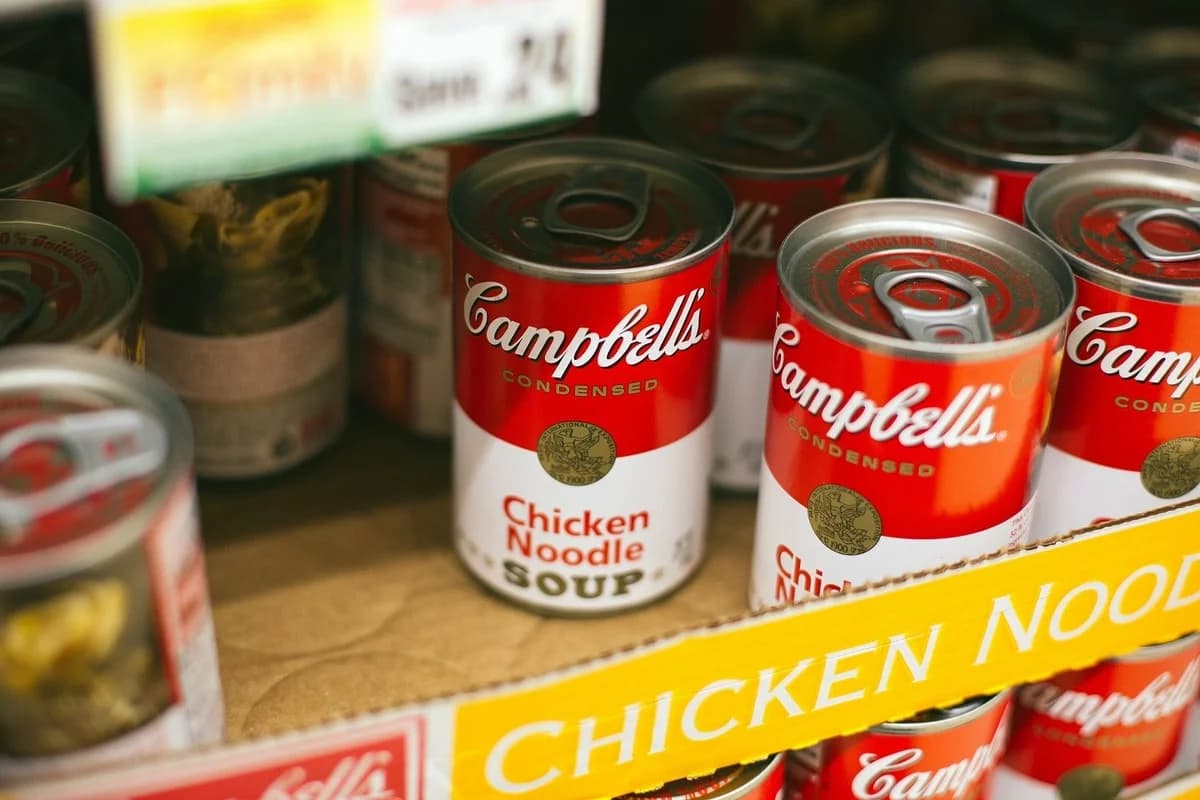
Nothing makes you feel nice and cozy during winter than a good soup. So, why not have some canned soup ready for those chillier days. Whilst it does take more time to cook than packet soup, these are generally more nutritious and tasty than packet soup’s freeze-dried ingredients and powdered flavor. Just make sure the canned soup you're using doesn’t have too much sugar, sodium, saturated fat, or artificial ingredients.
Full meals

As well as soup, you can buy entire meals in a can. These can really help you out in a fix. If we’re honest, the canning process means they don’t always look too appetizing. But, like all other canned food, they’re still nutritious. Although, you need to watch out for meals with high levels of sugar, sodium, and saturated fat, as well as artificial ingredients.
We would actually recommend making a fresh meal using canned ingredients, such as legumes and vegetables. This can save some precious time, is generally tastier, and certainly looks better! But canned meals are decent enough for those who really don’t have much time to cook, or if there’s an emergency. They can provide a somewhat balanced meal with minimum effort.
List of Canned Goods
If you’re keen to make canned food part of your well-stocked pantry, feel free to use our . By all means, take off anything you don’t like, and add some of your favorite canned food that we haven’t listed.
Canned Food Pantry Shopping List
Fish
Tomatoes Coconut Milk Baked beans Red kidney beans Chickpeas |
Lentils
Soup Full meals |

Canned Food is Good For You! Here’s Why.
February is National Canned Food Month in the USA. Also, maverick UK cook, Jack Monroe, is releasing a cookbook featuring only recipes using canned items this year: . But are canned goods healthy, and should you be using more of them?
Overview

Fresher means healthier, right? Fresh food has long been viewed as the pinnacle of good eating. But, even though it might be shocking to hear, it’s not always the case.
More and more research being done shows that other methods of storing and selling food mean that alternatives such as frozen and canned are generally nutritionally not worse than their fresh counterparts.
So, let us take you through what canned goods you should be buying and why. But also, when you should avoid them.
History of Canned Items

Canning food is a practice that has been around for longer than you think. In fact, canned items first appeared over 200 years ago. In 1811, an Englishman named Bryan Donkin bought a patent of Frenchman, Philippe Girard. Donkin made some adjustments to make Girard’s idea into something able to be produced on a large scale. After gaining approval from the British gentry in 1813, Donkin went on to provide canned food products for the British navy and set up the first canning factory in the world in Bermondsey, London.
And the rest, as they say, is history. To gain an in-depth insight into the history of canned goods, the BBC has a on canned items’ history.
How Canned Goods Are Made

To be canned, food is prepared (cut, chopped, or even cooked) and then sealed in an airtight can. This is treated under steam pressure at an incredibly high temperature (116-121°c / 240-250°f). This ensures that the food is completely sterile, as this process destroys all microorganisms. This means it’s safe to eat and won’t decay quickly.
4 Major Benefits of Canned Food

Price - cans do generally tend to be cheaper than fresh food
Range - you can find some food in cans that you wouldn’t find fresh in some supermarkets, like artichoke hearts
Sustainability - plastic got a bad rap (and rightly so) during 2018. It’s also made us think more generally about how we package food and what we waste. Whilst canned food might seem like a lot of potential waste, the fact is that cans are recyclable. Most cans these days are made from recycled steel, which can be recycled again. Labels can also go straight into your paper recycling pile.
Canned items can also help combat unnecessary food waste. As the food keeps for much longer (see below), and already comes in defined amounts and portions, we’re less likely to throw away what we don’t use because it’s gone bad. Any unused cans can be used a long time down the line.
But this, of course, is down to you. They won’t get recycled if you throw them straight into the general garbage. If you do this, they’ll just sit in a landfill whilst they slowly decompose, which takes about 50 years.
Storage - Perhaps the best thing about canned goods is that they keep for ages. Whilst they do all come with a use by date on them, it’s generally safe to use them well after this date (albeit at your own risk). For example, on the BBC’s “Made in the Factory” program, people opened canned food that was 100 years old, and it was still perfectly fresh and good to eat! However, this will only be the case if the can is in perfect condition, and there isn’t any damage to it.
Canned Produce vs Fresh

The mantra for many years has been, “fresh is best”. But canned produce is here to upset that.
Research has shown that the nutrient values of canned vegetables and fruit are very similar. Indeed, the levels of fat-soluble minerals, and vitamins (like A, D, E and K), are the same. This is because canned goods are produced whilst the food is at its peak freshness. Often canning plants can be found very close to farms, ports, and producers so the food doesn’t lose much of its freshness before the canning process begins. Fresh produce, however, travels great distances to your supermarket shelf. Sometimes they travel hundreds, even thousands of miles. With each moment on the road, it loses more and more nutritional value.
The only difference is the level of vitamin C. With any piece of produce, the levels of vitamin C start to decrease as soon as you start to prepare it, and that includes during the canning process. However, even though fresh produce has more vitamin C whilst whole and untouched, you do end up losing some of it when preparing and cooking it yourself. You lose even more if you’re using produce that you’ve already prepared and stored for a while. So, the levels might not be that much different once you’ve prepared and cooked food yourself.
Furthermore, the canning process can actually increase some antioxidants in some food. For example, the levels of lycopene in tomatoes are actually higher in canned form than in fresh!
Canned Legumes vs Dried

If you’re asking, “are canned beans healthy?” The answer is, yes!
Much like fresh produce, canned legumes are just as nutritious as they are dried. But the biggest advantage the canned stuff has over the dried version is the convenience.
Many dried legumes take a while to cook. Some even need to be left to soak for several hours, or even overnight, before cooking. This means you need to do a good deal of planning if you’re going to use them. Whereas, because canned legumes have already been cooked or part-cooked, you can pop them straight into your dish at a late stage to simply warm them up or finish cooking them.
However, this convenience does come at a price. It’s one of the few times canned items are more expensive. Canned legumes can cost up to 3 times more in weight than their dried counterpart.
Canned Soup vs Packet

Eating (drinking?) soup is a very comforting sensation, especially during colder months. Like most other food, soup can also come canned.
However, canned soup is not as clear a winner as its main competitor: packet soup. For starters, canned soup takes more time to make as the contents need to be emptied and heated. Packet soups just need hot water from the kettle and it’s ready to consume. Furthermore, packet soup also has a very long shelf life, much like canned, but tend to take up a lot less space.
Canned soup is also not great for portion control. 1 can of soup usually contains 2 portions: not 1 like some people think. This means you could be slurping down twice as much as you should. Packet soups can (but not always) come in single portions to help you control your intake.
But overall, canned soup is generally more nutritious. Packet soup often freeze-dry any vegetables and meat that comes with it, meaning a lot of its nutrients are lost (although some are regained when added back to water). Whereas in canned, the contents retain as much goodness as possible. This also generally makes canned soup taste better, although there are certainly exceptions.
Beware. Both varieties have a tendency to add extra sugar and salt/sodium. Always take a good look at the label before you purchase either varieties. Of course, the best way to avoid these extra nasty ingredients is to make even healthier and tastier homemade soup!
Canned Fish vs Fresh

Produce and legumes aren’t the only things that come canned: fish does too. We’re not just talking about tuna, either. A whole range of fish comes in cans, some in oil, and some even already marinated in sauce.
Just like everything else, the nutrients within canned fish don’t differ from fresh. The canning process can also make them a better source of calcium over fresh fish. This is because the process softens any bones, making them edible. It also comes with the added convenience of not needing much preparation or needing to store it in the fridge or freezer to make sure it doesn’t go off quickly.
What’s more, if you opt for canned fish in oil, this helps preserve even more of the omega 3 that is inherent in fish. Many recommend we eat two portions a week of fish, one of which should be oily because of their omega 3 levels. The downside is that using fish canned in oil will mean consuming more calories than those canned in water. Yet, the benefits of increasing your omega 3 intake may well be worth it.
When to Avoid Canned Items

Whilst canned goods are as good as most fresh food, there are some instances where you should avoid them.
The can is dented - if there is a dent in the can, it’s best not to buy it. This is because when the outside becomes dented, there’s a chance it creates a microscopic hole which will allow air to enter the can. When this happens, the contents will start to decay and the shelf-life greatly reduced.
If there’s over 3g of saturated fat per portion - many healthy guidelines say we should be cutting down on our saturated fat intake. This helps us avoid health issues like heart disease. If a serving of anything that comes in a can has more than 3g of this, then it should be avoided.
If there is over 300mg of sodium per portion - salt is not only used as a flavor enhancer but also as a preservative. Sometimes this can be added during the canning process. High levels of salt and sodium intake are linked to high blood pressure and hypertension. Look for canned goods labeled as “low sodium” to be extra sure you’re not overloading on salt. With legumes, giving them a proper wash before using can greatly reduce the amount of salt and sodium in them, too.
Anything with added sugar - sugar has started to get as much scrutiny by health professionals as saturated fat and sodium these days. Too much sugar in a diet can cause type 2 diabetes and is linked with obesity. Therefore, as tasty as fruit in syrup might sound, it’s probably best to avoid putting these onto your canned food list.
Too many strange ingredients - salt is not the only preservative that goes into our food. Manufacturers will also add a lot of non-organic ones. They also like to add a lot of non-natural coloring and flavoring in too. So, if there are any, or too many, ingredients that you’re not aware of, find a more natural alternative. These ingredients are often long complicated chemical names, and “E-numbers”.
Highly processed canned food - not everything that comes in a can is good. Highly processed meat, such as corned beef or spam, can contain a lot of salt and sodium. It is also generally advised to avoid processed meat as this is also linked to cancer as well as heart disease.
Yes, we can(ned)!

So, there are many reasons to start buying more canned food. It’s not just convenience, price, and shelf-life that makes them great: they can be just as good for us as fresh food. However, buyers should still be wary that not all that glitters is gold, and neither is every type of canned goods good. But more often than not, you’ll be surprised at how much canned items are actually great for your health.

Burns Night Shopping List for a Great Burns Supper
Every year a special dinner is put on by Scots to celebrate the memory of one of their greatest poets, Robert Burns: also known affectionately as Robbie Burns. Every January, Burns Night is a celebration held in his honor across Scotland and around the world by people of Scottish descent. If you want to host your own Burns Night supper, or simply want to discover Scottish cuisine, then look no further than our Burns Night shopping list template, which you can even download and print out for free.
Overview
But what is Burns Night? Well, it’s an evening of traditional Scottish food accompanied by ceremony and recitations of Burns’ work.

Robert Burns is perhaps one of Scotland’s most influential poets and a key figure in the romantic arts movement. Born in Alloway, Scotland, in 1759, he wrote poems, epithets, and even songs. Even if you can’t think of one of his works off the top of your head, it’s highly likely you’ll have come across his work before. “Auld Lang Syne” is a musical setting of one of his poems which is sung at midnight on New Year’s Eve. John Steinbeck's unforgettable novel Of Mice and Men takes its title from a line of Burns’ poem, To a Mouse:
“The best laid schemes o' mice an' men / Gang aft agley (often go wrong)”
But before we launch into the shopping list itself so you can host your own Robbie Burns day supper, here are some FAQs. Of course, you can skip the guide and go straight to the if you wish.
Burns Night FAQ

When is Burns Night?
25 January. The date marks the poet’s birthday.
What’s on the Burns Night menu?
Usually it’s a starter of cock-a-leekie soup (made of chicken, leeks, and grains), a main of haggis (a dish made with sheep’s offal) and neeps and tatties (a mash made of parsnips and potatoes), followed by a dessert of cranachan (a dessert made of oats, cream, raspberries, and whiskey).
However, the starters and dessert can vary. But the haggis and neeps and tatties are an ever-present tradition.
You mentioned a Burns Supper ceremony: What does it involve?
The BBC has a of the ceremony. Of course, it’s up to you how much you adhere to this. The keystone of the ceremony is the “Piping in of the Haggis” where bagpipe music is played whilst the haggis is brought into the dining room. This is immediately followed by the equally essential reading of Burns’ own poem, “Address to a Haggis”, whilst it’s being cut.
Be warned if you’re planning to recite this. It’s written in almost equal parts a dialect of Scots Gaelic and English and might be difficult for people to get their tongue around.
What if I don’t like the ingredients in Haggis?

Haggis isn’t the most pleasant sounding dish. It’s made up of a sheep’s heart, lungs, and liver, mixed with oats, spices, and suet (animal fat), and then cooked inside the animal’s stomach.
We promise you it’s an incredibly hearty, filling, and above all, tasty dish. If you’re a fan of black pudding (a traditional British sausage made of pig’s blood, spices, and oats), then you’re going to love haggis which has a similar taste and texture.
If we still haven’t managed to convince you, you might want to try a vegetarian haggis or replace the centerpiece with salmon: a fish that is native to and abundant in Scotland. Alternatively, you can check out many of the recipes over at .
But it’s Veganuary and Dry January! What can I do?
Don’t worry, you can still celebrate Burns night and keep faithful to your vows. For the cock-a-leekie soup, you can make your own and simply leave out the chicken or replace it with tofu or meat alternative.
For the main course, there are ranges of vegetarian haggis that may be also suitable for vegans depending on how strict you are. But the best thing to do is make one yourself. Essentially, you replace the meat with lentils or other legumes, but still keep the oats and the spices that give it its distinct flavor.
For the cranachan, you can use chilled coconut cream instead of dairy cream.
As for staying alcohol-free, the whiskey in the cranachan can be left out, or replaced with a fruit juice such as orange or apple.
Burns Night Shopping List Template
Without further ado, we give you your shopping list template which you can for free. Please be aware that the ingredients below each dish are if you wish to make your own versions instead of buying them pre-made. Because of this, some ingredients might be absent depending on the recipe you’re using, so feel free to adjust these accordingly.
Burns Night Shopping List
Starter
|
Main
|
