Shopping Guides
Become a super shopper and enhance your buying power with extraordinary shopping tips inside our shopping guides.
Shopping is actually trickier than your think. Supermarkets use sneaky psychological tricks to make you spend more, and there are even problems that are unique to men who don’t regularly do the shopping!
So, why not swot up on these shopping guides and arm yourself with your own set of shopping tricks. These will enable you to shop smart, saving money and time.
Do you know the best way to store milk? Have you ever wondered why there are no windows in supermarkets? What can you do to help you make better decisions at the grocery store? How can you do your shopping during Halloween if you hate the holiday?
Our shopping guides will let you know what to buy and how to buy it, as well containing plenty of other interesting and helpful pieces of information.
How To Store Tomatoes
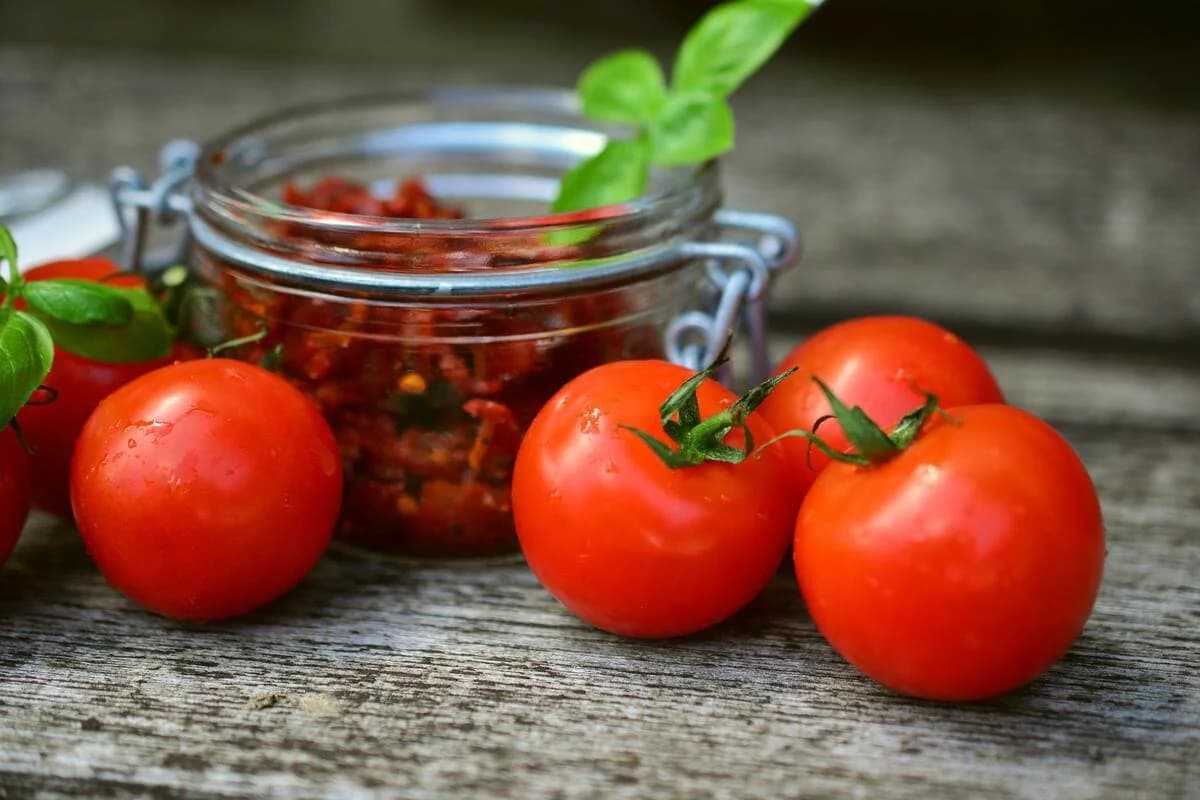
You say tom-ay-to. I say tom-ah-to. Who cares! They’re delicious. Whilst most of us will probably buy the more often than not, there’s still something great about taking the time to make a homemade tomato sauce from fresh tomatoes, or slicing up some nice big juicy ones to put straight into your salad. Regardless of how you want to use them, you should still beef up your knowledge about how to store tomatoes to get the most out of them.
How to Store Tomatoes
Can tomatoes be kept on the countertop or in the pantry?

Unripe - the countertop at room temperature or a cooler pantry is the best place to ripen your tomatoes. Unripe tomatoes are usually green or have patches of green skin on them. They will also be hard when lightly squeezed.
To ripen naturally, first remove any stalks or stems. Then, rest the tomatoes “scar” side down. Removing the stems stops moisture escaping via the stem. Storing them upside down helps to prevent air and extra moisture entering the tomato via the scar which would cause mold to grow and make them go bad.
If you want to ripen them quickly, place them in a breathable bag. Ideally, this will be a paper bag. But a plastic bag with some holes punched in it will suffice. This will trap ethylene gas that tomatoes produce whilst they ripen. This will then get reabsorbed to make them ripen quicker.
You can also store tomatoes in a paper bag with other ethylene-producing produce such as or bananas.
Ripe - if ripe, tomatoes are best eaten as soon as possible, or stored in the fridge (see below)
Can tomatoes be kept in the refrigerator?

Unripe - unripe tomatoes should be stored on the countertop or in the pantry (see above). This is because putting them in the fridge significantly slows down the ripening process. In some cases, the ripening process will be stopped all-together, meaning the tomatoes will never become ripe.
Ripe - if you have ripe tomatoes that you are unable to use immediately, you should put them in the fridge. This will significantly slow down or even halt the ripening process, keeping them from going bad too quickly.
Some advice says that you should take refrigerated tomatoes out of the fridge and place them on the counter for 24 hours before you wish to use them. This will help them regain some flavor lost during the refrigeration process.
Can tomatoes be kept in the freezer?

Unripe - the freezer is not a good place for storing tomatoes that are unripe. They are best stored on the countertop or in the pantry (see above).
Ripe - if you have a lot of ripe tomatoes that you aren’t going to use for a while, you can freeze them. To do this, first, wash and pat them dry. Then, place them on a baking sheet, making sure they don’t touch each other, before putting them into the freezer. Once frozen, transfer to a freezer bag or container.
Because the freezing process damages the cells, the tomatoes will be soft when thawed. This means that they will only be good for cooking with. They will not be good to use or eaten fresh. However, the freezing process does loosen the skin, making them much easier to peel.
How long do tomatoes last?
| Countertop or pantry | Refrigerator | Freezer | |
| Unripe tomatoes expire in... | 3-7 days | - | - |
| Ripe tomatoes expire in... | - | 1-2 weeks | 2-3 months |
How to Tell When Tomatoes Have Gone Bad
Look - the most reliable sign of whether a tomato has gone bad is mold. This mold will look like dark green or black spots on the skin of the tomato, as well as a fuzzier white kind.

If the skin shows sign of wrinkling, it has also gone bad.
Bad tomatoes also tend to leak fluid. If you pick up a tomato and notice that there is fluid underneath it, then it has gone bad.
Feel - if a tomato is soft or mushy when given a light squeeze, it has gone bad.
Smell - if you find that a tomato is producing a bitter or putrid smell, then it has gone bad.
Premade Master Grocery List Template
Have you ever wondered how your shopping would turn out if you were better prepared? It’ll probably have fewer missing items and not as many unnecessary additions. But that’s what master grocery list is for. It will give you better control over your grocery shopping, helping you spend less and save more. But is there anything super special or secret about a master grocery list? Not really. It’s nothing more than a premade grocery list in which products are arranged by category. You can make one yourself, or use our free printable template.
What are the categories for?

Shopping gets much easier when you know the shop. You know directly where to go and in what order pick up products. To help you do this, you should have all the products on your grocery list grouped in thematic order. By doing this, you won’t find yourself running around the shop because your items are in an unsorted jumble.
If you’re a bit worried about how to categorize your list, don’t worry. It is simply arranging your shopping items into the supermarket aisles you would expect to find them in. Bagels will be under “bakery”, chickpeas will be found in the “canned food” aisles, and ice cream in the “freezer” section. Yes, it’s as straightforward as that! It’s worth trying because using categories will make your time at the grocery store much more effective. If you know where to go, and everything in each category can be picked up at once, you’ll get things done faster and you will be able to get home quicker.
How does a master grocery list template affect meal planning?
Some people like having everything under control. Feeling in control is a lovely little side effect of being prepared. Making and using a master grocery list is part of that preparedness. Did you know that being prepared can even have ? As if you needed any more reasons to make that master grocery list!
Being prepared and in control is important, especially for people on specific diets. Here, there’s no place for improvisation. Every meal must be planned meticulously. If not, you just won’t have the products necessary to prepare you super specific meal.
Even if you’re not on a specific diet, you can use a master grocery list to help you stay healthy. Try this
How do you make one?

Sit down for a little bit and think. What do you really need? Then start to write out all these items. If you find your list a bit too long and unwieldy, here are some you might find useful.
Next, think about how you’re going to make and keep this master grocery list. If you are a tech-savvy person, consider using a grocery list app. Some of the apps available let you dictate entire lists. Other available functions include the ability to share your lists with your family and friends, choose items from extensive grocery databases, or even offer useful culinary tips, information about special offers in supermarkets, and tasty recipes.
Using pen and paper to create your master grocery lists is just as good, especially if you use these great tips about how to .
If you are struggling for ideas about what to put onto your list and how to format it, you can use our free premade master grocery list template below.
Your premade master grocery list template
Dairy
Grains
Fruit
Meat
Snacks:
Pets
|
Vegetables
Drinks
Seasoning
Personal Care
|


College Grocery List for 10 Quick and Cheap Meal Ideas
Some say your college years are the best of your life. The reality is that, whilst they’re super fun, they can also be super hard on your funds. Whether you’re a star frathouse quarterback, the university’s most cheery cheerleader, or an introvert gamer geek, you’re going to have to feed yourself. To do this, you’ll need a college grocery list that keeps you full and fed without breaking the bank.
Food for Thought

Feeding yourself at college can be tricky. If you’re not in a dormitory with a meal plan, you’re going to have to feed and fend for yourself. It can be even trickier if you’re used to mom and dad cooking for you for the last 18 years of your life.
Don’t worry. You’ve got this. However, whether you’re an iron chef or a novice with a knife, there are three things that every student grocery list needs to be:
- Cheap
- Quick
- Filling
Why?
Because you may find your funds quite limited. Yes, you’re gonna feel rich when that loan installment hits your bank account, but you’ll be surprised at just how much you’ll fritter away without realizing and how little you’ll have by the end of the semester. It’s best to be frugal from day one and learn to build an effective .

But why also quick and filling? Well, college days are long and full of learning. You’re simply not going to have the time to rustle up a massive “piece de resistance” every breakfast, lunch, and dinner. But then, if you’re not eating right, you’re going to be finding yourself tired, distracted, and unmotivated. This won’t be at all conducive to getting any effective learning done. Lectures can be challenging enough for college students to stay awake in without being hungry and fatigued!
So, let us take you through some questions you might have about building a brilliant grocery list for college students, then provide you with 10 great meal ideas to get you started. Afterwards, you’ll graduate with a free printable grocery list template. However, you can skip straight to the college shopping list if you wish.
Student Grocery List FAQs
How much should I budget for groceries?

It’s very difficult to give a general figure. Your budget is very dependent on where you’re living and your dietary requirements. A student in studying in New York or London should be prepared to spend more on groceries than if studying in Bloomington or Sheffield. Likewise, if you’re gluten intolerant you might have to put aside more money for more expensive gluten-free products. Conversely, vegetarianism is generally cheaper than eating meat.
The best thing to do is look at your college’s advice about how much you should budget for groceries. They’ll have the best information about what things cost locally. Then, adjust this to match your dietary requirements, and work from there.
Is being vegetarian really cheaper?

Generally speaking, yes.
Meat is more expensive than fruit and vegetables. In recent years, meat prices have increased more than produce.
However, that doesn’t mean vegetarianism is always cheaper. It all depends on how you shop. If you’re going to buy organic produce the price will go up. Likewise, you can bring the price of your shopping down by buying canned food, which is just but is mostly much cheaper.
Vegetarian meals can be really good for being cheap, quick, and filling. By doing vegetarianism right, you can make sure you get plenty of fiber from grains to keep you full and focused, as well as even more fiber and protein from legumes. If you’re curious about switching to vegetarianism, you might want to take a look at our .
Eating vegetarian meals can certainly save you more than a few bucks. If you simply cannot live without meat, you should consider . The idea here is that you significantly reduce your meat consumption rather than eliminate it altogether. This could be kinder on your pocket without denying you your bacon fix.
Is it better to cook for 1?

No.
Cooking for one takes nearly as much time than cooking for 4 or more. So, in order to save you time, what you could do is follow a recipe for 4+ people, and then freeze or refrigerate the remaining portions. This means that, for the next few days, all you need to do is defrost and/or warm something up. So, make sure you have plenty of food containers to do this.
But some meals are much better for freezing than others. For example, pasta dishes aren’t good for freezing as cooked pasta itself becomes very mushy once thawed out.
Is there a good time of the day to shop?

Yes, but also no.
When you first start shopping at a supermarket, you could try and notice what time items are being reduced. This generally tends to be towards the end of the day, so shopping then is a good bet.
But just because something has been reduced doesn’t make it the cheapest option. Buying your usual item at full price might still cheaper than a reduced premium item. This is definitely the case when it turns out that the reduction is a matter of cents/pence rather than dollars/pounds. The bright red or yellow sticker just makes you “think” it’s a steal.
Also, buying things randomly from the reduced section isn’t the best way to plan your meals. You might have to buy extra ingredients to prepare it. Worse still, it simply sits and goes bad in your fridge or gets forgotten about in your freezer.
You can find some bargains on some basics, like bread, from time to time. But it’s still generally better to come up with a budgeted meal plan and grocery list and stick to it. Therefore, just going to the store when you’re able to rather than planning your trip around reductions will be a better use of your time.
10 Meal Ideas List for College

Now some questions have been answered, we’ll take you through 10 decent and delicious dishes that we feel should be staples on your grocery list.
#1 Rev’d Up Ramen
Ramen is the DNA of student diets. It’s cheap, quick, easy, but not very filling. However, you can make them a masterful meal with just a few extra ingredients. Whilst cooking, you can simply:
- Add a chopped scallion/spring onion
- Add some spinach or kale
- Crack in an egg and poach it whilst the ramen cooks
- Add grilled chicken
- Beef up the protein and fiber count with a serving of beans
- Mix in a spoonful of peanut butter
- Drop in a handful of frozen chopped vegetables
Doing any or all of the above will make your ramen not just tastier, but also a much better-balanced meal. There are plenty of other wild instant ramen recipes you can find online too.
#2 Beans on Toast

This has been a British student staple for decades. So, if something works, why change it?
Baked beans are made with “haricot verts”. These are legumes. Legumes are high in fiber and protein, both of which will keep you full and healthy. They’re also quite cheap to buy.
Score.
But that isn’t to say beans on toast can’t be improved. If you’re finding your beans a little bland, simply “jus” up the flavor by adding some herbs and spices. Also, you can also make it even more filling by using wholewheat/wholemeal bread which has more fiber than white bread. Oh, and the traditional sprinkling of grated cheese on top shouldn’t go amiss.
#3 Homemade Tomato Pasta

It’s a simple yet filling and wholesome dish. All you need to do is cook some pasta, stir in some sauce, and “Bam!” You’ve got yourself a meal.
But if you’re using tomato sauce from a jar, you’re doing it all wrong. You can make your own sauce for a fraction of the price. Your own homemade tomato sauce will also have less added sugar and sodium than the one you pick off the shelf.
Even those shy of kitchens shouldn’t find this too difficult to make. Simply:
- Chop an onion
- Brown in a pan with some cooking oil
- Add some garlic
- Empty a can of chopped tomatoes
- Season with black pepper, salt, basil, and oregano
- Let simmer whilst you cook your pasta (approx. 4 cups/1.25lbs/500g)
- Combine
The above recipe will make about 2-4 servings depending on how hungry you are. You can make this meal even more filling by using wholegrain/wholewheat pasta which has more fiber than plain pasta. You can also add beans or diced chicken to give it a protein boost.
#4 Augmented Overnight Oats

Let start talking about breakfast for a bit. Oatmeal is your friend. It’s high in fiber, and also cheap. It can also be quick, easy, and very filling if you make it right.
Instant oatmeal tends to be full of added sugar. It’s also pricey. But standard oatmeal takes time to make in the morning. Warming it up with milk or water in a pan or in the microwave is time-consuming.
So, why not make your own overnight oats?
Overnight oats simply means soaking the oatmeal overnight so that all the liquid has been absorbed making the oats edible. Many recipes for overnight oats involve adding milk, nuts, and dried fruit at their simplest. Just adding these ingredients will be enough to fill you with fiber and energy in the mornings. All you have to do in the morning is fetch your oats and eat them, making for an incredibly quick breakfast.
#5 Super Sandwiches

It’s odd that ramen and beans on toast are considered student staples when sandwiches are a real savior. They’re cheap, quick to make, and can be quite filling if made right. Of course, you’re welcome to make any sandwich you desire: club, peanut butter and jelly, BLT.
The list goes on. The best advice to make these as filling as possible is to use wholewheat/wholemeal bread to get that extra tummy-stuffing fiber. Buying some premade sandwich spread might push the cost up a little, but will certainly save you time when making them.
#6 Sumptuous Soup

Don’t underestimate soup. It may seem scary to make and not the heartiest of meals. But soup can be quite the opposite. The basis for any soup is “vegetables + liquid”. Usually, it involves frying some onions, adding the veg, and then boiling until soft in stock before blending. You can even add some cream to give it a bit more weight and flavor. It’s not difficult to find easy soup recipes online to start your soup-making adventure with.
Choose vegetables that are high in fiber so a serving of soup keeps you nice and full. You might even consider adding a cup of grains such as rice, or even some legumes to boost the fiber and protein content.
If you are still tentative about making your own, packet soup and canned soup are both good options. The latter requires a bit more time but is generally healthier and tasty than the further. But of course, there are exceptions.
#7 Supercharged Salads

Salads get a bad rap for being boring and not very filling. But this is only the case if you don’t make them properly. Make sure you use plenty of legumes, nuts, seeds, or even some grains to give it a filling fiber and/or protein boost. You can even add some grilled chicken and avocado to up your salad’s protein game even further.
However, the real trick is to get the dressing right. Many dressings, like popular ranch dressing, is usually full of saturated fat and added sugar. The real problem is the added sugar. This makes you crave snacks more, undoing the healthy meal you thought you just had. Therefore, consider making a cheap, easy, and zingy homemade dressing using only 2 ingredients: oil and vinegar. It’ll add flavor and tang without giving you a sugar rush.
#8 Hero’s Couscous

Couscous is incredibly easy to make. All you do is pour some hot water over it and, after a few minutes of soaking, it’s done. Couscous is also high in fiber, which means that you’ll feel nice and full afterwards. Not to mention, buying it plain is also usually quite cheap.
But making a tasty, filling, and nourishing meal out of this does take a bit, but not much more, work.
Firstly, avoid flavored couscous packs. They might be in handy portion sizes and already flavored, but they’re also expensive and contain lots of unnecessary ingredients. It’s really much better and cheaper to make your own.
We recommend using half a stock cube or 1 teaspoon of bullion to each serving of couscous (approx 0.5 cup/3.5oz/100g) dissolved in about 0.5 cup/250ml of water to give it a little extra flavor. Once all the water is absorbed, mix some of the following through it:
- Avocado chunks
- Boiled eggs
- Cherry tomatoes
- Chickpeas
- Grilled chicken
- Pumpkin seeds
- Red kidney beans
- Sunflower seeds
- Sweetcorn
- White beans
#9 Princely Popcorn

Probably the least exciting or surprising on our list, but that doesn’t mean it should be overlooked, especially as a snack. Popcorn, especially microwaveable popcorn, is easy and quick to make. It’s also generally quite low in calories. It’s a snack that’s not going to make you pile on the pounds.
You can even add a little flavor to it by sprinkling some cocoa powder or chili powder over it.
#10 Epic Trail Mix

Nuts! Fruit! Seeds! And sometimes, chocolate chips! There’s a reason why trail mix is such a ubiquitous all-American snack: it’s because it’s great.
Nuts, being legumes, are high in fiber and protein. Seeds are a great source of healthy monounsaturated fat and Omega-3. Dried fruit adds vitamins and sweetness. And chocolate chips are just delicious. As a snack, it triumphantly ticks all three of our student food criteria.
You don’t even need to go out and buy a pricey pre-made mix. Make it yourself by buying the above ingredients, mix, and eat!
Your College Grocery List
Now that you’ve majored in these 10 great meal and snack ideas, we present to you our free printable grocery list for college students. Feel free to add your favorite snacks, or take off anything you don’t like in order to make this grocery list your own.

How to Store Canned Food
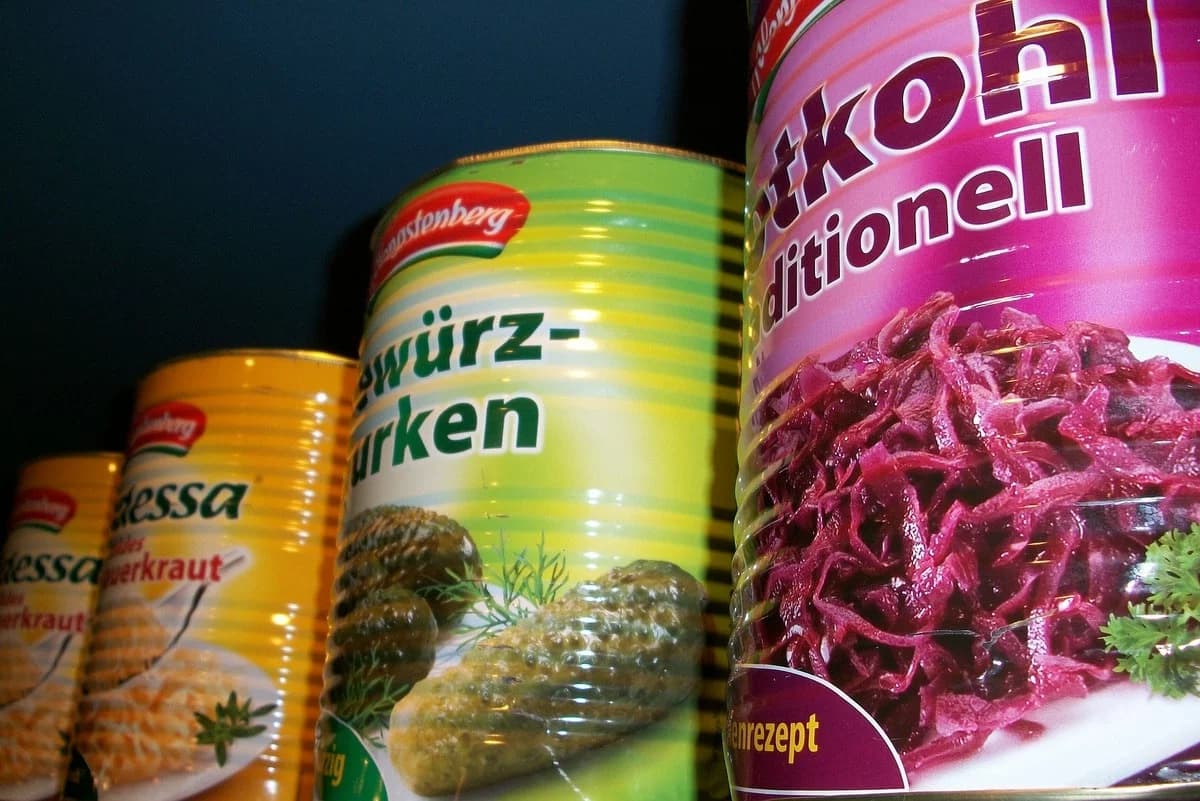
We already extolled the virtues of canned goods and why it can be just . We also gave you a list of . Now we’ll give you the lowdown on how to store canned food. Will you discover that you’re doing something wrong? Or is there a way for you to improve your canned food storage technique?
How to Store Canned Food
Can canned food be kept in the pantry?

Unopened - the pantry, or the pantry space you have in your kitchen, is absolutely the best place for you to store unopened cans. However, that is dependent on the condition of the can prior to storage. Make sure the can has no dents in it. Dents can cause microscopic holes in the can, letting air into the otherwise sealed environment, causing the contents to spoil.
If you find a can with a dent in it, it may still be good to use. Open the contents and check to see if it’s gone bad (see below). If it is still good, use immediately. However, dented cans are not recommended for long term storage.
If you’re unsure about what space in your kitchen would make for a suitable makeshift pantry, it needs to meet the following criteria:
- Cool
- Dry
- Out of direct sunlight
- Unlikely to go below freezing (0c/32f)
Once placed in this optimal canned goods storage environment, you should be able to use them up to, or even past, the printed date on the can.
Opened - once opened, the contents of any can should be emptied and stored in the fridge or freezer (see below)
Can canned food be kept in the refrigerator?

Unopened - there is really no need to keep canned food in the fridge. These are best stored in a pantry (see above).
Opened - if you’re not using a can’s full contents at once, then you need to make sure you store the remaining food safely. One thing you shouldn’t do is put the tin with the leftovers still in it straight into the fridge. However, this advice is not because doing so can make you seriously ill.
Yes, , a potentially fatal disease that many people still link with commercially canned food, is still a possibility. But it is only a likely threat from canning facilities that maintain poor hygiene standards, or home canned food. In the UK, EU, and the USA, food facilities are kept to very high safety and hygiene standards.
The best way to reduce the risk of exposure to botulism is to not only ensure that the canned goods you buy are undamaged (see above) but to also check to see if the contents have gone bad (see below).
The main reason for not storing open cans and their contents directly in the fridge is because some of the can’s coating may be corded by the food making it taste bad. This is particularly the case with food of high acidity, like tomatoes. Also, once opened, leaving the contents exposed to air can make it spoil quicker, putting you at risk from general food poisoning.
Therefore, empty the remaining contents along with any residual water, syrup, or brine, and place in an airtight container or jar. Then, place this at the back of the fridge to keep it extra cool and lasting longer.

Can canned food be kept in the freezer?
Unopened - placing unopened canned food in the freezer is a bad idea. Any liquid in the cans will expand causing them to burst. The pantry really is the best place for them.
Opened - whilst this is possible, it is not generally advised to do so this.
How Long Does Canned Food Last?
| Pantry | Refrigerator | Freezer | |
| Unopened canned food expires in... | up to 3 years after printed “expiry” date* | - | - |
| Opened canned food expires in... | - | 2-4 days | - |
*It is recommended you consume canned food no longer than 1 year after the expiry date. Although, canned goods are likely to still stay good for longer.
How to Tell When Canned Food Has Gone Bad
Look - a very reliable way to know if canned food has gone bad is to look at the can. If the can is bulging, then it’s incredibly likely the contents have gone bad. The bulging is caused by gas that is produced as food rots and mold grows.

When opening, if liquid spits or foams out of the opening, it is very likely to have gone bad.
Lastly, if there is any visible mold on the food inside the can, throw it out.
Smell - canned food that has gone bad will also have developed an unpleasant odor which will release once the can is opened.
Taste - if you suspect the contents to have gone off, we do not recommend tasting. Even tasting a small bit of canned food can put you at risk of contracting botulism. If there are no other signs of spoilage, if the food doesn’t taste as expected, then it’s likely to have gone bad.
How to Store Apples
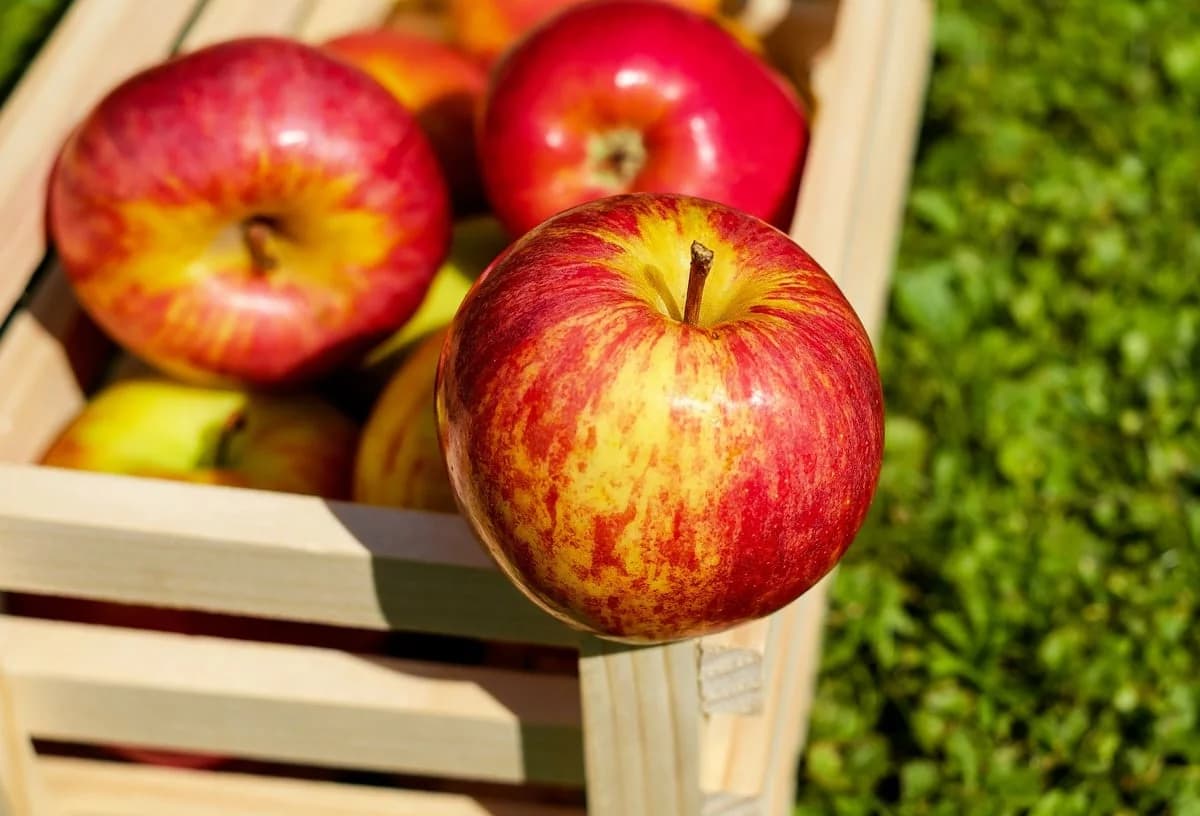
Apples are quite possibly the world’s most famous fruit. An apple is anecdotally responsible for the theory of gravity. One is even the symbol of one of the world’s most successful tech companies. They’re as well-known as they are tasty. In the USA, 2,500 apple varieties are grown. It’s no wonder apple pie is considered “the” American desert. Whilst they’re delicious and full of vitamin C, fiber, and even boron, do you know how to store apples to get the most out of their shelf life?
How to Store Apples
Can apples be kept on the countertop?

Whole apples - they certainly can. But this is only best if you plan on eating your apples within 2-3 days of buying them.
To store, make sure the countertop area is cool and dry. However, you absolutely must not store them close to other fruit and vegetables, especially oranges, bananas, avocados, and potatoes. The ethylene gas produced by these quickens the ripening process and will make them go bad very quickly.
You’ll also want to make sure other apples you store nearby are in good condition. The phrase, “one bad apple spoils the whole bunch” is true in both people and apples. This is because the riper something is, the more ethylene it produces. A bad or overripe apple will quicken the ripening process of other produce around it.
Also, try to make sure the apples don’t touch each other. In places where apples have touched each other, the area develops a soft spot, which can make them go bad quicker.
Another thing to be aware of is that apples tend to take on the flavor and aroma of any strong smelling produce nearby. So, if you don’t like your apples tasting like onions, keep them as far away from these as possible.
Sliced apples - these are best stored in the fridge or freezer (see below)
Pulped apples - these are best stored in the fridge or freezer (see below)
Can apples be kept in the refrigerator?

Whole apples - apples keep perfectly fine in the fridge. Indeed, they keep quite well here for longer than they do on the countertop. This is great if you’ve bought a few more than you can eat in 2-3 days. They can be stored inside or outside a plastic bag. If you’re putting them in a bag, puncture some holes in it to ensure decent air circulation.
Like storing on the countertop, keep them away from other ethylene producing fruit and vegetables. To prevent the skins from touching each other, you can wrap them individually in newspaper or baking parchment. But, as putting them in the fridge slows down any ripening and rotting, this isn’t as imperative.
Furthermore, make sure your fridge is clean. Just like apples can pick up the taste of nearby onions, you definitely don’t want your apples tasting of unclean fridge!
Sliced apples - the trickiest thing about storing apples once they’ve been sliced is to stop them turning brown. The most tried and tested trick is to soak them in lemon juice for 2-3 minutes. Then, put them in a ziplock bag and place inside the fridge. Some people say that salt water, or even citrus-flavored soda, works even better.
However, you should remember that once you start to prepare any fruit or vegetables, their nutrient levels start to decrease rapidly. So, if you’re not going to eat your apples as soon as possible after you’ve sliced them, they’re not going to be as full of nutrients as they would be if you eat them immediately.
Pulped apples - once pulped, these should be placed in a zip-lock bag or a plastic container before being placed in the fridge. You can combine the pulp with some lemon juice to prevent it from going brown.
Can apples be kept in the freezer?

Whole apples - whilst this is possible, it isn’t advised. This is because the freezing process destroys a lot of the apple's cells. This means it’ll be quite soft once thawed. This will make it unsuitable for eating, and also difficult to chop or prepare. You’re better off slicing or pulping apples before freezing them.
Sliced apples - arrange the slices on a baking sheet lined with baking parchment, and then place in the freezer. You can brush some lemon juice over the slices to prevent them from going brown. Make sure your freezer is on a high setting so that smaller ice crystals form within the apples, keeping their structural integrity as much as possible. Once frozen, remove them from the baking sheet and place them inside a plastic container or zip-lock bag to store in the freezer.
Pulped apples - place inside a plastic container or zip-lock bag and then place in the freezer.
Can apples be kept in the pantry?
Whole apples - putting apples in the pantry is more of a long-term storage solution. It’s mainly for those who might have quite a few apple trees in their garden and therefore will be harvesting a lot of apples.
The amount of time you can keep apples in the pantry varies between apple varieties. Thick-skinned apples, such as Golden Delicious, Granny Smith, and Red Delicious, are far more suitable for long-term storage.
First, make sure you pick the best apples to store long-term. Avoid storing apples that are bruised or are a little soft. Not only will these individual apples not last as long, but they may also cause other apples around them to rot quicker. Next, to ensure they don’t touch each other. Wrap them individually in newspaper or baking parchment.
The best way to store them in the pantry is in a shelving unit. Also, you need to make sure the pantry is cool enough (between 0-2c/30-35f) to ensure they last the longest. Make sure the pantry temperature doesn’t dip below freezing as this will significantly damage your apples.
How Long Do Apples last?
| Countertop | Refrigerator | Freezer | Pantry | |
| Whole apples expire in... | 2-3 days | 1-2 months | - | 3-4 months |
| Sliced apples expire in... | - | 24 hours | 3-6 months | - |
| Pulped apples expire in... | - | 24 hours | 3-6 months | - |
How to Tell When Apples Have Gone Bad
Look - an apple has gone bad is that if there is visible mold on it. Another thing you should look for is small holes that are either caused by burrowing insects. Because the hole exposes the flesh inside, it is likely that the inside of the apple has started to go bad, even though the appearance otherwise looks fine.

The skin should also be smooth. If it is crinkly and dull, it means the apple has gone bad.
Make sure you don’t mistake a bruise for a bad apple. Bruises will make the skin in a certain area dark in color, and it will also look like a dent in the apple.
Feel - feel is probably the best signifier of a bad apple. Apples should be firm when squeezed. If it is soft, then it has definitely gone bad.
The apple flesh underneath a bruise will also feel soft. Check to see if it looks like a bruise (see above). If the apple is merely bruised, the flesh should only be soft in the affected area.
Bruised apples are still good to eat. The area around the bruise is still perfectly healthy. Simply cut out the bruised part of the apple, and consume the rest. Some people don’t mind eating the bruised area. If you’ve got a lot of bruised apples that you can’t eat immediately, simply pulp and store them in the fridge or freezer to make an apple pie, crumble, or sauce at a later date.
Your Essential Pantry Shopping List
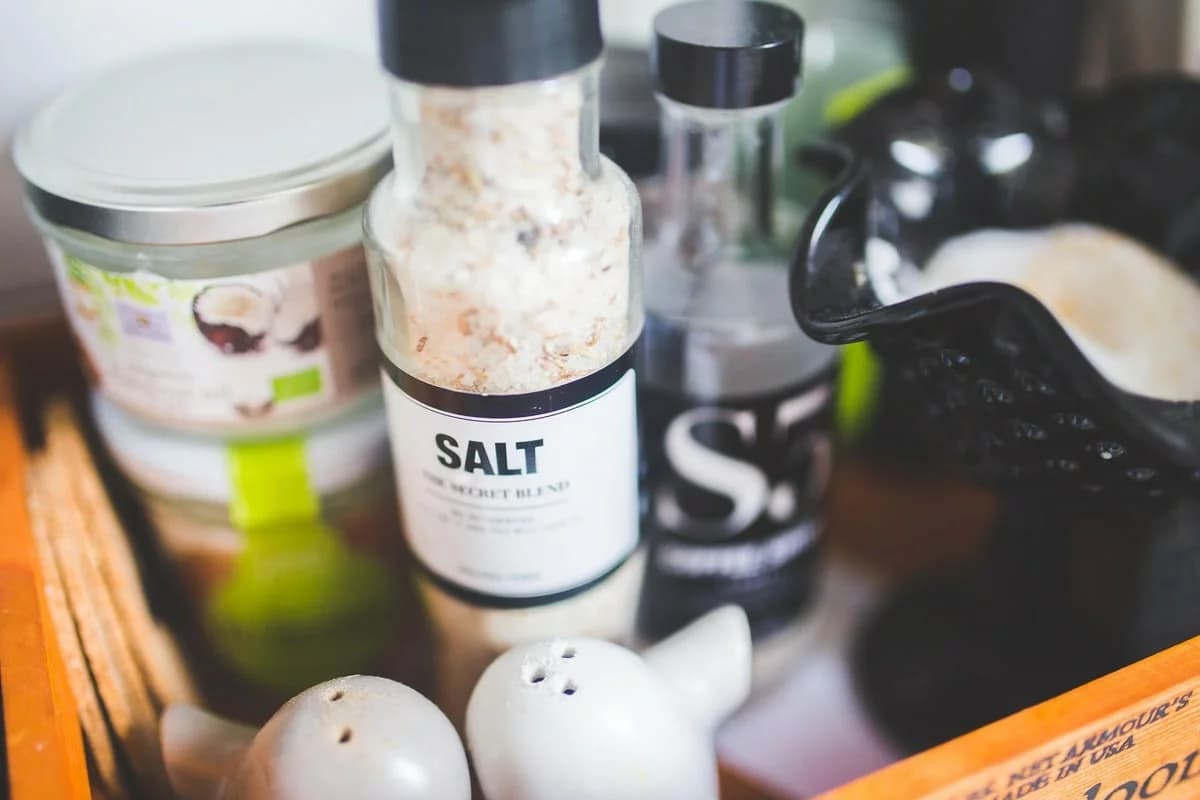
Do you have a pantry? Even if it’s not a separate room like a traditional pantry, you’ll most certainly have an area in your kitchen to store dry goods. It may be a shelf, a cupboard, or even an old Hoosier Cabinet: America’s first commercially produced kitchen pantry storage unit. But have you ever thought about what should be on your pantry shopping list? What should and shouldn’t you store in your pantry?
Daily bread

The word “pantry” comes from the French word for bread (“pain”). Therefore, it’s no surprise that in Medieval times this is where the household’s bread and food were kept. The exception was that meat was stored separately in a larder, and alcohol in a buttery.
Today, we still have pantry spaces to store a variety of kitchen goods. You might not call this space a pantry, but it still functions as one. But with the advent of the refrigerator, we’re putting more and more into these coolboxes that we don’t have to, or shouldn’t.
We’ll answer a few questions you might have about pantries, and then provide you with a list to help you maintain a stocked pantry or pantry space. However, you can skip straight to our printable premade grocery list if you wish.
Pantry FAQs
What should be kept in your pantry?

Canned goods are especially good to have in your pantry and on your pantry shopping list, especially as food in cans can be as fruit varieties. But what other types of food can be stored here? The simple answer is:
- Anything that doesn’t need to be refrigerated immediately
- Dry food
- Unripe fruit and vegetables
- Unopened jars, cans, and cartons
These are general rules without many exceptions. This means that there are more items than you think that can be stored in the pantry. In some cases, the pantry is actually the best place for them.
What shouldn’t I keep in the pantry?

Basically, everything that’s the opposite of the list above:
- Meat
- Dairy
- Ripe fruit and vegetables
- Opened jars, cans, and cartons
The biggest thing to remember is that jars, cans, and cartons shouldn’t be opened when stored in a pantry. For example, leftover canned beans should be emptied into a container and then kept in the fridge, not the pantry.
There are some exceptions. For example, some tomato sauces, although in jars or cartons, may need to be put in the fridge immediately. This is because of the lack of additives in them meaning they may spoil quicker than more processed varieties. Likewise, whilst salted butter can be kept nice and soft in a pantry, unsalted butter should be kept in the fridge. This is because salt acts as a preservative, meaning unsalted butter will go rancid quicker in a pantry.
If you’re unsure about putting something in your pantry, read the label on the packaging. If it says “store in a cool, dry place” then in the pantry it goes.
I don’t have a separate pantry. What type of space can I use?

The space only needs to meet 3 requirements:
- Cool
- Dry
- Out of direct sunlight
Cupboards are ideal pantry spaces. However, if you don’t have enough cupboard space, a shelf in a shady area of your kitchen.
Your pantry shopping list
Below you’ll find our free printable list to help you have a well-stocked pantry. Feel free to add to it and take things off that you don’t buy. It’s by no means an exhaustive list! Furthermore, don’t forget to check out our section for more information about optimally storing some food. Some things in this section are perfect for pantries, such as onions.
