How to store carrots in the fridge for 2 to 3 weeks
Quick answer
-
Fridge
Keeps for 2-3 weeks
Keep carrots in a clean refrigerator at 40°F (4°C) or below, where baby carrots last 4 weeks.
Watch out Throw away carrots that look rotten.
-
Freezer
Keeps for 10-12 months
Blanch the carrots in boiling water or in a microwave oven, chill them rapidly, then freeze them.
Watch out Baby carrots keep 3 months in the freezer.
Carrots last 2 to 3 weeks in the fridge, and baby carrots last 4 weeks. You can freeze carrots for 10 to 12 months if you blanch them first. USDA FoodKeeper lists baby carrots for the pantry at 4 days below 75°F but gives whole carrots no pantry time. A small mold spot can be cut off, with at least 1 inch around and below it.
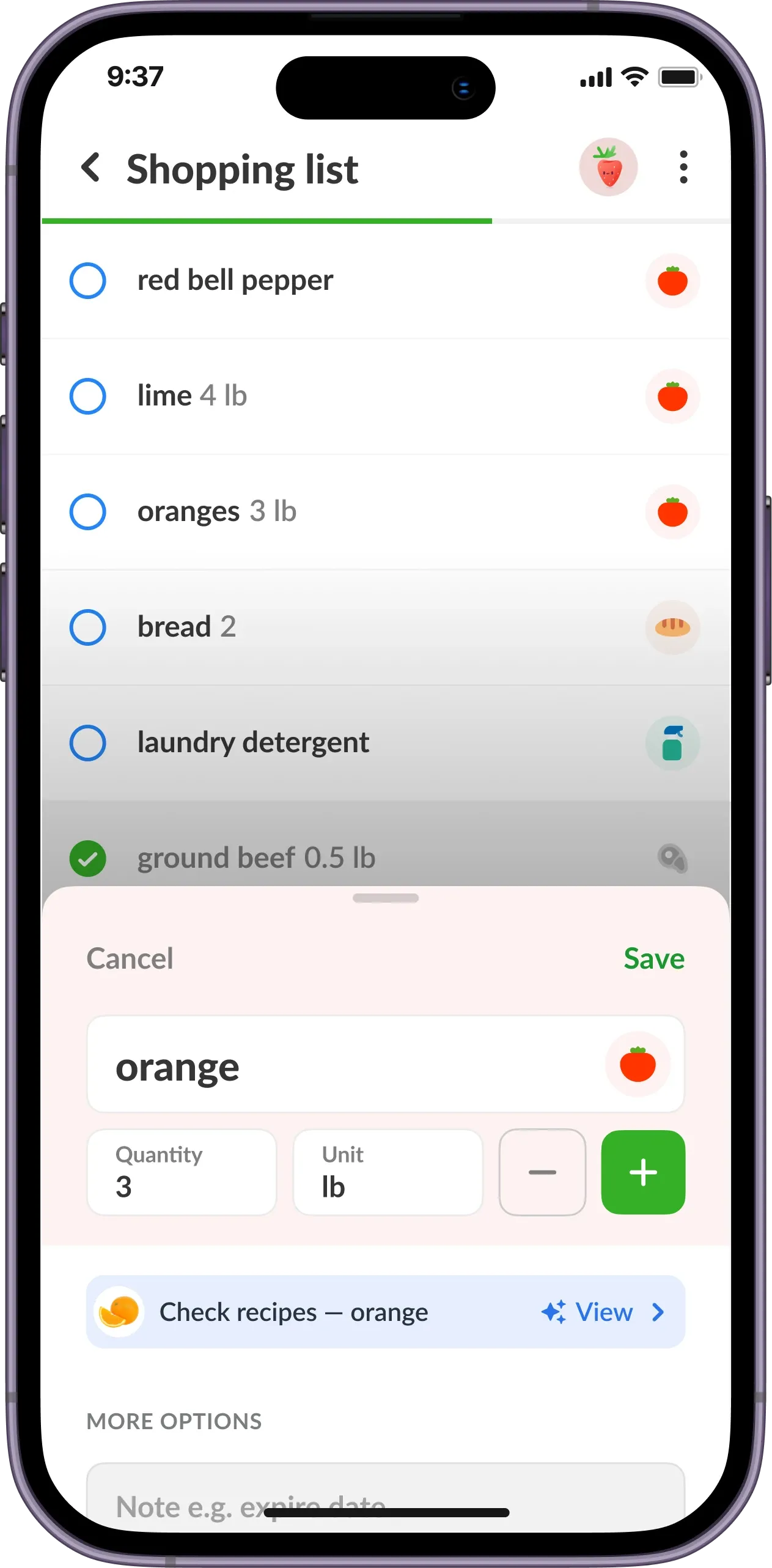
Buying carrots this week?
On a Listonic list, every item gets the amount you need and a note on when to use it by.
- Quantity and unit on every item
- A note like “fridge, use within a week”
- One list shared with everyone at home
Carrots last 2 to 3 weeks in the fridge, according to USDA FoodKeeper, and 10 to 12 months in the freezer if you blanch them first. Baby carrots and fresh squeezed carrot juice have their own times. This guide covers all of them, plus what to do about a small spot of mold.
How to store carrots
Store carrots in a clean refrigerator at 40°F (4°C) or below. The FDA gives that temperature for perishable fresh vegetables, and USDA FoodKeeper lists carrots and parsnips for the fridge at 2 to 3 weeks.
Do carrots need to be refrigerated?
Whole carrots are listed for the fridge, not the pantry. USDA FoodKeeper gives carrots and parsnips 2 to 3 weeks there and no pantry time.
Baby carrots are the exception, with 4 days in the pantry if the temperature stays below 75°F. The FDA also says to refrigerate all produce that is bought pre-cut or packaged.
How long do carrots last in the fridge?
Carrots last 2 to 3 weeks in the fridge, counted from the day you bought them. Baby carrots last 4 weeks.
FoodKeeper lists carrots and parsnips together, so carrots and parsnips get the same times. The table shows what it gives for each food, with “Not listed” where it gives no time.
| Food | Fridge | Freezer | Pantry |
|---|---|---|---|
| Carrots and parsnips | 2 to 3 weeks | 10 to 12 months | Not listed |
| Baby carrots | 4 weeks | 3 months | 4 days, below 75°F |
| Fresh squeezed carrot juice | 6 days | 12 months | Not listed |
How long do baby carrots last in the fridge?
Baby carrots last 4 weeks in the fridge, counted from the day you bought them. FoodKeeper also allows 4 days in the pantry if the temperature stays below 75°F, and 3 months in the freezer.
How long does fresh squeezed carrot juice last?
Fresh squeezed carrot juice lasts 6 days in the fridge and 12 months in the freezer, according to USDA FoodKeeper.
Can you freeze carrots?
Yes. USDA FoodKeeper gives carrots and parsnips 10 to 12 months in the freezer, counted from the day you bought them, and baby carrots 3 months.
Can you freeze raw carrots?
Blanch carrots before you freeze them rather than freezing them raw. The USDA says most vegetables that freeze well need brief, partial cooking before freezing to prevent deterioration, and FoodKeeper’s baby carrot line also says to blanch before freezing.
How to freeze carrots
Blanch the carrots in boiling water or in a microwave oven, then chill them rapidly and freeze them. Blanching means cooking them briefly and only partly.
Can you freeze baby carrots?
Yes, for 3 months. FoodKeeper says to blanch baby carrots before freezing.
Can you freeze shredded carrots?
FoodKeeper has no separate line for shredded carrots, so go by its carrots time, 10 to 12 months in the freezer, counted from the date of purchase.
Blanch the carrots before you freeze them, as you would for whole ones. The USDA’s guidance on freezing says most vegetables that freeze well need this brief, partial cooking, in boiling water or in a microwave oven. Chill them rapidly afterward.
How to tell if carrots are bad
Throw away carrots that look rotten. The FDA also says to cut away damaged or bruised areas before you prepare or eat the carrots.
Can you cut mold off carrots?
Yes, if it’s a small spot. The USDA’s guidance on molds in food says to cut off at least 1 inch around and below the spot on firm vegetables with low moisture content, and it names carrots. Keep the knife out of the mold.
That works because it’s difficult for mold to penetrate dense foods.
How to wash carrots
Rinse carrots under plain running water before you peel or cut them, and rub them gently as you rinse. Then dry them with a clean cloth or paper towel to further reduce bacteria, as the FDA’s tips for cleaning fruits and vegetables advise.
Washing reduces bacteria but doesn’t eliminate them. Wash carrots even if you plan to peel them, so dirt and bacteria aren’t carried from the surface when you peel or cut.
Frequently asked questions
Do carrots go bad?
Yes, they can. USDA FoodKeeper gives carrots 2 to 3 weeks in the fridge, and the FDA says to throw away produce that looks rotten.
How long can carrots stay out of the fridge?
USDA FoodKeeper gives whole carrots no pantry time. It allows baby carrots 4 days in the pantry if the temperature stays below 75°F.
What should you look for when buying carrots?
Choose carrots that aren't bruised or damaged. For pre-cut, bagged, or packaged carrots, the FDA says to choose only items that are refrigerated or surrounded by ice.
Do you need soap or produce wash for carrots?
No. The FDA says to rub carrots gently under plain running water and doesn't recommend soap, detergent, or commercial produce wash. Produce is porous and can absorb them.
Do parsnips keep as long as carrots?
USDA FoodKeeper lists carrots and parsnips on one line, so both get 2 to 3 weeks in the fridge and 10 to 12 months in the freezer.