 Cleaning supplies
Moving is incredibly exciting, especially when it’s into a new apartment.
But it’s easy to forget plenty of important things you don’t notice day to day. Without the right kitchen gear, even making breakfast can be a struggle, and running short on cleaning supplies makes settling in a real challenge.
We looked at how users of the Listonic shopping list app plan a move, and it’s clear that a shopping list for a new apartment is one of the keys to a good start. So what should it include in 2026?
First apartment checklist
What our data says:
- Listonic users add an average of 47 items to their shopping list when planning a move.
- Over 60% of people forget at least one product category when they shop without a list.
- In the home and garden category, Ikea leads Polish shoppers’ lists in 2026 (over 36%), ahead of Leroy Merlin (21%) and Castorama (18%). Read our report.
- Kitchen and bathroom accessories are the most often overlooked categories when furnishing a first apartment.
- Furnishing a new apartment from scratch in Poland costs PLN 60,000 to 120,000 on average, depending on its size and finish.
- Spreading purchases over 3 to 6 months can cut the final cost by 30% to 40% compared with buying everything at once.
What do you need in a new apartment?
In a new apartment, you mainly need a few categories of things: furniture, home appliances, kitchenware and bathroom essentials. The exact list depends on whether the place is completely empty or the previous owners left the key items, like a washing machine, fridge or wardrobes.
Even apartments straight from the developer may already come with the essentials and a fully working bathroom. But what if you have to set up the whole place from scratch?
Whether it’s a five-room residence or a cozy studio, there are some basics every new home needs. They include the bigger furnishings: curtains, beds, sofas and tables.
Smaller things matter just as much: knives, forks, plates and glasses. Listonic users most often name kitchen accessories as the category that’s easiest to forget when moving.
A shopping list for a new apartment will always look similar, because everyone needs a place to sleep and a comfortable spot to eat. Keep it with you when you’re browsing stores so you don’t forget anything important.
How can you furnish a new place for less?
You can furnish a new place for less with a few proven strategies: spreading purchases over time, watching for seasonal sales and considering secondhand furniture.
Keep in mind, though, that for now it’s just a building with bare walls, and it’s meant to become a fully working home. Here are a few tips that, based on our users’ experience, really help cut costs in 2026.
Look for deals
Following genuine deals is one of the simplest ways to cut the cost of furnishing an apartment. It sounds obvious, but these days lots of stores lure you in with slogans about special prices that aren’t actually discounted.
So it’s worth browsing their offers ahead of time to catch the moment when good deals really show up.
Our data shows that Listonic users saved the most on furnishing an apartment during seasonal sales, especially after New Year’s and in August.
You don’t have to buy everything at once
Spreading purchases over time is an effective strategy that lets you avoid one big expense and furnish your apartment at your own pace over several months. The decision to buy a home often comes after many months of planning. Even at that stage, a shopping list is a huge help.
You can pick up individual items whenever you’re out shopping, so putting together, say, your kitchen essentials won’t feel like such a burden.
A full dinnerware set and a large set of silverware can cost more than you’d think. Building them up gradually certainly won’t strain your budget as drastically.
We found that users who spread their shopping over 3 to 6 months spent less in total than those who bought everything at once, often on impulse and without comparing prices.
The first evening, in the order you’ll need it
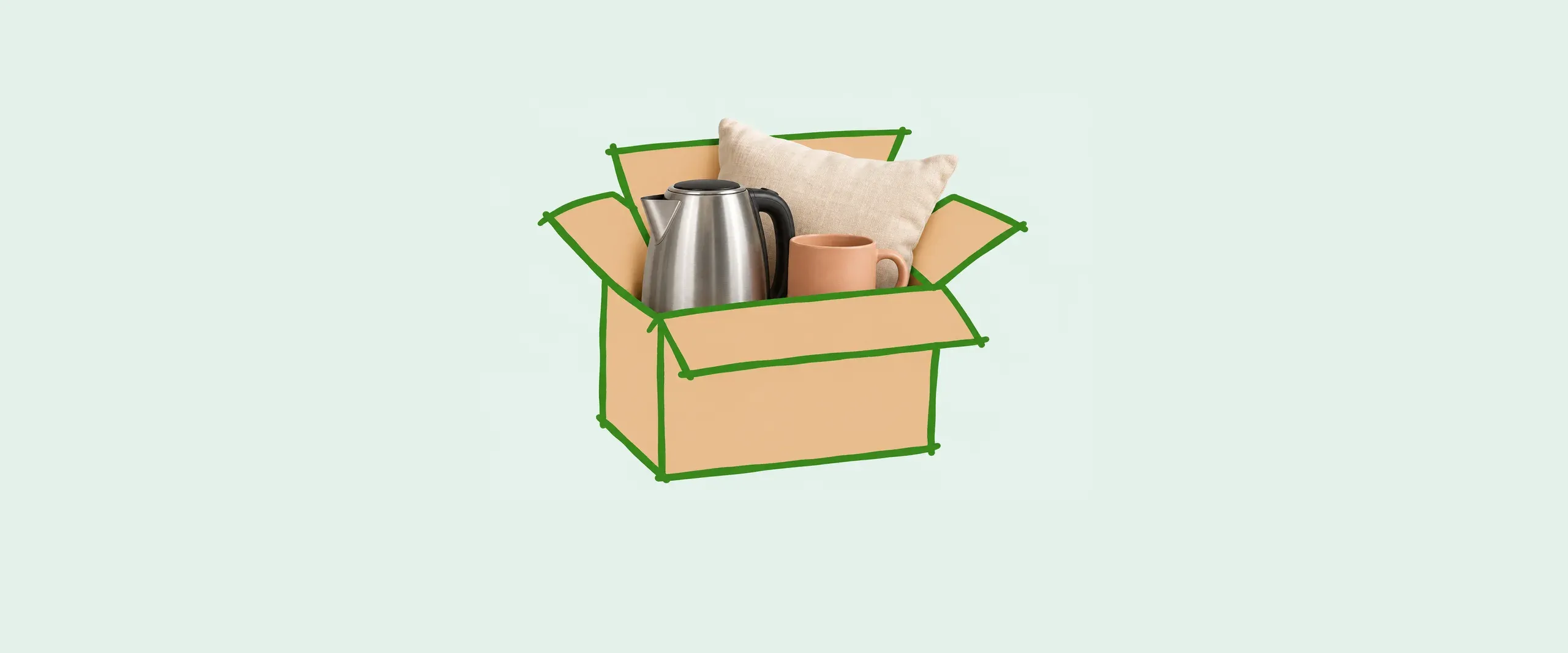
Pack one box that doesn’t go into storage, and fill it from four of the six categories above.
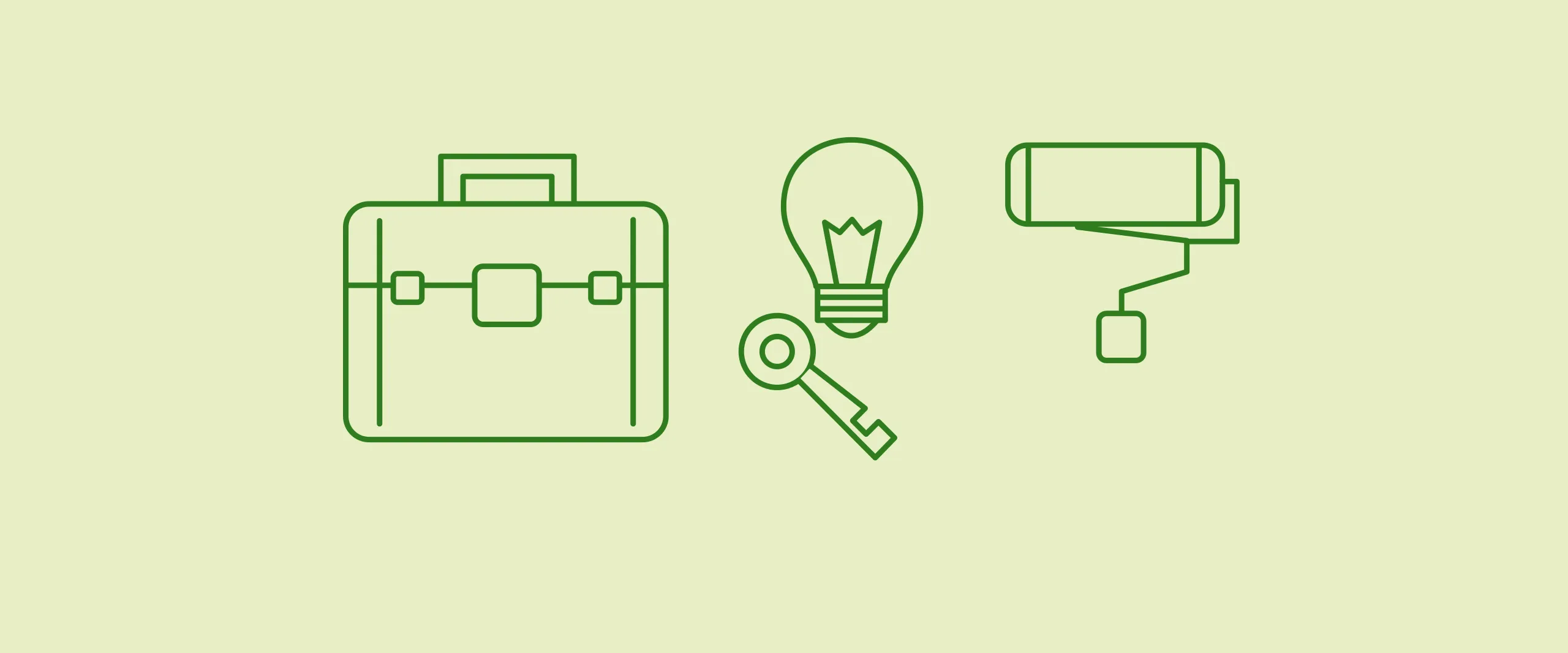
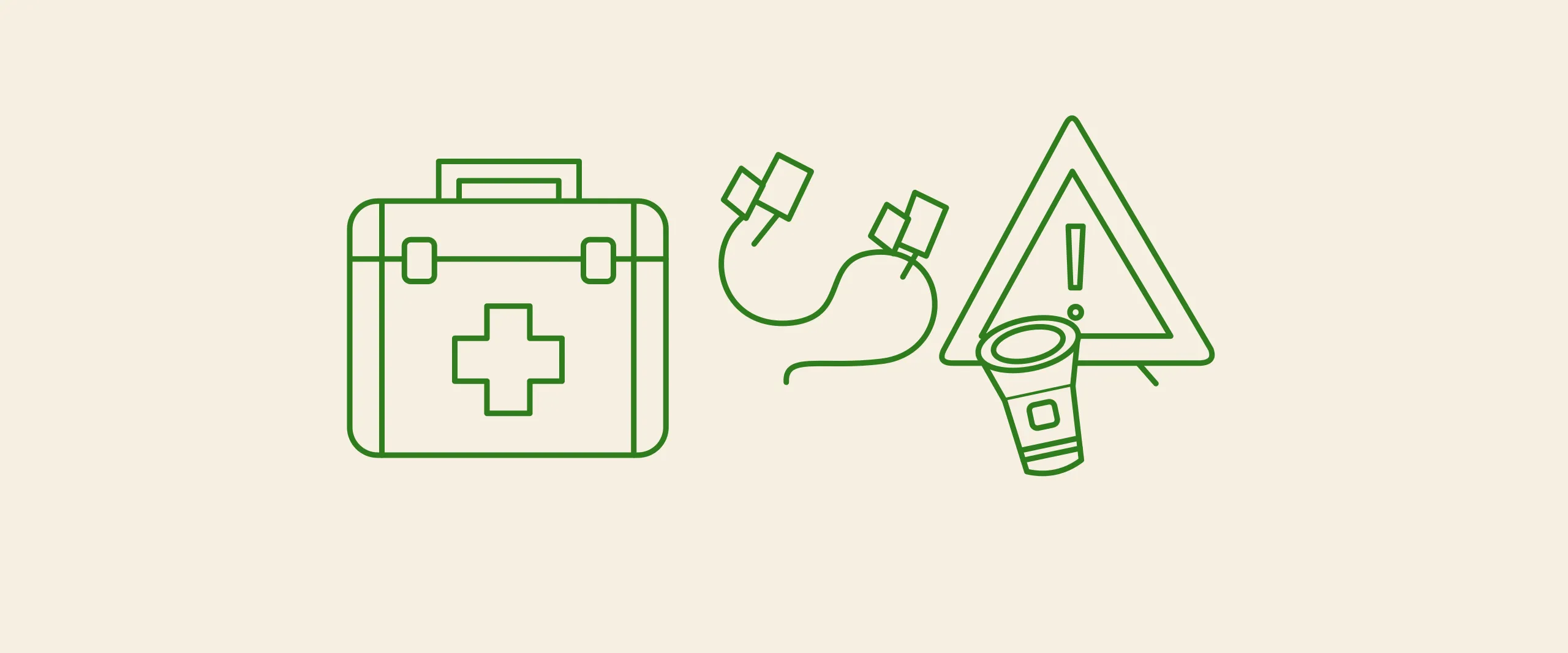
Light comes first. Spare light bulbs and a screwdriver set, because an empty apartment often has bare fixtures or dead bulbs in them, and nothing else on this list gets done in the dark. An extension cord belongs in the same box, since the one outlet you need is always on the wrong wall.
Then the bathroom, because it’s the first room you’ll actually use. Towels, a bath mat, a toilet brush and a trash can. These are the things people leave in a bag in the car and then go hunting for at midnight.
Then somewhere to sleep. A mattress, sheets, pillows and a blanket beat a bed frame on day one, and the frame can wait for a weekend with a drill and daylight in it.
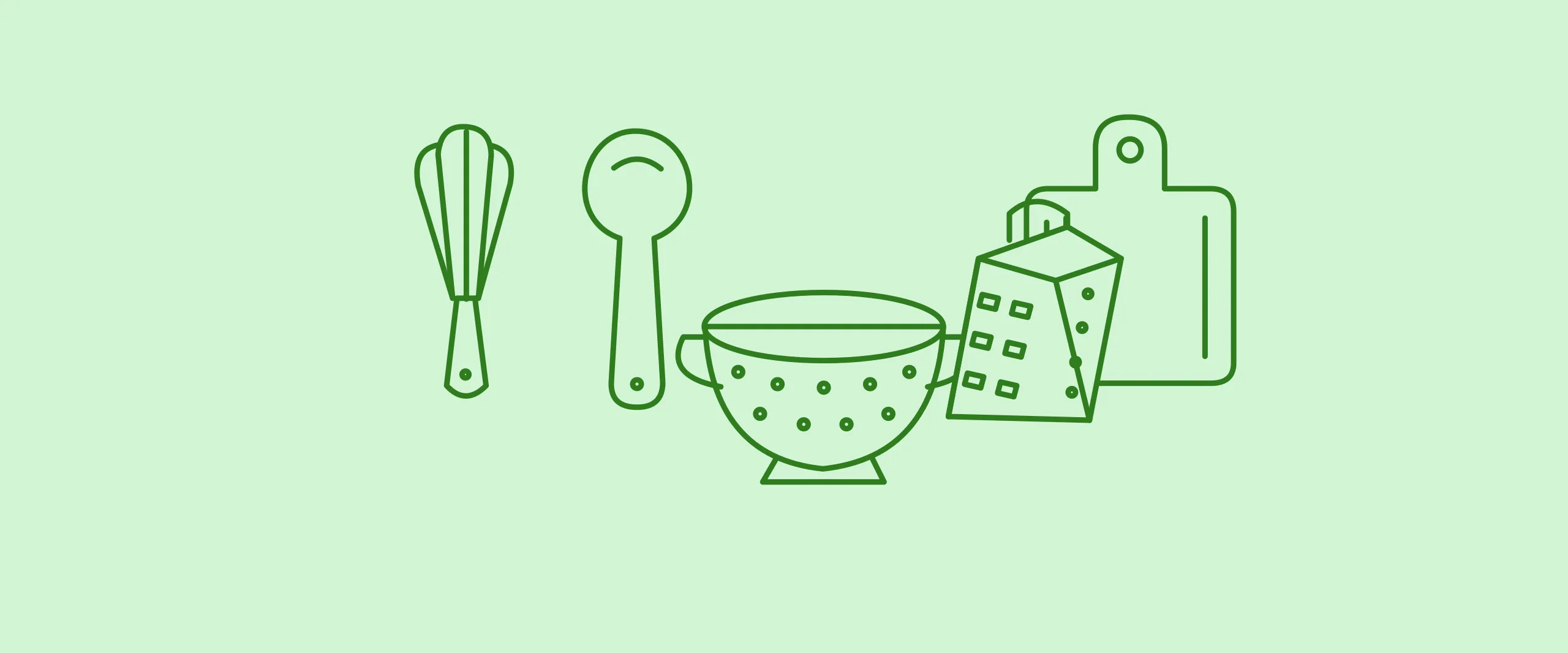
The kitchen box is smaller than you’d expect: a kettle, two mugs, two plates, forks, spoons and teaspoons, a knife set, a bottle opener and a can opener. Everything else in that category is for the week after.
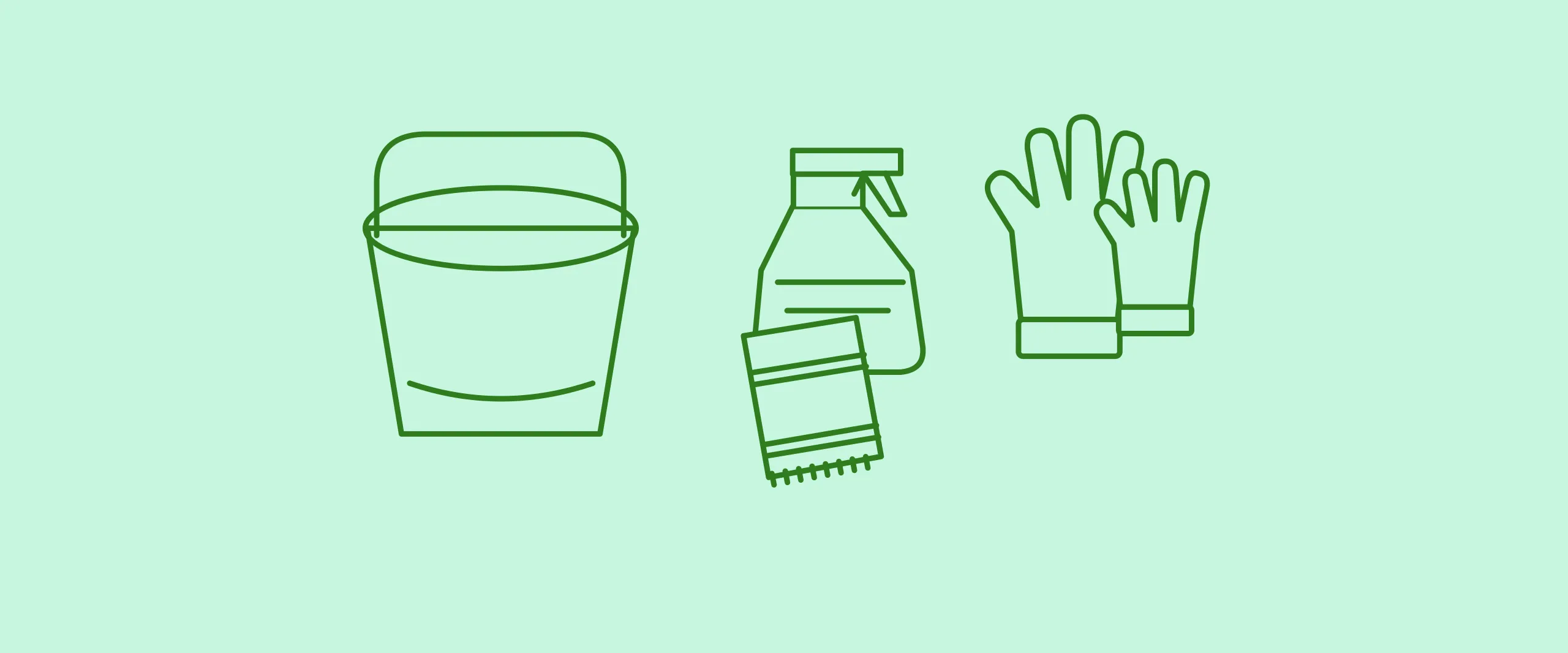
Last, the mess the move itself makes. Paper towels, cleaning cloths, dish soap, a bucket and a trash can for every room, because moving produces more cardboard and dust than any week that follows it.
What a small place changes
The six categories stay the same whether you’re furnishing a studio or a five-room place. What changes is how many of each line you buy, and which lines you skip entirely.
In one room, furniture has to do two jobs. A couch that opens out stands in for the bed, a coffee table doubles as a desk, and a dresser does the work a wardrobe would if there’s no alcove to put one in. Bookshelves are the piece worth buying tall and narrow, since the only direction a studio has going spare is up.
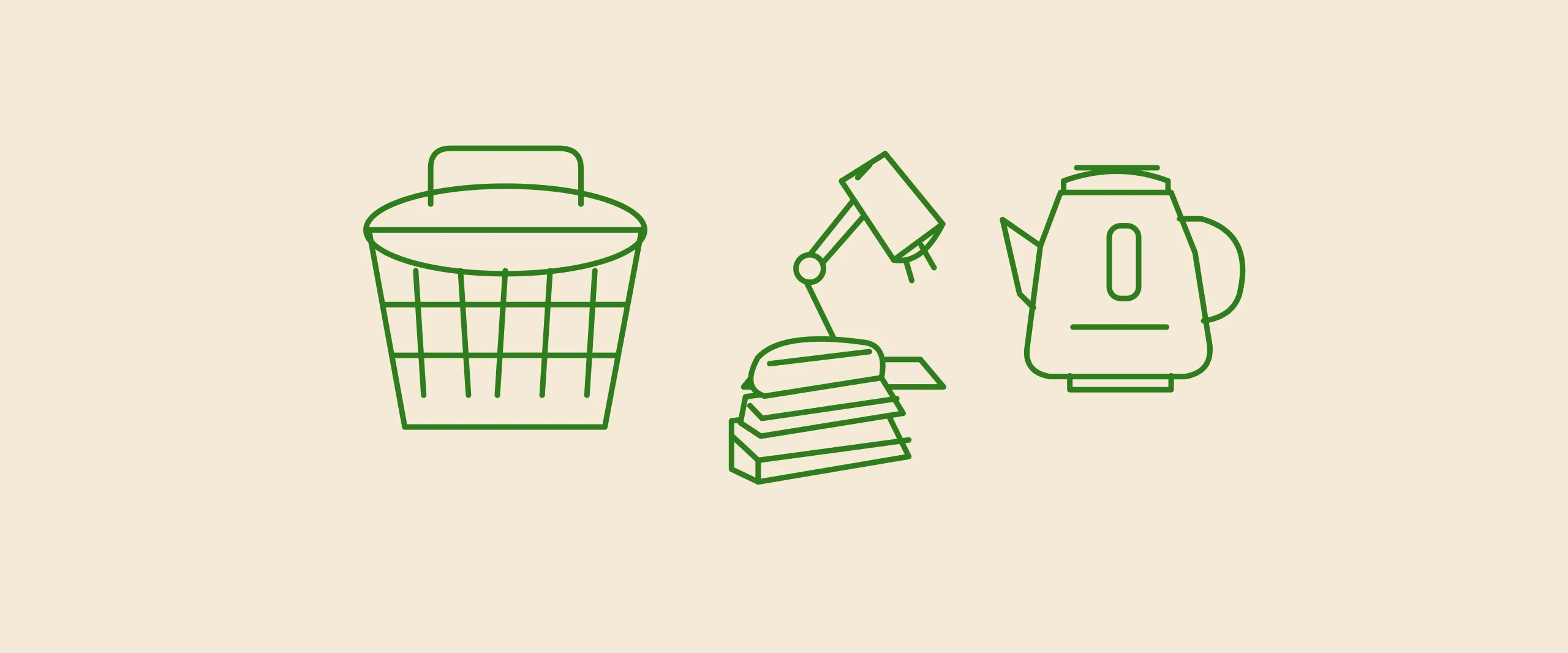
A small kitchen is a question of counter space, not storage. A toaster, a kettle and a mixer all want the same corner, so decide which of them you’ll really use before all three are in the cart. A small and large pot, a frying pan, a baking sheet and a knife set will cook almost anything between them, while the measuring pitcher, bread box and spice containers are better added once you know where they would live.
Living alone changes the quantities more than it changes the list. Plates, drinking glasses, mugs and towels are the lines where people buy for the dinner party they imagine rather than the Tuesday they’ll actually have. Buy for two more than you are, and add the rest the first time you genuinely need it.