Puppies are awesome. Dogs have always been considered “man’s best friend”. But for many, they’re a member of the family. If you’re getting a new pupper, be sure that your home is ready and welcoming with this new puppy checklist.
Pup Up the Volume
What can be more exciting than receiving a new puppy into your family?
By this point, you’ve probably already done some research about what dog breeds are best for your particular home. This will be dependent on whether you have babies, children, or other pets. Regardless, when the time comes to bring your new puppy home, whatever the breed, it’s going to need the tender loving care you just can’t wait to give it.
To help, we’ll supply you with that all important new puppy shopping list and checklist. Alternatively, you can skip straight to the free printable puppy supplies list if you wish.
Your New Puppy Checklist
Now that you’re a little more prepared, we present to you your puppy shopping list and checklist so you’re ready to receive that fluffiest new member of your family.
Set the house up before the puppy sees it
Almost everything in the Essentials column is more use fitted and in place than sitting in a bag by the front door.
Decide where the Dog crate/cage lives before you build it, because wherever you put it on the first evening is where your pup will expect it afterwards. Pick a corner of a room people actually use, out of a doorway and away from a radiator, and put the Blankets in it a day early so it smells of the room rather than of the shop.
Dog gate(s) are worth hanging that same afternoon. The stairs are the obvious one, but the gate that saves you most is the one shutting off the room with the cables, the shoes and the bin in it. Walk your ground floor at knee height and you’ll see the house the way your puppy will: the trailing phone charger, the fringe of the rug, the gap behind the washing machine.
Bitter apple spray goes on the chair legs and skirting boards you already know are at mouth height, and it goes on before the first bite rather than after it. Enzyme cleaning spray goes somewhere you can reach it one-handed, because you’ll be holding a puppy with the other one. Poop bags go in a coat pocket, by the door and in the car, all three.
Buy once, and buy it in the right size
A few things here are easy to buy twice, which is about the only way to genuinely waste money on a new pup.
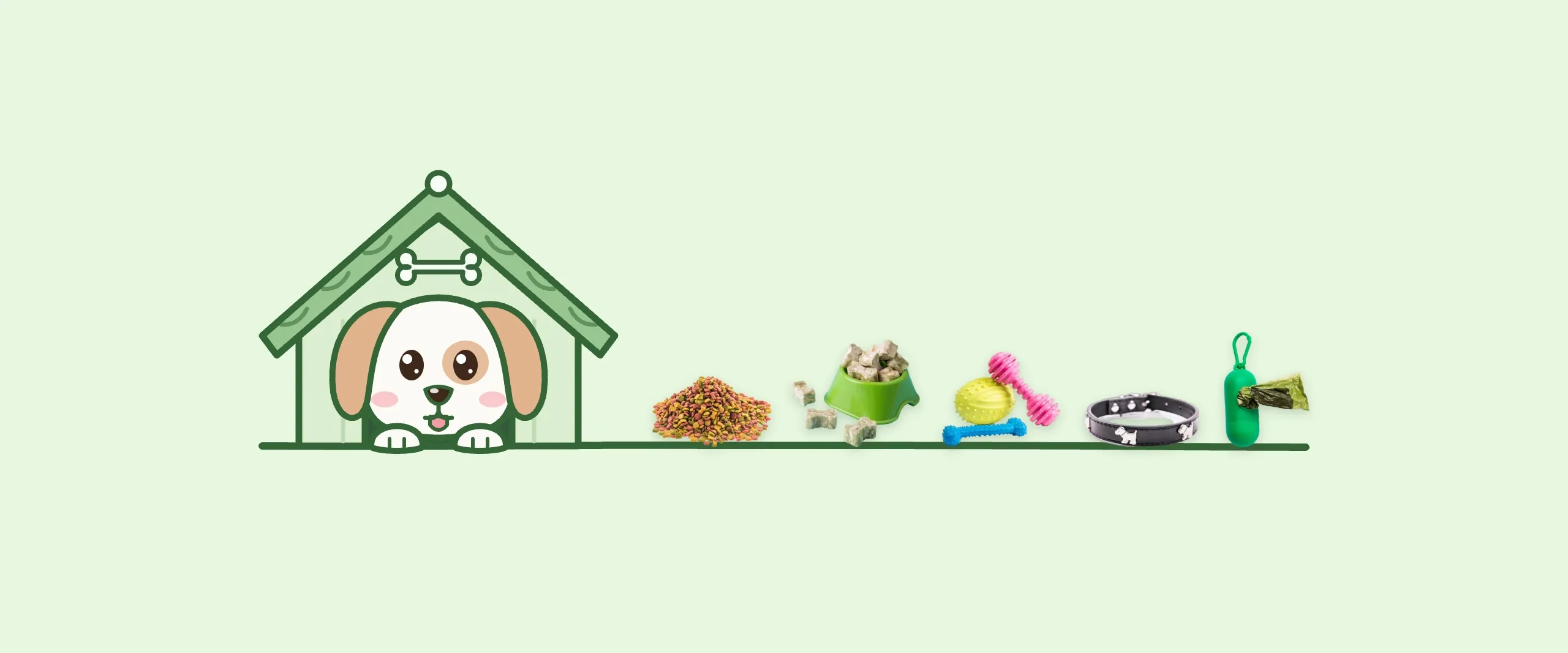
The Adjustable collar is on the checklist for a reason, since a puppy outgrows a fixed one in roughly the time it takes to get used to wearing it. Check the fit as your pup grows rather than fitting it once and forgetting about it, and let it wear the thing indoors for a few days before the first walk. The Dog leash can be plain and cheap, because those early weeks are about teaching your puppy that the leash means something good, not about the leash itself.
Buy the Dog crate/cage for the dog your puppy is going to be, then divide it rather than replacing it later. A crate sized for a grown dog hands a small pup a bedroom at one end and a bathroom at the other, which is precisely what you don’t want, so block off the far half until it grows into the space.
Start the Puppy formula dog food as whatever the breeder or shelter was already feeding, and change it over gently once you’re home if you want something else. Puppy treats are training currency, so buy the small soft sort you can hand over quickly and often. The Brush and Nail clippers are worth using in the first week, before there’s much to brush or clip, so that being handled is already boring by the time it matters.