Which condiments need the fridge and how long they last
Quick answer
-
Room temperature
Keeps for up to 3 years
Shelf-stable sauces keep from 3 months for mayonnaise to 3 years for soy sauce in the pantry, counted from the day you bought them.
Watch out Throw out jam, jelly, or peanut butter that has mold.
-
Fridge
Keeps for 1-6 months
After opening, most condiments keep 1 to 6 months in the fridge, from 1 month for soy sauce and salsa to 6 months for ketchup.
Watch out Creamy salad dressing keeps only 3 to 4 weeks after opening.
Shelf-stable commercial condiments such as ketchup, mustard, and soy sauce are safe at room temperature after opening, and the fridge keeps them fresh longer. FoodKeeper lists 6 months in the fridge for opened ketchup, 1 year for mustard, and 2 months for mayo. Opened commercial peanut butter lasts 2 to 3 months in the pantry. Throw out jam, jelly, or peanut butter that has mold.
Buying condiments this week?
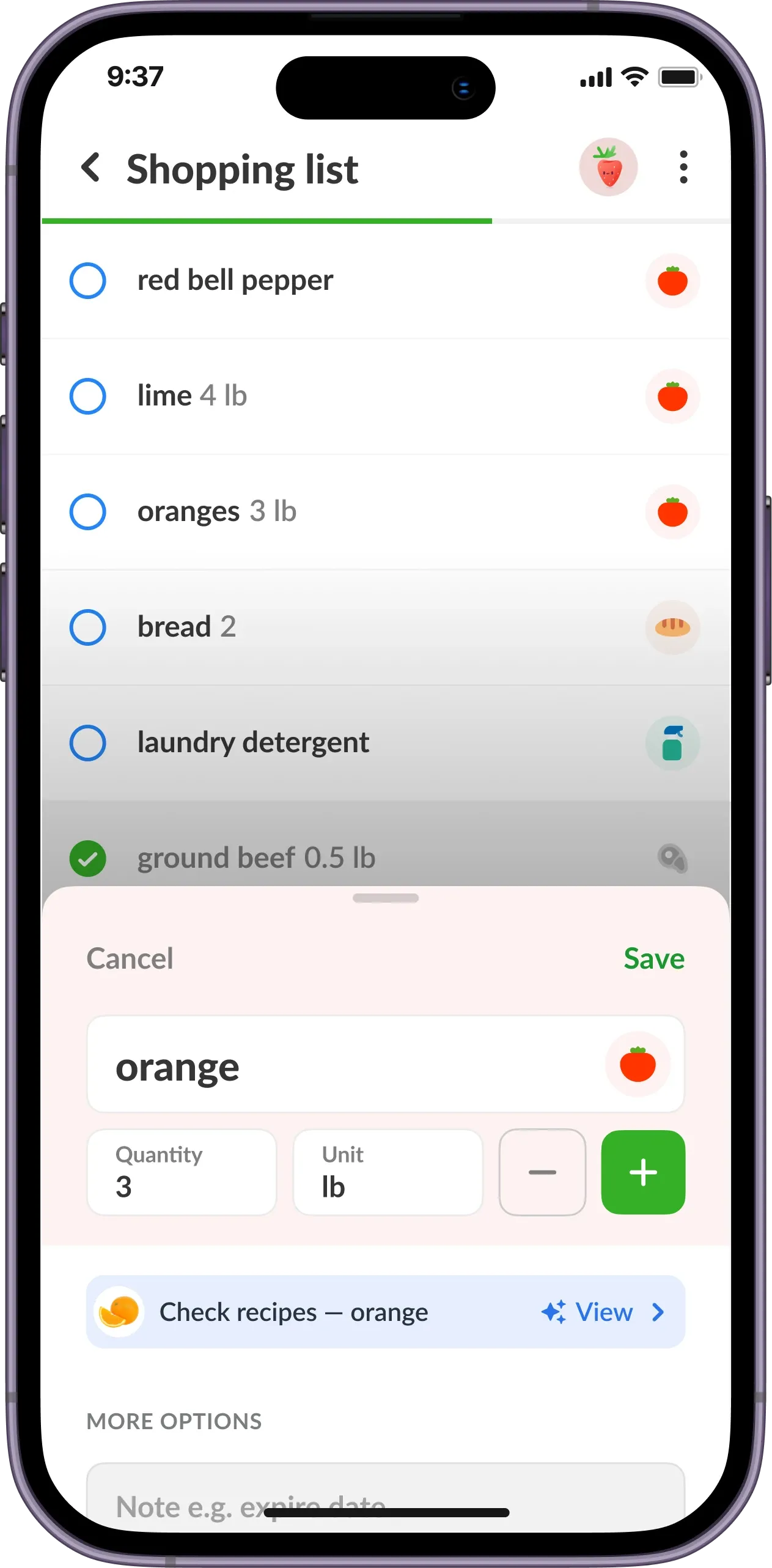
On a Listonic list, every item gets the amount you need and a note on when to use it by.
- Quantity and unit on every item
- A note like “fridge, use within a week”
- One list shared with everyone at home
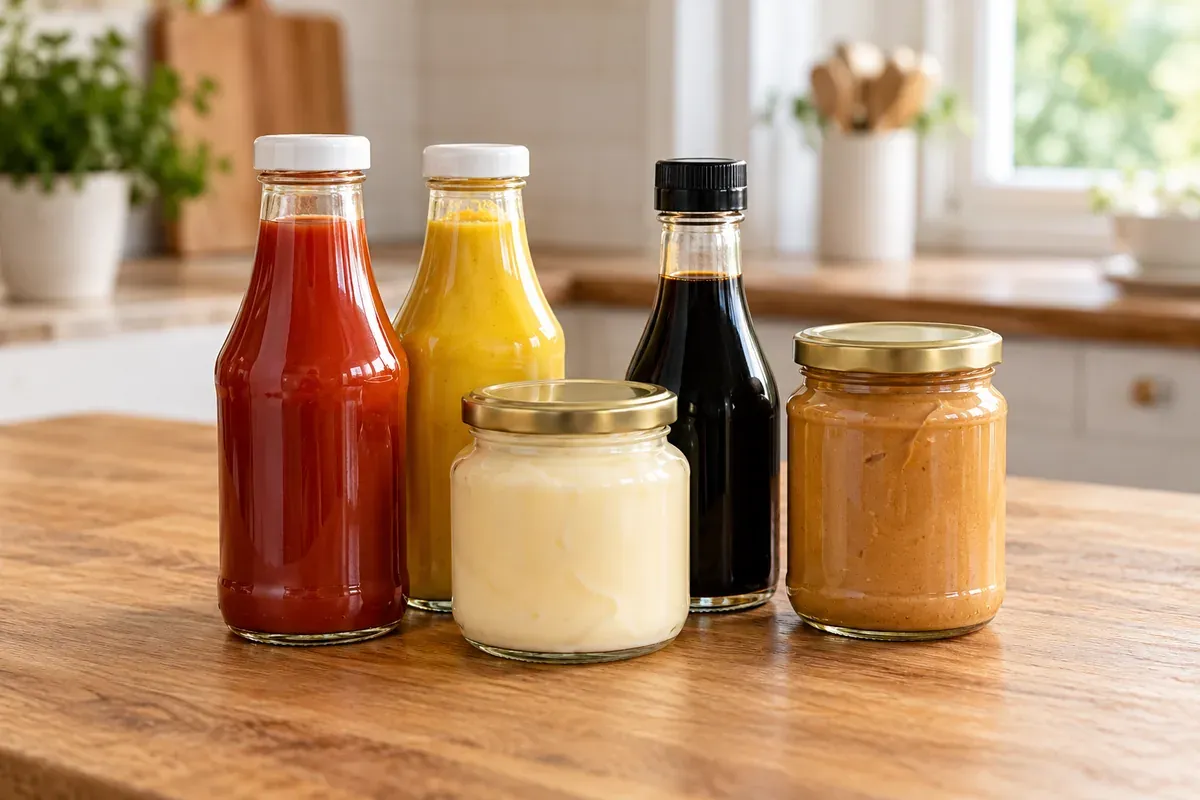
Most condiments don’t need the fridge to stay safe. USDA FoodKeeper says shelf-stable commercial ketchup, mustard, soy sauce, Worcestershire sauce, barbecue sauce, salad dressing, and salsa are safe at room temperature after opening.
The fridge still helps, because it keeps these sauces fresh for longer. The times below come from USDA FoodKeeper.
Do condiments need to be refrigerated?
Shelf-stable commercial condiments don’t have to be refrigerated after opening. FoodKeeper says so for ketchup, cocktail sauce, chili sauce, mustard, soy sauce, teriyaki sauce, Worcestershire sauce, barbecue sauce, salad dressing, and salsa.
Labels on these products suggest the fridge after opening. The reason is quality, not safety, because refrigeration keeps the sauce fresh for a longer period of time.
How long do condiments last?
Shelf-stable sauces last from 3 months for mayonnaise to 3 years for soy sauce in the pantry, counted from the day you bought them. After opening, FoodKeeper lists 1 to 6 months in the fridge for most, from 1 month for soy sauce and salsa to 6 months for ketchup.
Mustard lasts 1 year in the fridge after opening, and jams and jellies last 6 to 12 months.
| Condiment | Pantry, from purchase | After opening |
|---|---|---|
| Ketchup, cocktail sauce, chili sauce | 1 year | 6 months in the fridge |
| Mustard | 1 to 2 years | 1 year in the fridge |
| Mayonnaise, commercial | 3 to 6 months | 2 months in the fridge |
| Soy sauce or teriyaki sauce | 3 years | 1 month in the fridge |
| Worcestershire sauce | 1 year | Not listed |
| Hot sauce | 6 months | Not listed |
| Barbecue sauce, bottled | 1 year | 4 months in the fridge |
| Salad dressing, bottled | 10 to 12 months | 1 to 3 months in the fridge |
| Salad dressing, creamy | 6 months | 3 to 4 weeks in the fridge |
| Salsa | 1 year | 1 month in the fridge |
| Jams, jellies, and preserves | 6 to 18 months | 6 to 12 months in the fridge |
| Peanut butter, commercial | 6 to 24 months | 2 to 3 months in the pantry |
| Peanut butter, natural | Not listed | 3 to 4 months in the fridge |
Does balsamic vinegar go bad?
Balsamic vinegar keeps 3 to 5 years in the pantry from the day you bought it, according to USDA FoodKeeper. After opening, FoodKeeper lists 18 months in the fridge and no pantry time.
How long do tomato paste, tomato sauce, and pesto last in the fridge?
Opened tomato paste lasts 5 days in the fridge, tomato sauce 3 to 5 days, and jarred pesto 3 days, according to USDA FoodKeeper. Unopened, they all keep much longer.
For spaghetti or pizza sauce, go by the use-by date on the package. FoodKeeper notes that putting an unopened jar in the fridge won’t make it last longer.
| Product | Unopened | Opened, in the fridge |
|---|---|---|
| Tomato paste | 27 months in the pantry | 5 days |
| Tomato sauce, spaghetti or pizza | Package use-by date | 3 to 5 days |
| Tomato sauce, homemade and canned | 9 to 12 months in the pantry | Not listed |
| Pesto, jarred | 6 months in the fridge | 3 days |
Does peanut butter go bad?
Yes, peanut butter goes bad eventually. Commercial peanut butter keeps 6 to 24 months in the pantry, counted from the day you bought it, and 2 to 3 months after you open the jar. Throw it out if it grows mold.
Commercial peanut butter made with hydrogenated fat or other stabilizers has its own entry. It keeps 6 to 9 months in the pantry from purchase, or 12 months in the fridge.
Does peanut butter need to be refrigerated?
Commercial peanut butter can stay in the pantry, where FoodKeeper gives it 2 to 3 months after opening. For peanut butter with hydrogenated fat or other stabilizers, the fridge stretches that to 3 to 4 months.
Natural peanut butter is different. FoodKeeper lists only fridge times for it, which are 12 months from the day you bought it and 3 to 4 months after opening, or the package use-by date if that comes first.
Do tahini, almond butter, and chocolate hazelnut spread go bad?
Yes, but slowly. Tahini and almond butter each keep 1 year in the pantry, and chocolate hazelnut spread keeps until the use-by date on the package.
After opening, FoodKeeper lists tahini for the fridge, where it keeps 3 weeks. It gives no pantry time for an opened jar.
In the pantry, almond butter may turn hard and its natural oil may float to the top. That’s normal, and you can stir the oil back in by hand or with a hand mixer.
For best quality, FoodKeeper says not to refrigerate or microwave chocolate hazelnut spread. Cashew butter keeps 3 months in the pantry and doesn’t need the fridge.
| Spread | Pantry | Fridge |
|---|---|---|
| Tahini | 1 year from purchase | 3 weeks after opening |
| Almond butter | 1 year | Not listed |
| Cashew butter | 3 months | Not needed |
| Chocolate hazelnut spread | Package use-by date | Not recommended |
Do ketchup, mustard, and mayo go bad?
Yes, in time. Shelf-stable commercial ketchup and mustard are safe at room temperature after opening, and the fridge keeps them fresh longer. For opened mayonnaise, FoodKeeper lists the fridge.
Does ketchup need to be refrigerated?
Not for safety. Shelf-stable commercial ketchup is safe at room temperature after opening, and the fridge keeps it fresh longer. FoodKeeper lists 1 year in the pantry from purchase and 6 months in the fridge after opening. The same entry covers cocktail sauce and chili sauce.
Does mustard go bad?
Yes, but slowly. FoodKeeper gives mustard 1 to 2 years in the pantry from purchase and 1 year in the fridge after opening. Shelf-stable commercial mustard is safe at room temperature after opening, so refrigerating it is about quality, not safety.
Do relish and horseradish go bad?
Yes, in time. Relish keeps 30 months in the pantry from the day you bought it, and jarred horseradish keeps 12 months in the fridge.
FoodKeeper also gives relish 9 months in the fridge, counted from purchase. Once you open horseradish, it keeps 3 to 4 months in the fridge.
Does mayo need to be refrigerated?
Yes, once it’s open. FoodKeeper lists opened commercial mayonnaise for the fridge, where it keeps 2 months, and gives it no pantry time after opening. Unopened, it keeps 3 to 6 months in the pantry from purchase.
How long does homemade mayo last?
Homemade aioli, the closest FoodKeeper line to homemade mayo, keeps 3 to 4 days in the fridge. FoodKeeper has no line for homemade mayonnaise by name, and it gives homemade aioli no pantry time.
Do soy sauce, Worcestershire sauce, and hot sauce go bad?
Yes, in time. The fridge keeps all three fresh longer, and shelf-stable commercial soy sauce and Worcestershire sauce are also safe at room temperature after opening.
Does soy sauce go bad?
Soy sauce keeps 3 years in the pantry, counted from the day you bought it. After opening, FoodKeeper lists 1 month in the fridge. Shelf-stable commercial soy sauce and teriyaki sauce are safe at room temperature after opening, and quality, not safety, is why labels suggest refrigerating.
Does Worcestershire sauce go bad?
Worcestershire sauce keeps 1 year in the pantry from the day you bought it, according to FoodKeeper. Shelf-stable commercial Worcestershire sauce is safe at room temperature after opening, so the fridge is about quality, not safety. FoodKeeper lists no fridge time for it.
Does hot sauce go bad?
Hot sauce keeps 6 months in the pantry, according to FoodKeeper. It will stay fresher longer if refrigerated, though FoodKeeper lists no fridge time for it.
Does sriracha need to be refrigerated?
FoodKeeper doesn’t list sriracha by name, but its hot sauce line gives 6 months in the pantry. That line says hot sauce will stay fresher longer if refrigerated.
FoodKeeper gives no fridge time for hot sauce. Unlike ketchup, mustard, and soy sauce, it also has no note saying an opened bottle is safe at room temperature.
Do miso paste and hoisin sauce go bad?
Yes, but slowly. Miso keeps 1 year in the fridge from the day you bought it, and hoisin sauce keeps 18 to 24 months in the pantry.
FoodKeeper lists miso only for the fridge and gives it no pantry time. Its 1 year counts from purchase, with no separate time after opening.
Once you open hoisin sauce, it keeps 3 to 6 months in the fridge, according to USDA FoodKeeper.
Do barbecue sauce, salad dressing, and salsa go bad?
Yes, in time. Shelf-stable commercial barbecue sauce, salad dressing, and salsa are safe at room temperature after opening, and the fridge keeps them fresh longer.
After opening, FoodKeeper lists 4 months in the fridge for bottled barbecue sauce and 1 month for salsa. Bottled salad dressing keeps 1 to 3 months, while creamy dressing keeps 3 to 4 weeks.
How long does homemade salsa last?
Fresh homemade salsa lasts 5 to 7 days in the fridge, according to USDA FoodKeeper. Canned homemade salsa keeps 9 to 12 months in the pantry.
Does maple syrup go bad?
Yes, but slowly. FoodKeeper gives unopened genuine maple syrup 4 years in the pantry if it’s in glass and 2 years if it’s in plastic.
In the fridge, unopened glass bottles keep indefinitely, and unopened plastic bottles keep 18 to 24 months.
FoodKeeper has no separate line for opened maple syrup. Its entry for syrup in general lists 1 year in the pantry from purchase and 6 months in the fridge after opening.
Do corn syrup, chocolate syrup, and pancake syrup go bad?
Yes, in time. Corn syrup keeps 3 years in the pantry, and chocolate syrup keeps 2 years from the day you bought it.
Keep corn syrup tightly covered. FoodKeeper says refrigerating it will extend its storage life, though it gives no fridge time.
After opening, chocolate syrup belongs in the fridge, where it lasts 6 months. FoodKeeper doesn’t recommend the pantry once it’s open.
FoodKeeper doesn’t list pancake syrup by name. Its line for syrup in general gives 1 year in the pantry from purchase and 6 months in the fridge after opening.
| Syrup | Pantry, from purchase | After opening |
|---|---|---|
| Corn syrup | 3 years | Not listed |
| Chocolate syrup | 2 years | 6 months in the fridge |
| Syrup, general | 1 year | 6 months in the fridge |
Does jelly need to be refrigerated?
After opening, FoodKeeper lists jams, jellies, and preserves for the fridge, where they keep 6 to 12 months. Before opening, they keep 6 to 18 months in the pantry, counted from the day you bought them.
How long does cranberry sauce last in the fridge?
Opened canned cranberry sauce lasts 1 to 2 weeks in the fridge, and homemade cranberry sauce lasts 7 to 10 days, according to USDA FoodKeeper. Unopened cans keep 2 years in the pantry, counted from the day you bought them.
Can you freeze condiments?
Mayonnaise doesn’t freeze well. During thawing, large ice crystals from slow freezing make emulsions such as mayonnaise or cream separate and look curdled, according to the USDA’s Freezing and Food Safety page. FoodKeeper also says freezing is not recommended for creamy salad dressing.
Can you freeze pesto, tomato paste, salsa, and cranberry sauce?
You can freeze jarred pesto for 1 month, tomato paste for 2 to 3 months, and fresh homemade salsa for 12 months. FoodKeeper doesn’t recommend freezing cranberry sauce, canned or homemade, because it may turn too watery after thawing.
FoodKeeper has no line for spinach dip or spinach artichoke dip by name. If yours is made with sour cream, its line for sour cream dips applies, with 2 weeks in the fridge from purchase and no freezing.
| Food | Freezer |
|---|---|
| Tomato paste | 2 to 3 months |
| Pesto, jarred | 1 month |
| Salsa, homemade and fresh | 12 months |
| Cranberry sauce, canned or homemade | Not recommended |
| Miso | Not recommended |
| Relish | Not recommended |
| Dips made with sour cream | Not recommended |
What should you do with moldy condiments?
Throw out jam or jelly that has mold, according to the USDA’s guide to molds on food. The mold could be producing a mycotoxin, so don’t scoop it out and keep using the rest.
Molds can grow in refrigerated jams and jellies, because molds tolerate salt and sugar better than most other food invaders. Moldy peanut butter goes in the trash too, since foods processed without preservatives are at high risk for mold.
Frequently asked questions
Does soy sauce need to be refrigerated?
Shelf-stable commercial soy sauce and teriyaki sauce are safe at room temperature after opening, so they don't need the fridge. Labels suggest refrigerating for quality, not safety, and FoodKeeper lists 1 month in the fridge after opening.
Does Worcestershire sauce need to be refrigerated?
Shelf-stable commercial Worcestershire sauce is safe at room temperature after opening. Labels suggest the fridge for quality, not safety, and FoodKeeper lists 1 year in the pantry from the day you bought it.
Does mustard need to be refrigerated?
Shelf-stable commercial mustard is safe at room temperature after opening. The fridge keeps it fresh longer, and FoodKeeper lists 1 year there after opening.
Does maple syrup need to be refrigerated?
FoodKeeper lists unopened genuine maple syrup for both places, with 4 years in the pantry and an indefinite time in the fridge for glass bottles. It has no separate line for an opened bottle, and its entry for syrup in general lists 6 months in the fridge after opening.
Does hot sauce need to be refrigerated?
Hot sauce keeps 6 months in the pantry, and FoodKeeper says it will stay fresher longer if refrigerated.
How long does natural peanut butter last?
Natural peanut butter lasts 12 months in the fridge from the day you bought it, or 3 to 4 months after opening. FoodKeeper says to go by the package use-by date if it comes first.
Does balsamic vinegar need to be refrigerated?
USDA FoodKeeper lists the fridge for an opened bottle, where it keeps 18 months. It gives no pantry time after opening.
Does sriracha go bad?
FoodKeeper doesn't list sriracha by name. Its hot sauce line gives 6 months in the pantry and says hot sauce will stay fresher longer if refrigerated.
Does tahini need to be refrigerated?
USDA FoodKeeper lists the fridge for opened tahini, where it keeps 3 weeks, and gives no pantry time after opening. An unopened jar keeps 1 year in the pantry from the day you bought it.
Does almond butter need to be refrigerated?
Almond butter keeps 1 year in the pantry, according to USDA FoodKeeper, which lists no fridge time for it. If it turns hard or its oil floats to the top, that's normal, and you can stir it back together.
Does miso paste need to be refrigerated?
USDA FoodKeeper lists miso only for the fridge, where it keeps 1 year from the day you bought it. It gives no pantry time and doesn't recommend freezing.