
Report English
Global Shopping Insights Report: Germany 🇩🇪
Consumer habits in the world spotlight
Top 3 takeaways about GERMANY from this report


Battle of the drinks: juice or water?
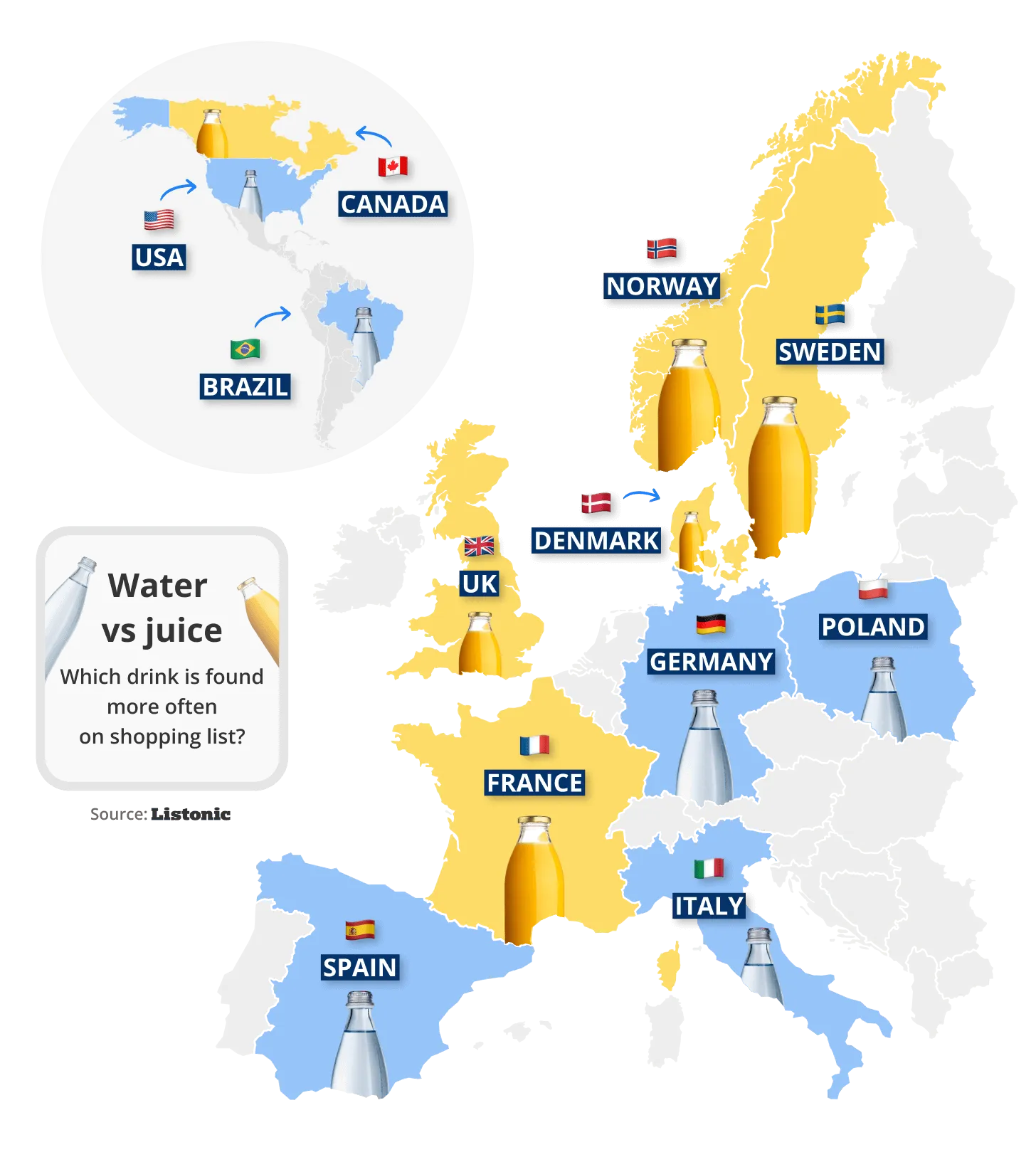
In Germany, water is chosen significantly more often than juice, with a 118% preference for water.
Similarly, water is more frequently planned for purchase by Americans, Brazilians, and Italians, while juice is favored by the French and Norwegians.
Which country likes Nutella the most?
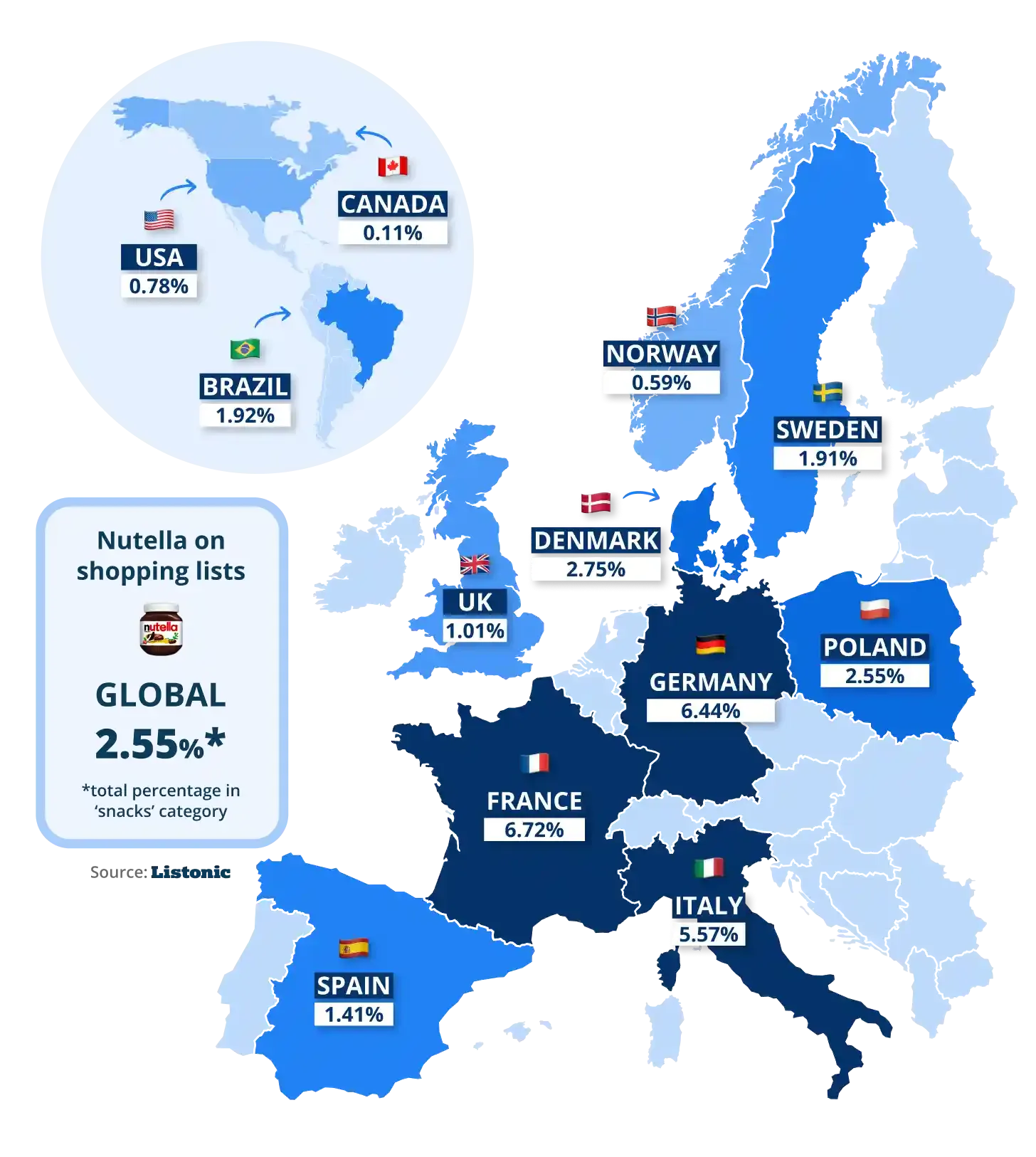
Germany ranked secondin the analysis of Nutella's popularity in the savory and sweet snacks category, with a score of 6.44%. This is just 0.28 percentage points less than in France and 3.89 percentage points higher than the global average.
At the opposite end is Canada, where Nutella's share is only 0.11%.
"shopping" or Lidl? Most common shopping list names
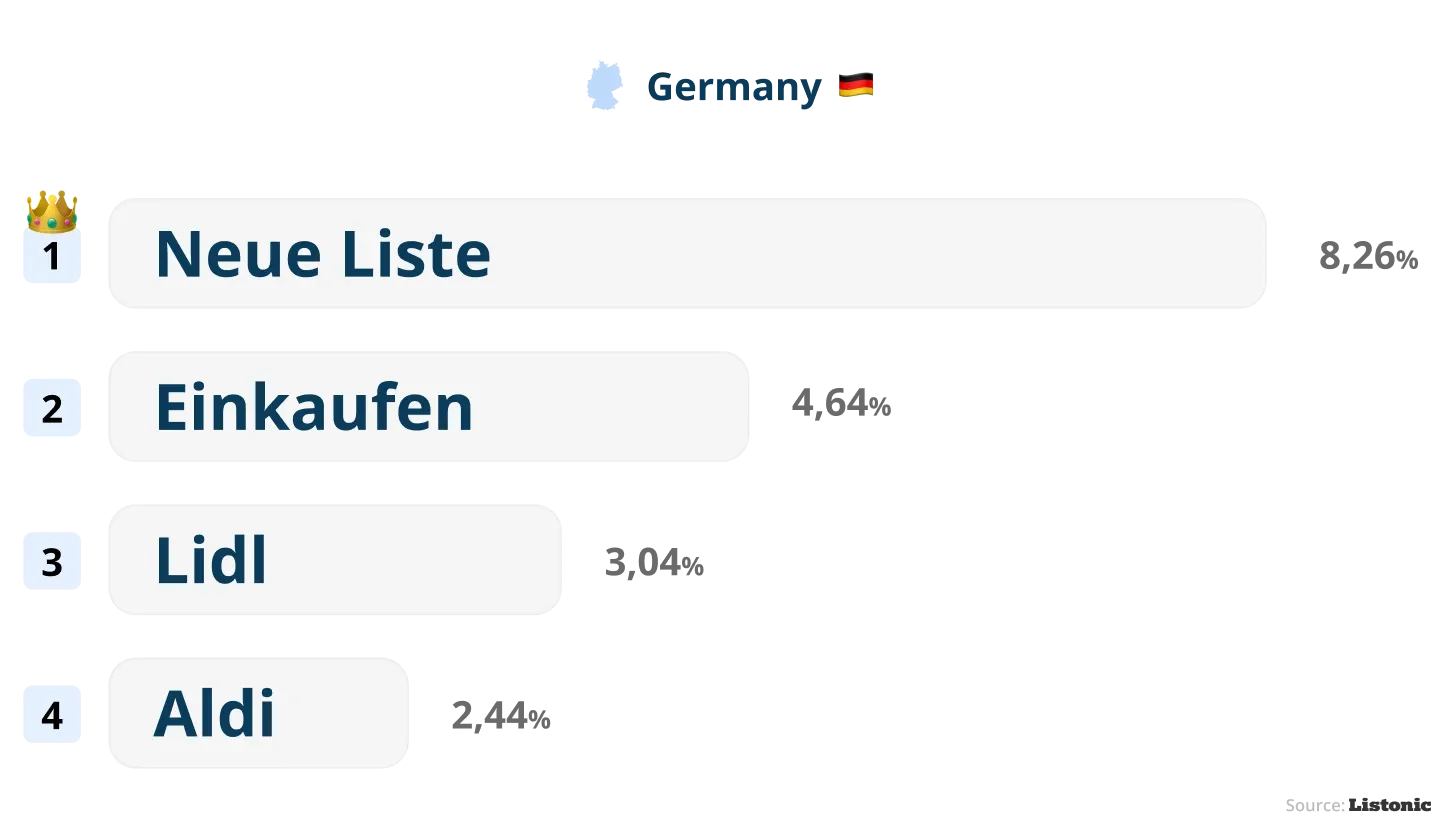
The most popular shopping list names in Germany include terms like "shopping" (4.64% of shopping lists) and "new list" (8.26% of shopping lists). Among retailers, Lidl is the most popular (3.04%), ahead of Aldi (2.44%) and Edeka and Kaufland (both 1.85%). Interestingly, Lidl’s share in Germany is lower than in Poland, where it accounted for 4.48% of shopping list names.
The total share of retailer names in German shopping lists reached 9.94%, the second-highest after Spain (15.38%). The U.S. (9.94%) and Poland (9.11%) follow closely behind.
Who’s behind the shopping list?
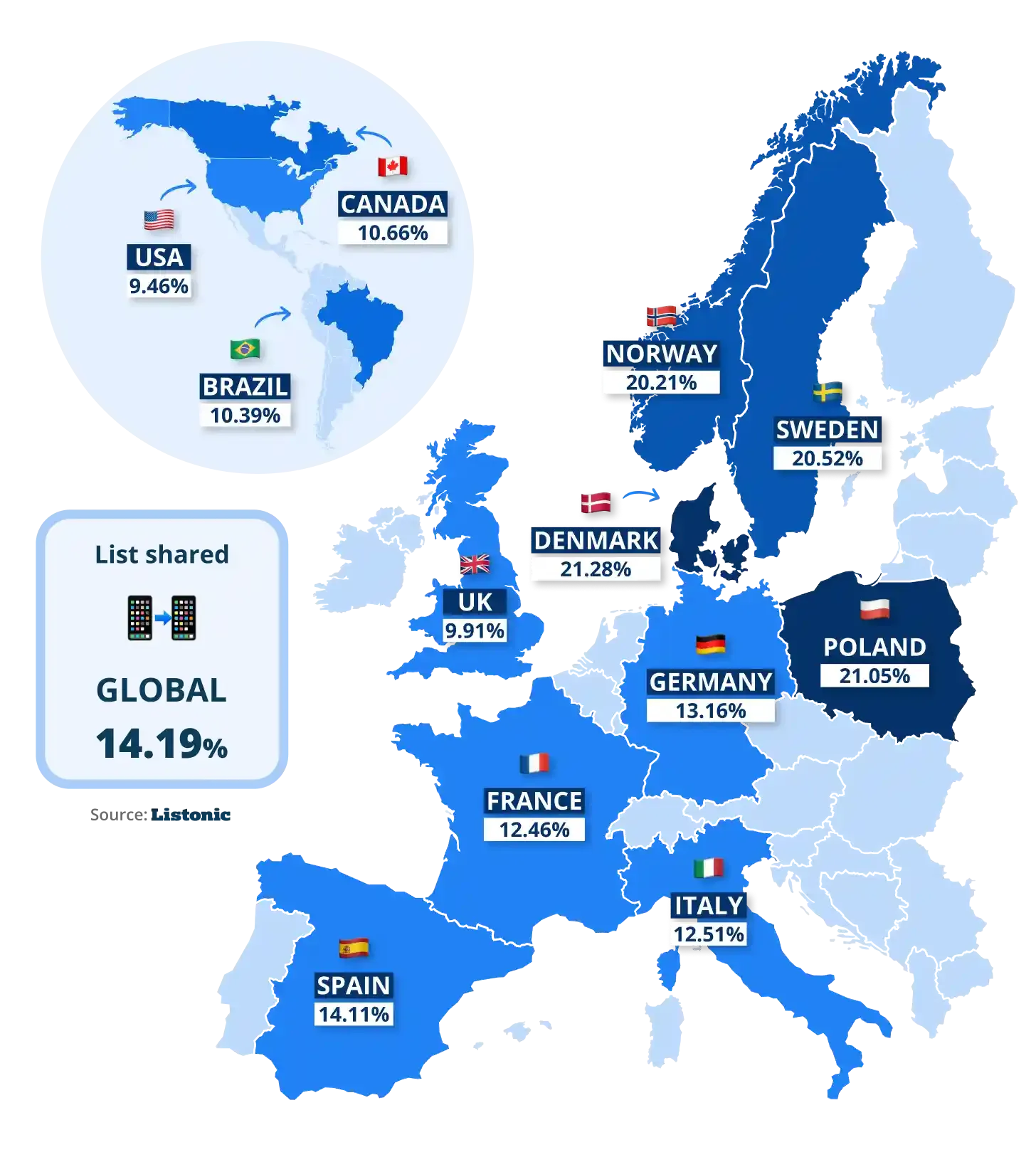
In Germany, 13.16% of active shopping lists from June 1, 2023, to May 31, 2024, were shared with at least one person.
This is 1 percentage point lower than the global average but higher than in the UK, France, or the USA. The highest sharing rates were observed in Denmark and Poland, while Americans shared their lists the least.
The shopping list sharing rate may reflect how citizens of different countries share the responsibility of shopping.
Hot categories
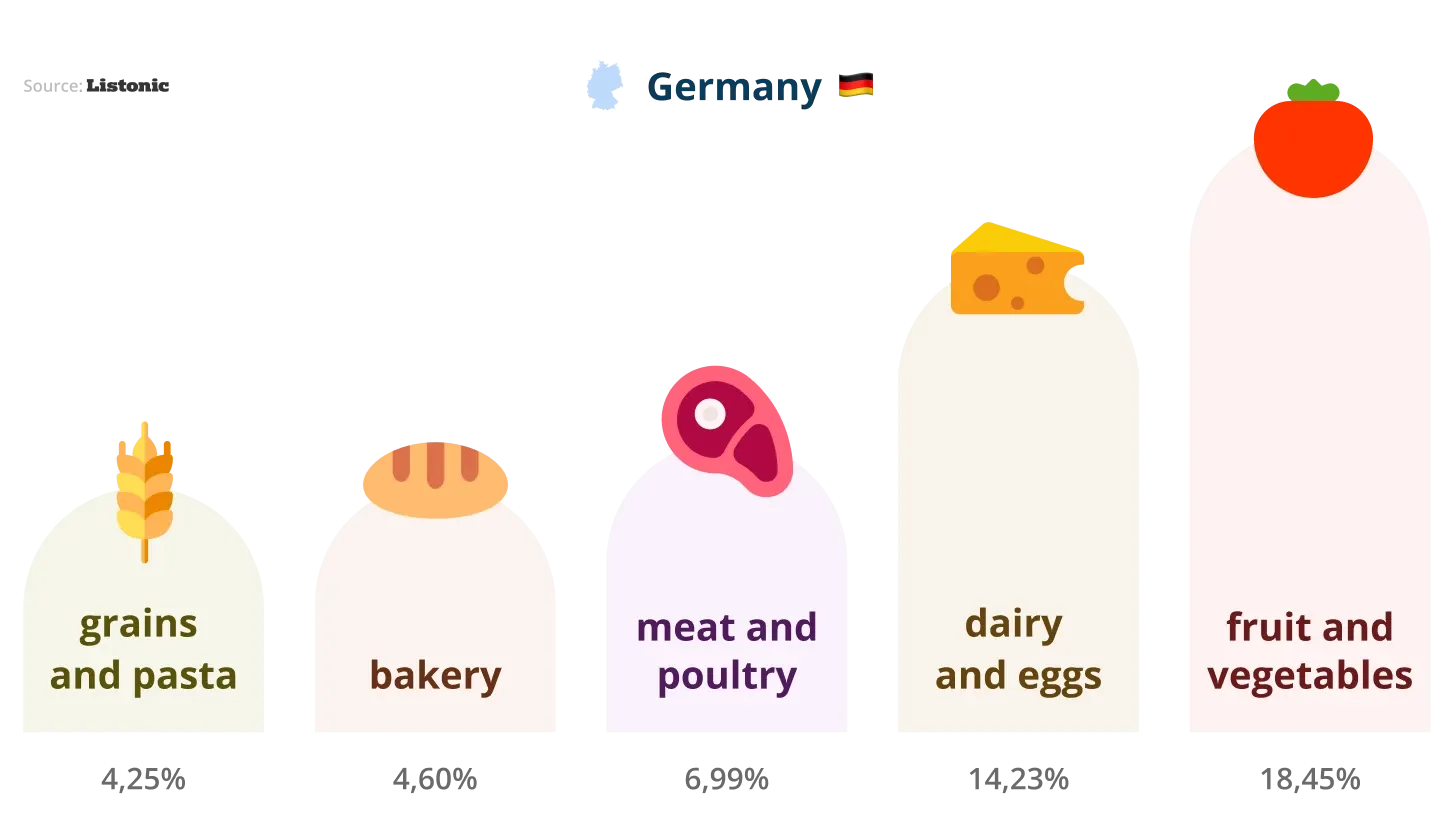
In Germany, as in other countries, the most frequently added items to shopping lists came from the fruits and vegetables category, accounting for 18.45%. This is slightly below the global average (18.57%) but higher than in France (15.61%), Italy (15.01%), and Spain (16.72%). The highest share was observed in Poland (22.86%).
The second most popular category in Germany was dairy (14.23%), followed by meat and cold cuts (6.99%).
Shopper favorites
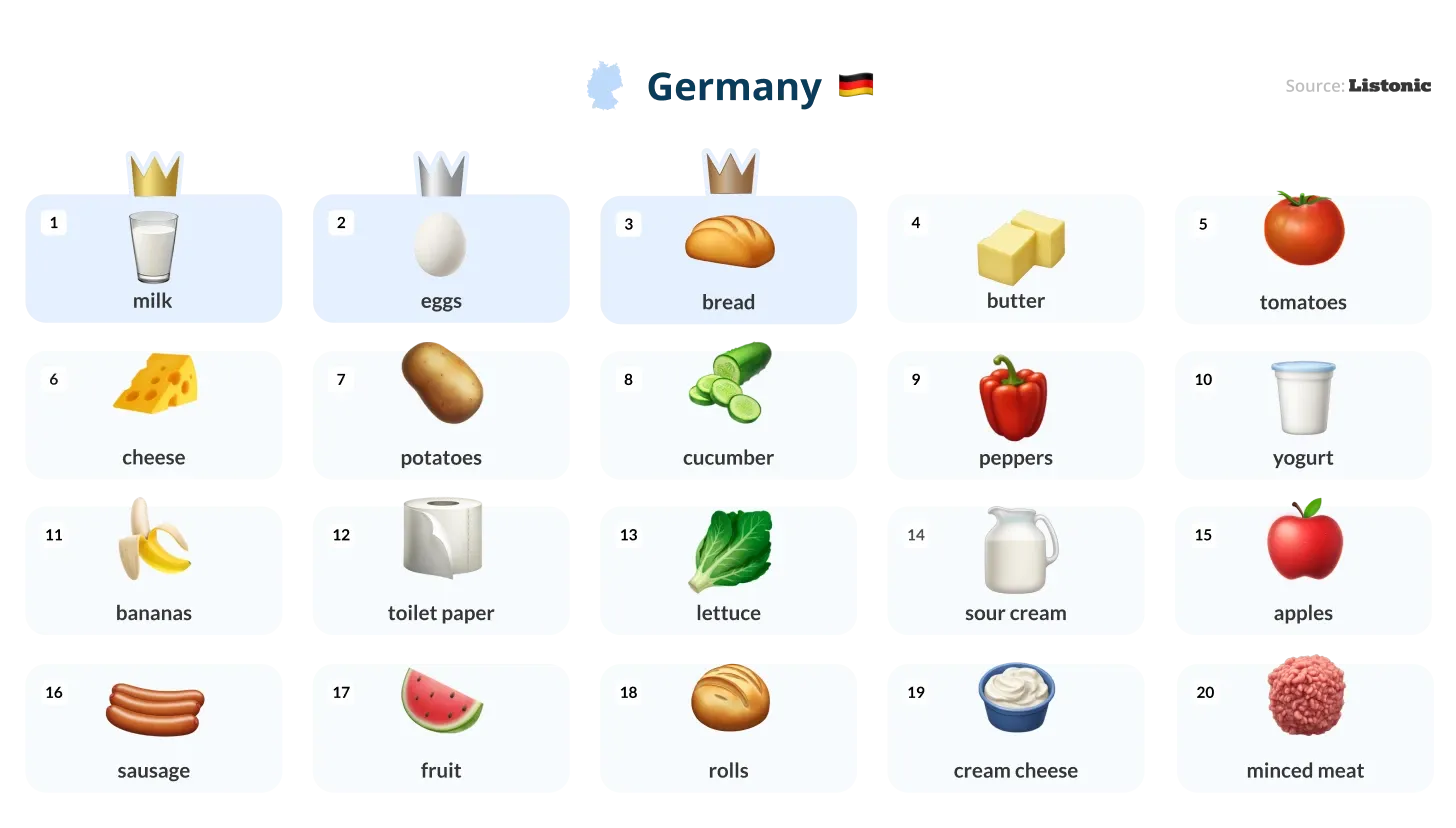
Milk, eggs, bread, and butter are the most popular items on German shopping lists. The most popular fruit, as in other countries, is bananas (11th place), followed closely by apples (13th place). In 16th place are general “fruits", suggesting that the final choice depends on the availability of products in the store.
Who shops like a pro?
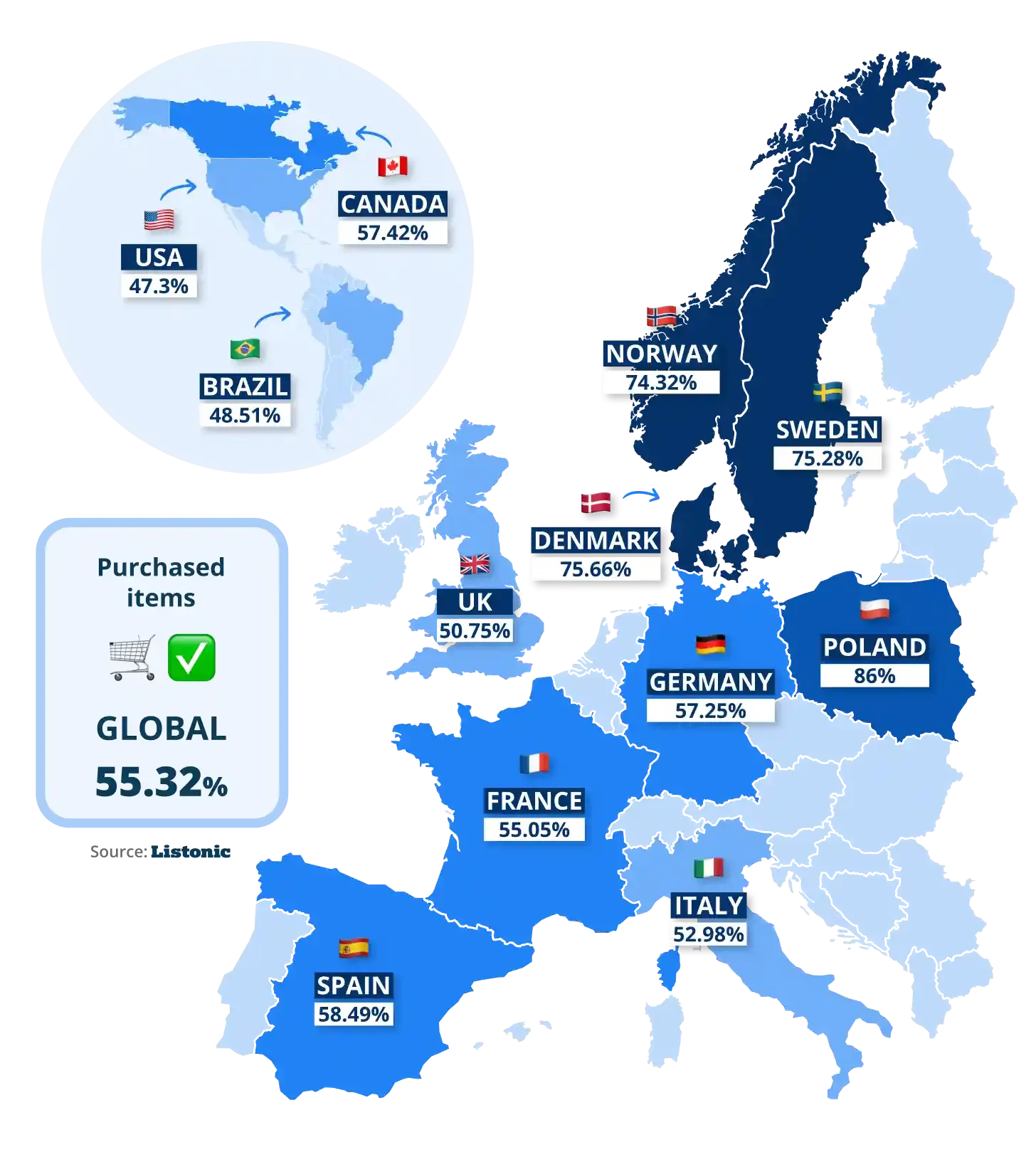
In Germany, 57.25% of items on shopping lists were marked as purchased, 2 percentage points higher than the global average. Germany ranks eighth out of 12 analyzed countries.
The lowest rates were recorded in the United States (47.3%) and Brazil (48.51%), while the highest rates were observed in Scandinavian countries and Poland.
Factors such as store availability and product offerings may influence the rate of items marked as purchased.
Sweet tooth or snack attack?
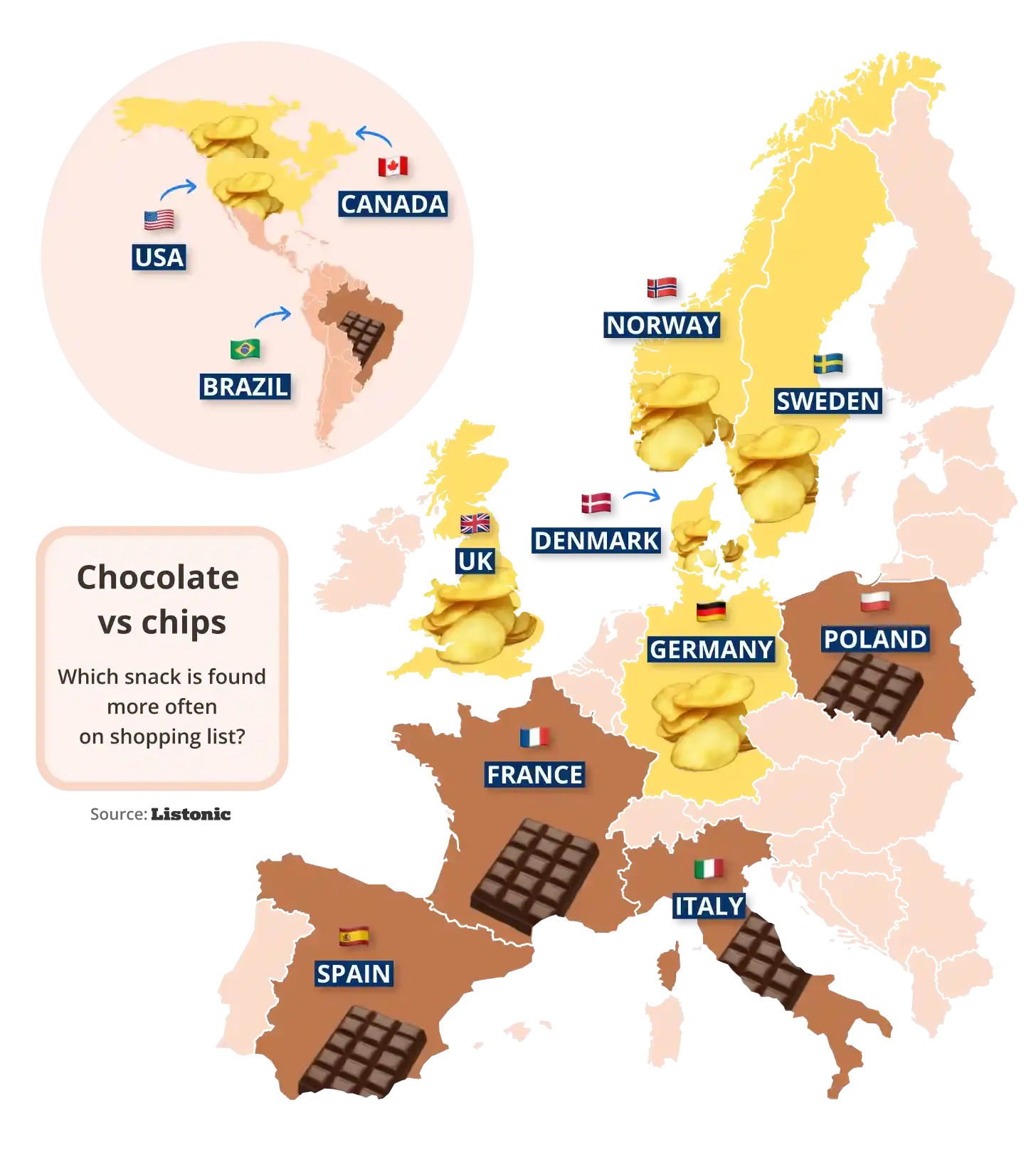
Germans choose chips more often than chocolate, with a 22% preference for chips.
Similarly, chips are more popular among Americans and Swedes, while chocolate is favored in Italy and Spain.
Loved in Germany
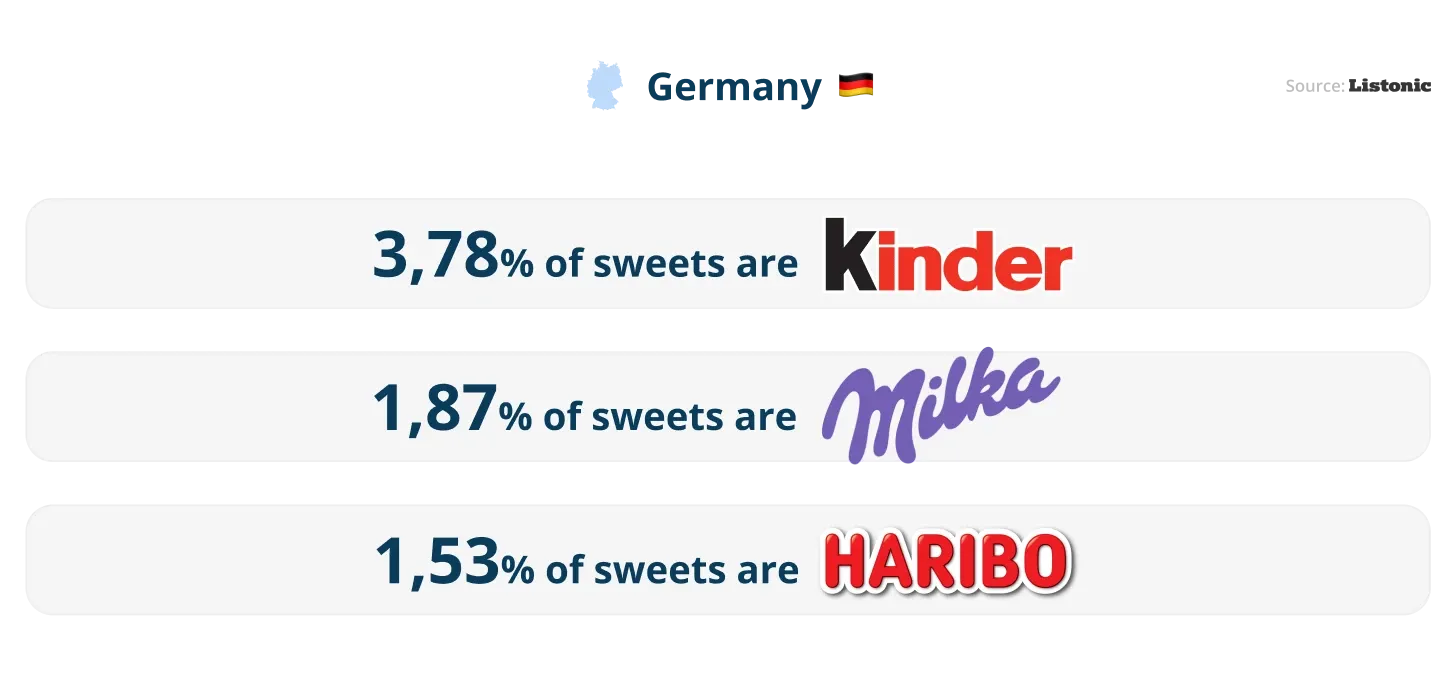
Local brands such as Kinder, Milka and Haribo stood out on German shopping lists in the savory and sweet snacks category.
Adding specific brands, like "Milka chocolate," indicates brand loyalty and the importance of purchasing that exact product. This is especially relevant for shared lists, where items are added by people who won’t be shopping directly.
German, please!
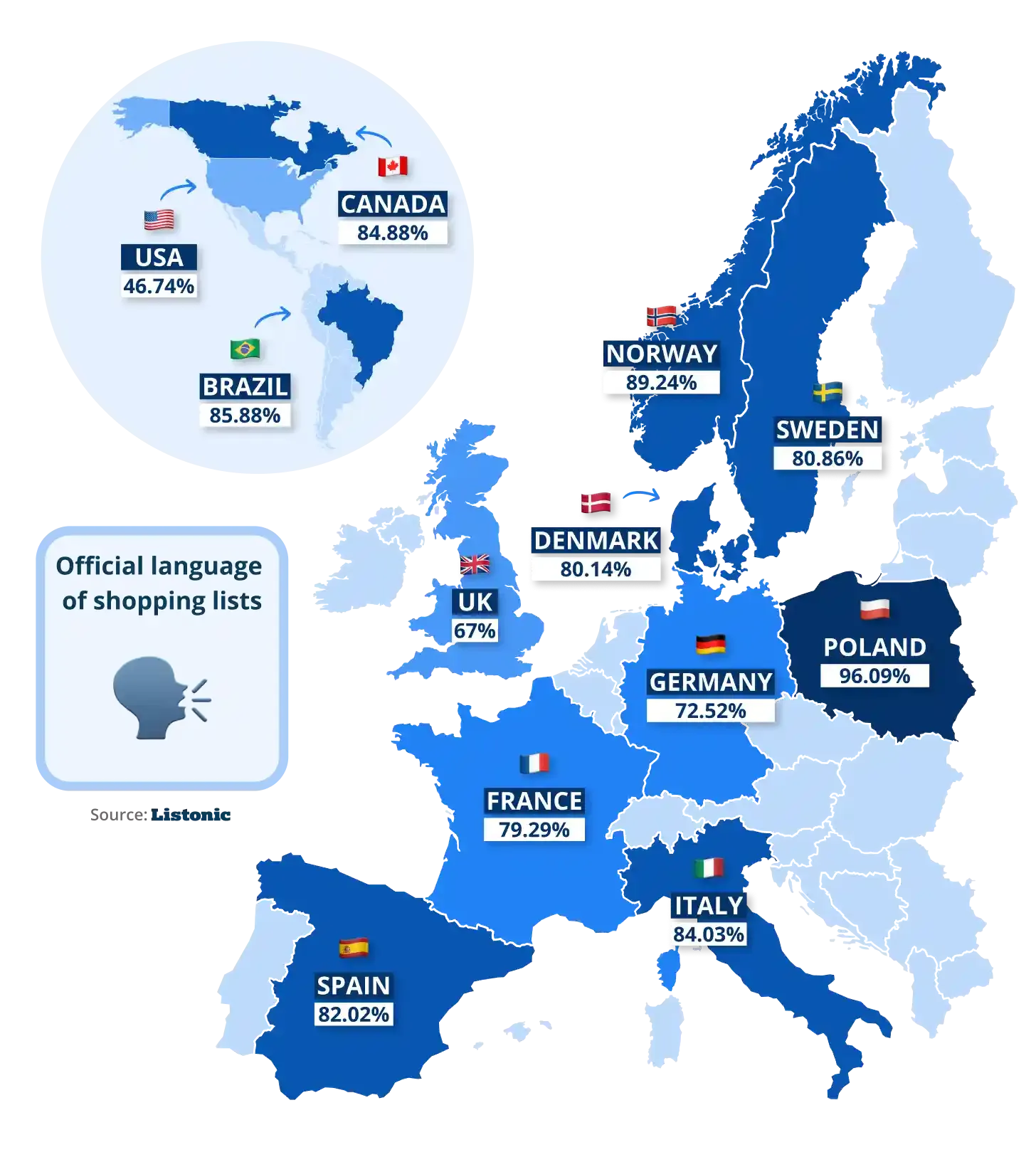
In Germany, 72.52% of shopping lists created between June 1, 2023, and May 31, 2024, were in German. Poland had the highest rate (96.09%), followed by Norway (89.24%).
The lowest share of the primary language was in the United States, where only 46.74% of shopping lists were in English, despite 78.3% of residents speaking only English at home, according to the American Community Survey (ACS) from 2018-2022.
Shopping speed champions
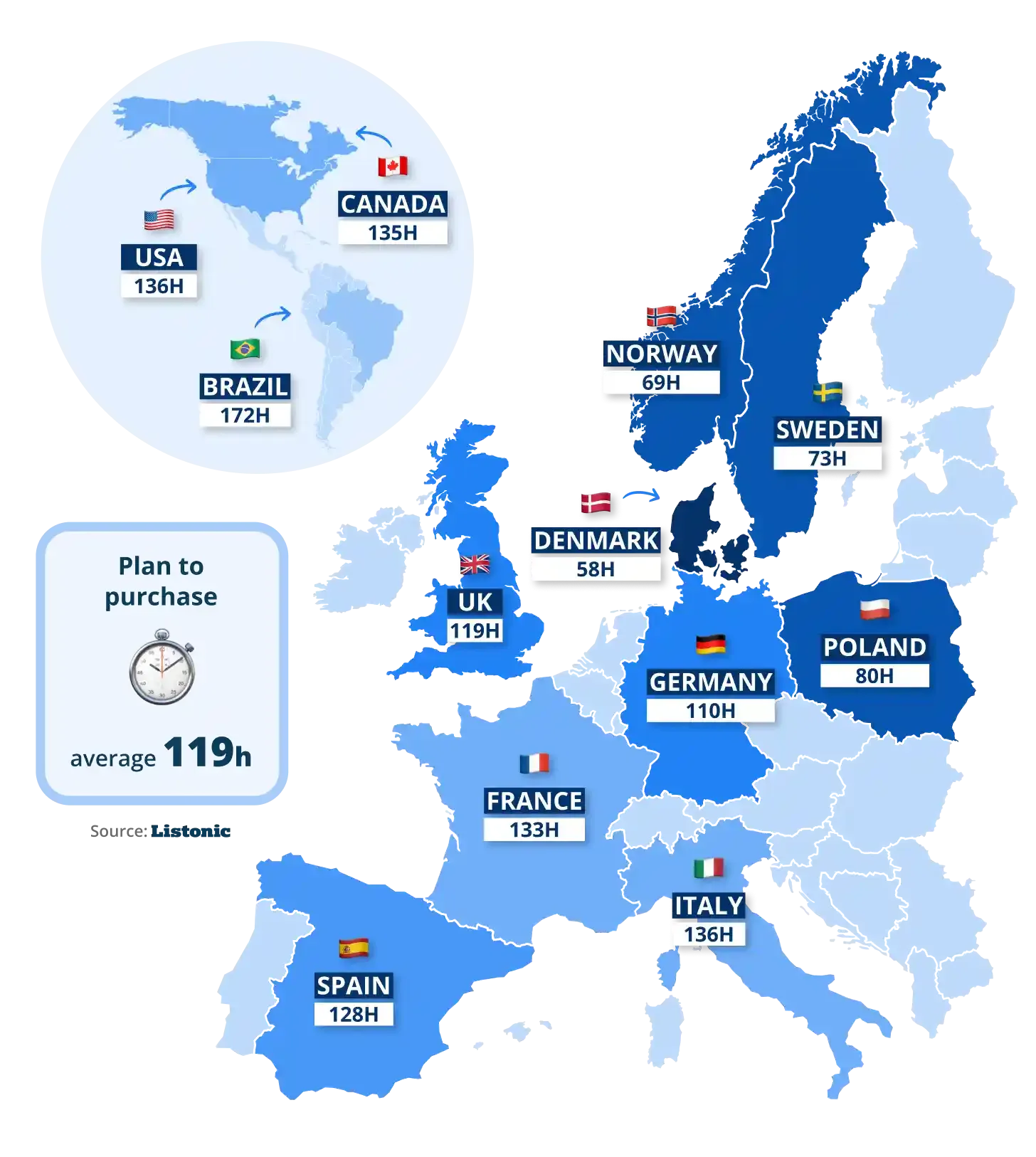
Germany ranks 5th in the list of nations with the fastest shopping list completion, with an average time of 110 hours (just over 4.5 days) from adding an item to purchasing it.
Danes complete their shopping lists the fastest (58 hours), while Brazilians are the slowest (172 hours).
These results may be influenced by factors such as shopping frequency or the availability of groceries.
The country of ultimate organizers
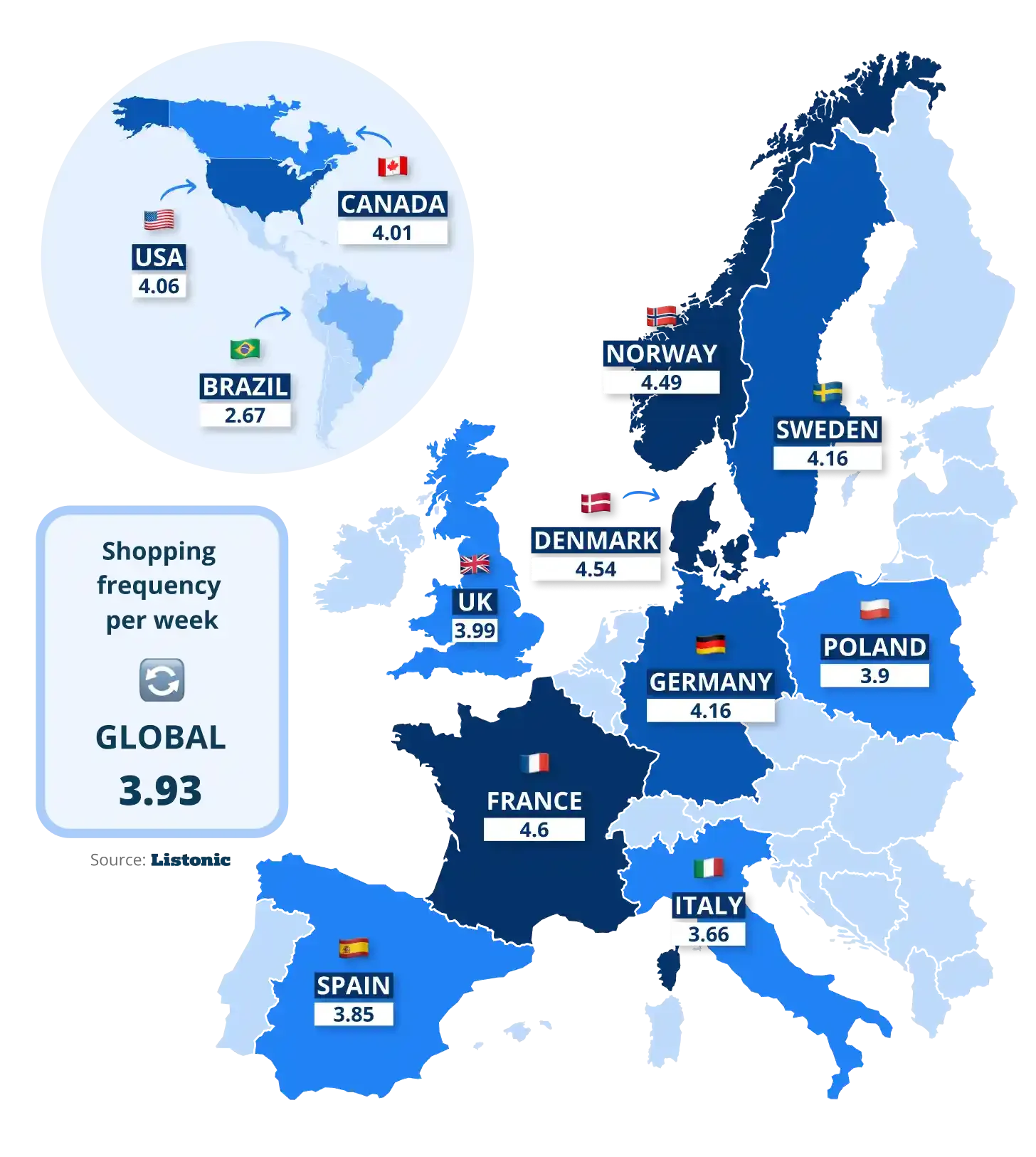
Germans planned their shopping in the Listonic app an average of 4.16 times per week. The most frequent users were the French (4.6 times/week), and the least frequent were Brazilians (2.67 times/week). The global average is 3.93 visits per week.
Most users from Germany (36.30%) used the Listonic app once a week.

Where do the insights come from?
The Listonic app has been downloaded over 20 million times worldwide, with more than 115,000 active users in Germany. Between June 1, 2023, and May 31, 2024, 560,265 shopping lists were created in Germany, with 23,989,036 products added.
Globally, during the same period, 13,637,355 shopping lists were created, with 371,443,058 products added.
More about Listonic