How to freeze milk and store milk alternatives
Quick answer
-
Fridge
Keeps for until the use-by date
Keep regular milk in the fridge at or below 40°F (4°C) until the package use-by date.
Watch out Don't keep opened plant milks longer than 7 to 10 days.
-
Freezer
Keeps for 3 months
Freeze plain or flavored milk and count the 3 months from the date of purchase.
Watch out FoodKeeper doesn't recommend freezing lactose-free milk.
You can freeze milk for 3 months, counted from the date of purchase. In the fridge, regular milk keeps until the package use-by date, and opened almond, soy, rice, and coconut milk last 7 to 10 days. Milk that needs refrigeration can sit out for no more than 2 hours, or 1 hour above 90°F (32°C).
Buying milk this week?
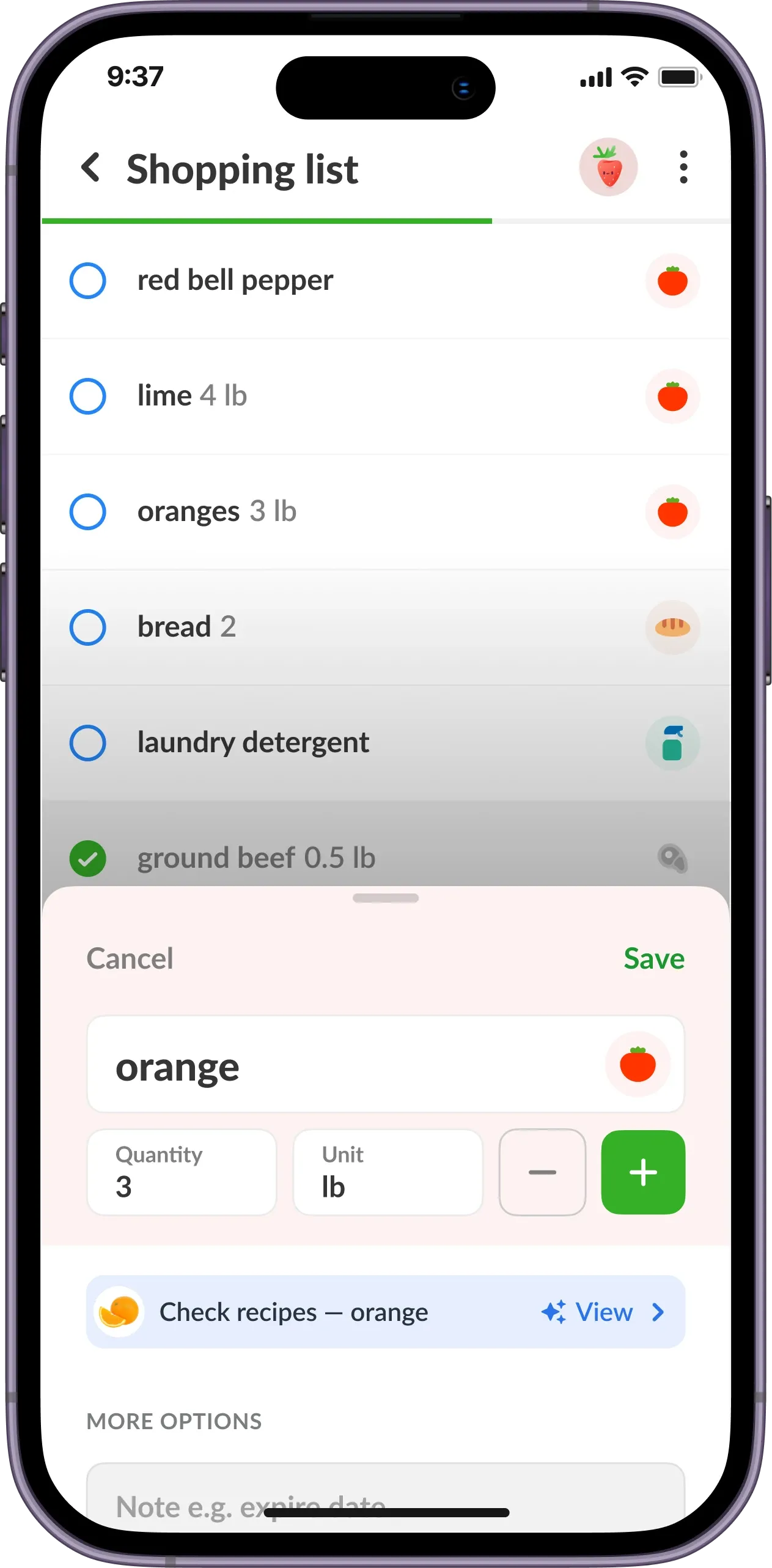
On a Listonic list, every item gets the amount you need and a note on when to use it by.
- Quantity and unit on every item
- A note like “fridge, use within a week”
- One list shared with everyone at home
Milk keeps in the fridge until the use-by date on the package, and you can freeze it for 3 months. Opened almond, soy, rice, and coconut milk last 7 to 10 days in the fridge.
These times come from USDA FoodKeeper, plus USDA and FDA rules on leaving food out and reading date labels.
Can you freeze milk?
Yes. USDA FoodKeeper gives plain or flavored milk 3 months in the freezer, counted from the date of purchase.
To freeze milk, set your freezer to 0°F (-18°C). Food kept at that temperature stays safe, and only quality suffers with long freezer storage, so the 3 months is a quality guide, not a safety limit.
Can you freeze lactose-free milk?
No. FoodKeeper doesn’t recommend freezing lactose-free milk.
Can you freeze eggnog?
Yes, you can freeze store-bought eggnog for 6 months from the date of purchase, according to USDA FoodKeeper. In the fridge, it keeps 3 to 5 days from the date of purchase.
How long does milk last?
Regular milk keeps in the fridge until the package use-by date, according to USDA FoodKeeper. Keep the fridge at or below 40°F (4°C).
Other kinds of milk have their own times, shown below.
| Type of milk | Storage time | After opening |
|---|---|---|
| Regular milk, plain or flavored | Fridge, until the package use-by date | No separate time given |
| Almond, soy, rice, or coconut milk | Fridge, until the package use-by date | 7 to 10 days in the fridge |
| Lactose-free milk | No time given | 1 week in the fridge |
| Ultra-pasteurized milk | 1 to 3 months in the fridge | 7 to 10 days in the fridge |
| Shelf-stable milk | 6 to 12 months in the pantry | 5 to 7 days in the fridge |
| Canned evaporated or condensed milk | 12 months in the pantry | 4 to 5 days in the fridge |
| Powdered milk | 3 to 5 years in the pantry | 3 months in the pantry |
How long does milk last after opening?
FoodKeeper gives regular milk no separate time after opening. Its fridge time is the package use-by date.
Other kinds do have one. Opened plant milks keep 7 to 10 days, lactose-free milk 1 week, ultra-pasteurized milk 7 to 10 days, and shelf-stable milk 5 to 7 days. Keep all of them in the fridge once you open them.
How long does shelf-stable milk last?
Shelf-stable milk keeps 6 to 12 months in the pantry, counted from the date of purchase. Once you open it, keep it in the fridge for 5 to 7 days.
How long does ultra-pasteurized milk last?
Ultra-pasteurized milk keeps 1 to 3 months in the fridge, according to FoodKeeper. After opening, it keeps 7 to 10 days.
How long do powdered and canned milk last?
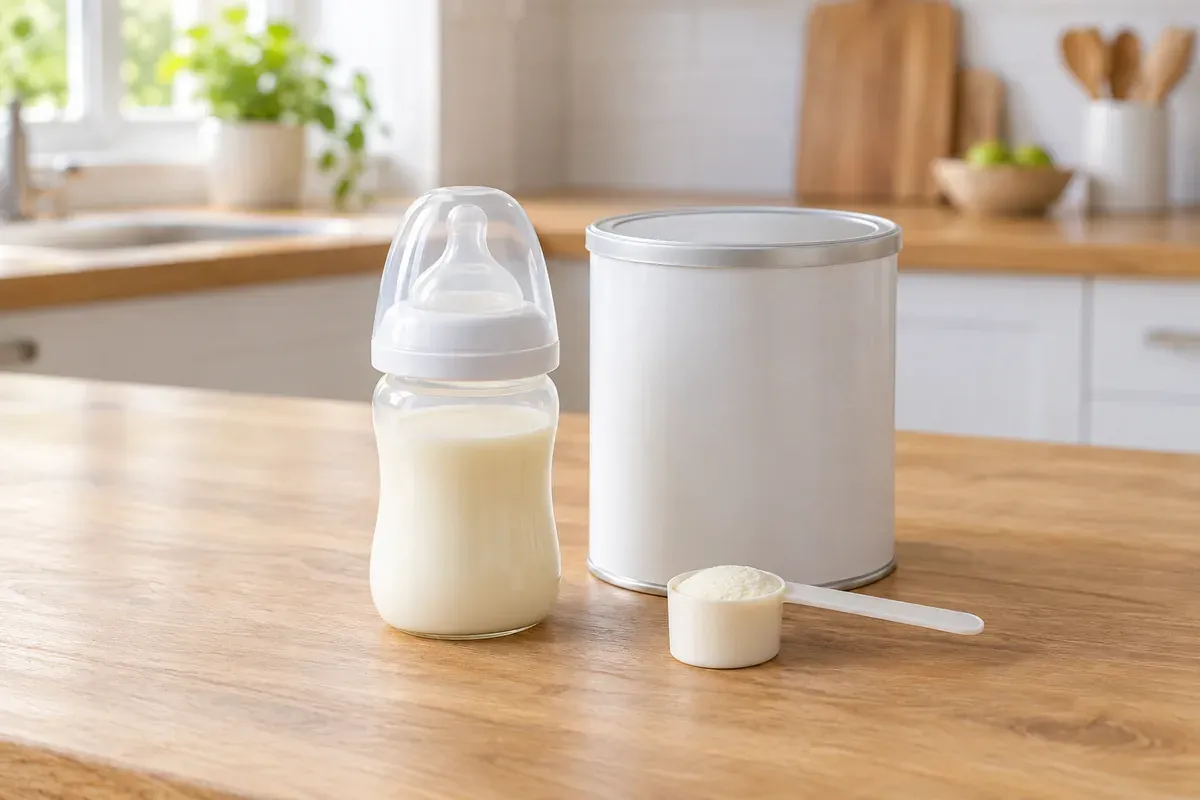
Powdered milk keeps 3 to 5 years in the pantry. That time is based on cool temperatures and dark storage, and in hot temperatures powdered milk may spoil as quickly as 3 months.
After you open it, FoodKeeper gives powdered milk 3 months in the pantry. Canned evaporated or condensed milk keeps 12 months in the pantry from the date of purchase, then 4 to 5 days in the fridge after opening.
Does kefir go bad?
Yes, kefir goes bad, and once you open it, it keeps only 1 to 2 days in the fridge. Unopened, it keeps 1 week from the date of purchase, according to USDA FoodKeeper. FoodKeeper doesn’t recommend freezing kefir.
How long can milk sit out?
Milk that belongs in the fridge can sit out for no more than 2 hours, or 1 hour when the air is above 90°F (32°C). That’s the FDA’s two-hour rule for foods that need refrigeration.
The limit is short because of the USDA’s Danger Zone. Bacteria grow most rapidly between 40°F (4°C) and 140°F (60°C), doubling in number in as little as 20 minutes.
FoodKeeper says to keep almond, soy, rice, and coconut milk refrigerated, so the same limit applies to them. It keeps shelf-stable milk in the pantry until you open it, so the rule is for milk that goes in the fridge.
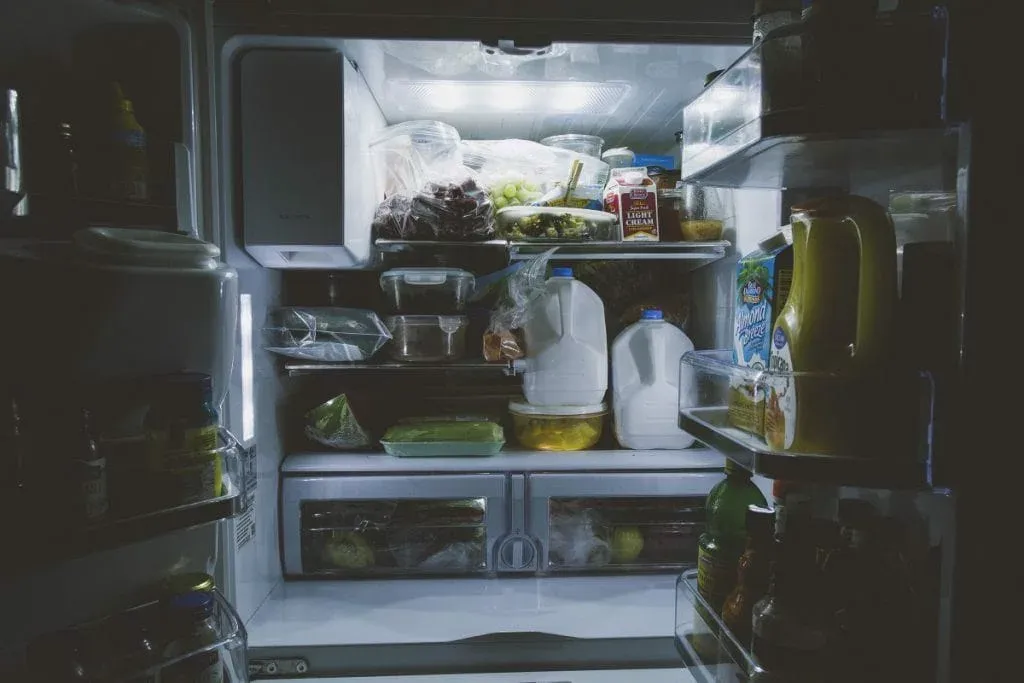
Pick up milk at the end of your shopping trip, and put it in the fridge as soon as you get home. Don’t crowd the fridge so tightly that air can’t circulate.
Does almond milk go bad?
Yes. Almond milk has a time limit, and so do soy, rice, and coconut milk.
How long does almond milk last after opening?
Opened almond milk lasts 7 to 10 days in the fridge, according to USDA FoodKeeper. Soy, rice, and coconut milk have the same time, and FoodKeeper’s fridge time for all four is the package use-by date.
Does almond milk need to be refrigerated?
FoodKeeper says to keep almond milk refrigerated. It says the same for soy, rice, and coconut milk.
Can you freeze almond milk or coconut milk?
FoodKeeper gives no freezer time for almond, soy, rice, or coconut milk, so this guide gives none.
Does oat milk go bad?
FoodKeeper has no oat milk line, so there’s no USDA time to give for it. Check the date on the package, and remember that any food with an off odor, flavor, or texture should not be eaten.
How can you tell if milk is bad?
Bad milk develops an off odor, flavor, or texture. That’s how the USDA describes spoiled food in general, and it applies to plant milks too.
Smell the milk and check its texture before you pour, especially once the date has passed. Food can spoil much faster when it isn’t stored or handled properly.
Should you drink spoiled milk?
No. The USDA says a food that has developed an off odor, flavor, or texture should not be eaten.
Two kinds of bacteria can be on food. Pathogenic bacteria cause foodborne illness. Spoilage bacteria make food deteriorate and lose wholesomeness, which creates an off taste or bad odor.
How long is milk good after the expiration date?
Milk can still be safe after the date on the carton if you stored it properly and it shows no spoilage. The USDA’s food product dating guidance says a food handled properly should still be safe and wholesome after the date passes, until spoilage is evident.
So with expired milk, check for spoilage before you decide. If it has an off odor, flavor, or texture, don’t drink it.
Labels vary, because there are no uniform date phrases on food in the United States. These are the common ones.
- A “best if used by” date shows when the product will have its best flavor or quality. It’s not a purchase or safety date.
- A “sell-by” date tells the store how long to display the product for sale. It’s not a safety date.
- A “use-by” date is the last date recommended for using the product at peak quality. It’s not a safety date, except on infant formula.
- A “freeze-by” date shows when to freeze the product to keep peak quality. It’s not a purchase or safety date.
Frequently asked questions
How long does lactose-free milk last after opening?
Lactose-free milk lasts 1 week in the fridge after you open it, according to USDA FoodKeeper.
Is the sell-by date on milk a safety date?
No. A sell-by date tells the store how long to display the milk for sale. It isn't a safety date.
How long does coconut milk last in the fridge?
FoodKeeper keeps coconut milk in the fridge until the package use-by date. After you open it, it lasts 7 to 10 days.
When should you put milk in the fridge after shopping?
As soon as you get home. The FDA says foods that need refrigeration should go in the fridge as soon as you get them home.
How should you store powdered milk?
Keep it in the pantry, cool and dark. FoodKeeper gives powdered milk 3 to 5 years that way, but in hot temperatures it may spoil as quickly as 3 months.