Where to store fruits and vegetables, and how long they last
Quick answer
-
Room temperature
Keeps for 7 days-2 months
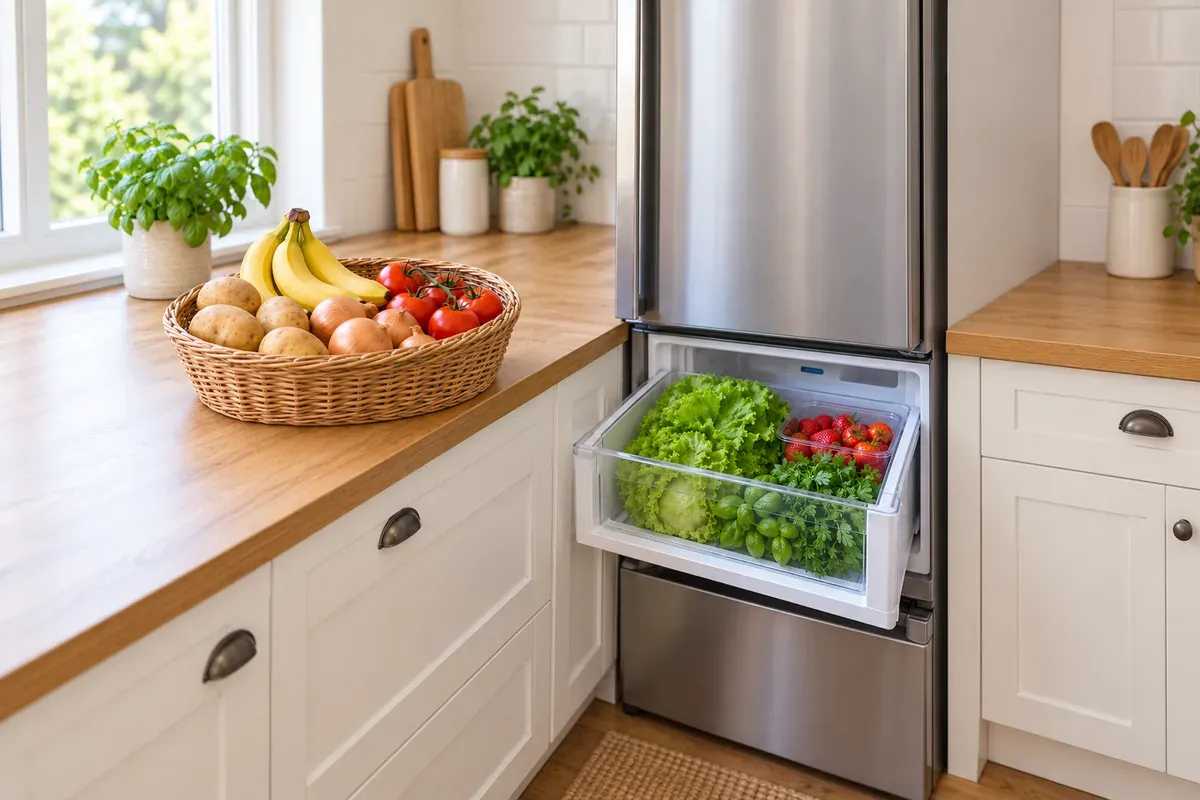
Keep potatoes, onions, garlic, sweet potatoes, apples, citrus fruit, and winter squash in the pantry, and let bananas, avocados, tomatoes, and melons ripen at room temperature.
Watch out Keep tomatoes and whole potatoes out of the fridge, because refrigeration may affect tomato flavor and can make potatoes darken during cooking.
-
Fridge
Keeps for 3 days-3 months
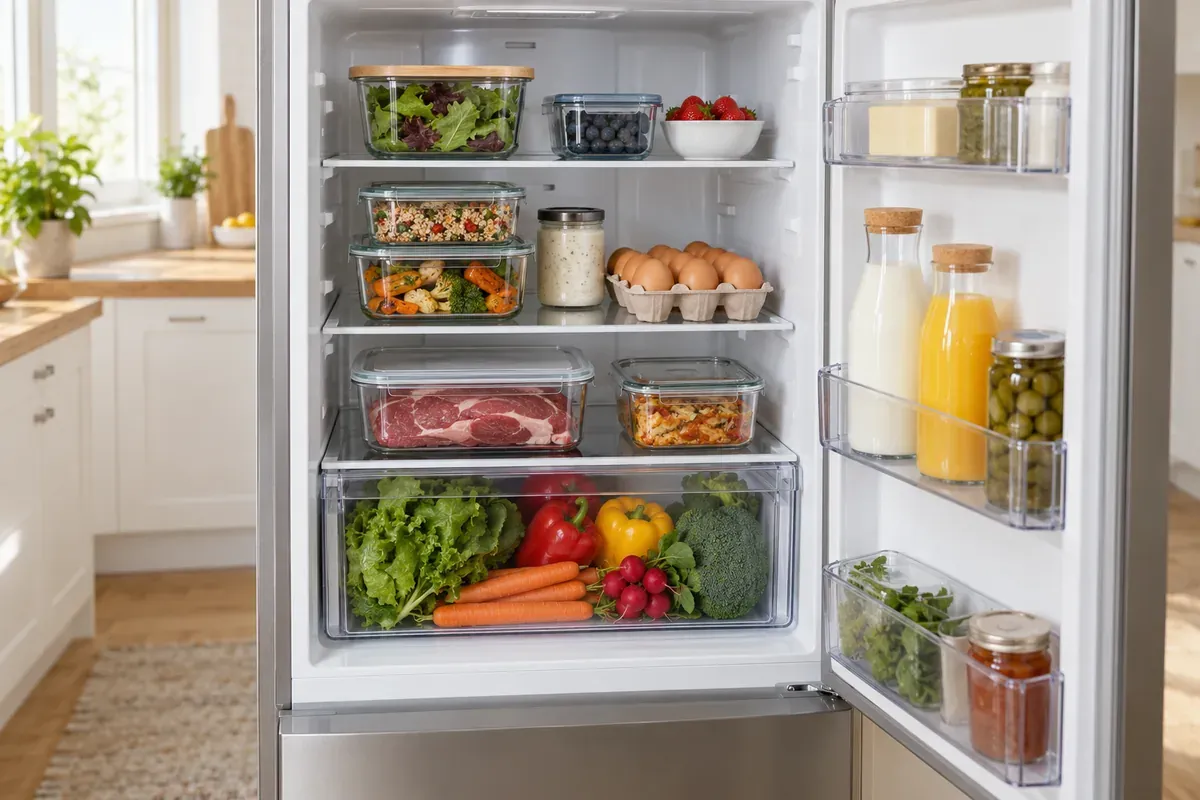
Store perishable produce such as strawberries, lettuce, herbs, and mushrooms in a clean refrigerator at 40°F (4°C) or below, and refrigerate all pre-cut or packaged produce.
Watch out Throw out soft fruits and vegetables that have mold, because they can be contaminated below the surface.
-
Freezer
Keeps for 1-12 months
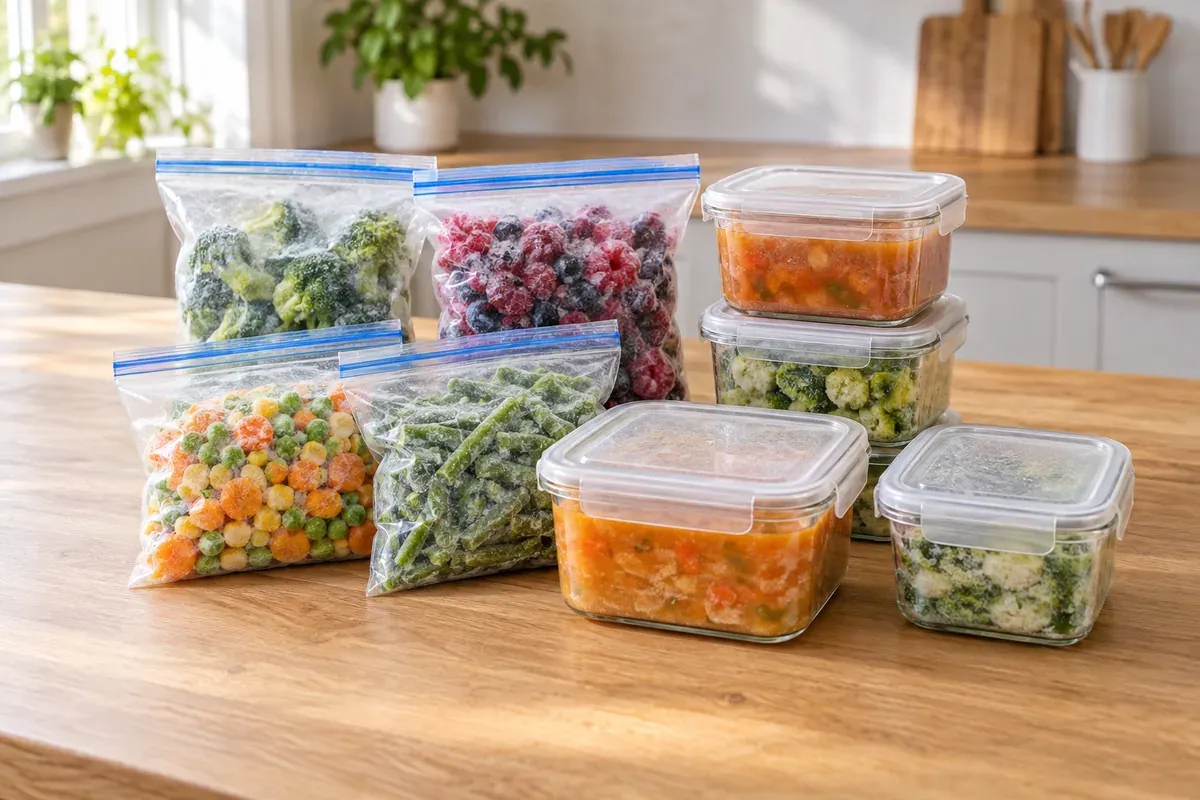
Blanch most vegetables first by partly cooking them in boiling water or a microwave oven, chill them rapidly, then freeze them.
Watch out USDA FoodKeeper does not recommend freezing avocados or citrus fruit.
Whole fruits and vegetables last from 3 days to 3 months in the fridge, depending on the food. Strawberries, lettuce, herbs, mushrooms, and all pre-cut or packaged produce belong in the fridge at 40°F (4°C) or below. Potatoes, onions, garlic, sweet potatoes, apples, and winter squash also have a pantry time in USDA FoodKeeper. Wash produce under plain running water, with no soap.
Buying fruits and vegetables this week?
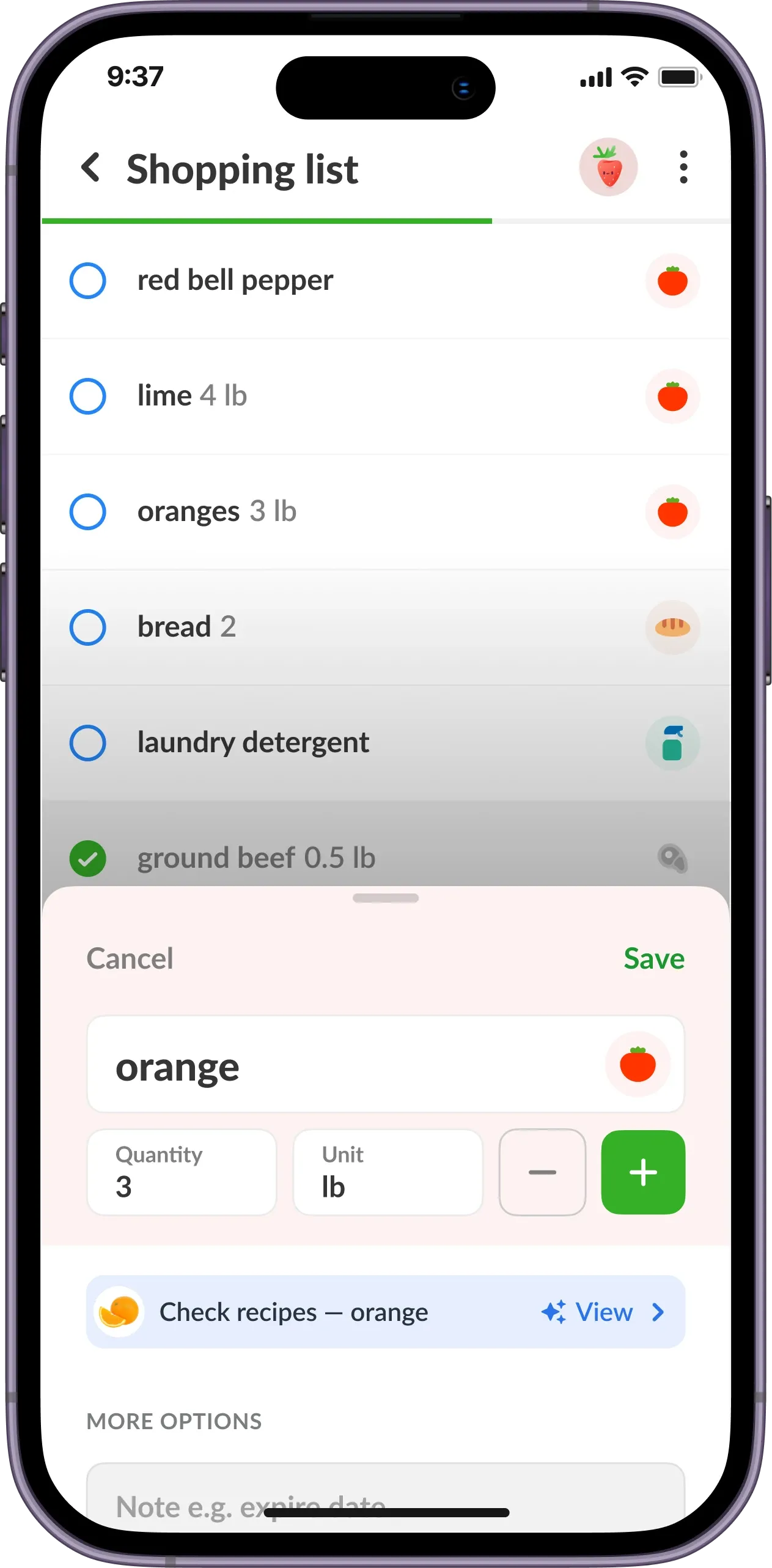
On a Listonic list, every item gets the amount you need and a note on when to use it by.
- Quantity and unit on every item
- A note like “fridge, use within a week”
- One list shared with everyone at home
Whole fruits and vegetables last from 3 days to 3 months in the fridge, depending on the food, and many of them keep at room temperature too. Strawberries, lettuce, herbs, mushrooms, and all pre-cut produce are the ones that go straight into the fridge.
The storage times below come from the USDA’s FoodKeeper data. The advice on washing, mold, and freezing comes from the FDA and the USDA Food Safety and Inspection Service.
How long do fruits and vegetables last?
Ripe bananas last 3 days in the fridge, and winter squash lasts up to 3 months, so the right spot depends on the food. The table gives USDA FoodKeeper times for common fruits and vegetables.
Most times count from the day you buy the food. Fridge times for bananas and avocados apply to ripe fruit, which means tender, fully developed, and ready to eat.
| Food | Room temperature | Fridge | Freezer |
|---|---|---|---|
| Bananas | Until ripe | 3 days (ripe fruit) | 2 to 3 months |
| Avocados | Until ripe | 3 to 4 days (ripe fruit) | Not recommended |
| Tomatoes | Until ripe, then 7 days | Pantry storage is recommended | 2 months |
| Apples | 3 weeks | 4 to 6 weeks | 8 months (cooked apples) |
| Melons | Until ripe, then 7 days | 2 weeks, or 2 to 4 days after opening | 1 month (balled melon) |
| Citrus fruit | 10 days | 10 to 21 days | Not recommended |
| Potatoes | 1 to 2 months | 1 to 2 weeks | 10 to 12 months (cooked or mashed) |
| Sweet potatoes | 2 to 3 weeks | Not listed | Not listed |
| Onions | 1 month | 2 months | 10 to 12 months |
| Garlic | 1 month (unbroken bulbs) | 3 to 14 days (cloves) | 1 month |
| Winter squash | 2 to 6 weeks | 1 to 3 months | 10 to 12 months |
How to store fruits and vegetables in the fridge
Put perishable fruits and vegetables in a clean refrigerator at 40°F (4°C) or below. The FDA’s guide to selecting and serving produce safely names strawberries, lettuce, herbs, and mushrooms as examples, and says to refrigerate all produce you buy pre-cut or packaged.
At the store, choose produce that isn’t bruised or damaged. For pre-cut, bagged, or packaged produce, choose only items that are refrigerated or surrounded by ice.
How long does fruit last in the fridge?
Whole fruit lasts from 3 days to 6 weeks in the fridge, depending on the fruit. Apples keep 4 to 6 weeks, citrus fruit keeps 10 to 21 days, and a whole melon keeps 2 weeks.
Bananas and avocados stay at room temperature until they’re ripe. Ripe avocados then keep 3 to 4 days in the fridge, and ripe bananas keep 3 days, although a banana’s skin will blacken.
How long do vegetables last in the fridge?
The vegetables in the table last from 3 days to 3 months in the fridge, depending on the vegetable. Winter squash keeps 1 to 3 months, onions keep 2 months, and garlic cloves keep 3 to 14 days.
Whole potatoes keep 1 to 2 weeks in the fridge, but the pantry is the better place for them, as the room temperature section below explains.
How long does cut fruit last in the fridge?
USDA FoodKeeper gives 2 to 4 days for melon after opening. Cover cut fruit with plastic wrap to keep it moist and away from mold spores in the air, and refrigerate all fruit you buy pre-cut or packaged.
Which fruits and vegetables don’t need to be refrigerated?
FoodKeeper lists a pantry time for bananas, avocados, tomatoes, apples, melons, citrus fruit, potatoes, sweet potatoes, onions, garlic, and winter squash, so you can keep all of them at room temperature. Sweet potatoes keep 2 to 3 weeks in the pantry.
Fruit that keeps at room temperature
Bananas, avocados, tomatoes, and melons stay at room temperature until they’re ripe. Tomatoes and melons then keep another 7 days.
Refrigeration may affect the flavor of tomatoes, and the USDA recommends pantry storage for them. Apples keep 3 weeks at room temperature, and citrus fruit keeps 10 days.
Vegetables that keep at room temperature
Whole potatoes keep 1 to 2 months in the pantry, which FoodKeeper lists as the recommended way to store them. In the fridge they last 1 to 2 weeks, and FoodKeeper notes that refrigeration can make potatoes darken during cooking and taste unpleasantly sweet.
Onions keep 1 month at room temperature, and winter squash keeps 2 to 6 weeks. Unbroken garlic bulbs keep 1 month in the pantry, while individual cloves belong in the fridge.
How to keep fruits and vegetables fresh longer
Buy undamaged produce, store each food in the place FoodKeeper lists for it, and cover cut pieces with plastic wrap.
- Choose produce that isn’t bruised or damaged.
- Put perishable produce in a clean fridge at 40°F (4°C) or below.
- Cover fresh or cut fruits and vegetables with plastic wrap to keep them moist and away from mold spores in the air.
- Cut away damaged or bruised areas before preparing or eating, and throw away produce that looks rotten.
How to wash fruits and vegetables
Wash fruits and vegetables under plain running water before you prepare or eat them, and gently rub them as you rinse. There is no need for soap or a produce wash.
The FDA’s tips for cleaning fruits and vegetables say to dry produce with a clean cloth or paper towel afterward, which further reduces bacteria. Soap, detergent, and commercial produce wash aren’t recommended, because produce is porous and can absorb them.
Wash produce even when you won’t eat the skin, and rinse it before you peel it, so dirt and bacteria aren’t carried from the surface when you peel or cut. Washing reduces bacteria but does not eliminate them.
How to wash firm produce and leafy heads
Scrub firm produce, such as melons and cucumbers, with a clean produce brush. For a head of lettuce or cabbage, remove the outermost leaves.
Do you need to wash pre-washed produce?
No, when the package says the produce is pre-washed or ready to eat. You can use it without further washing, and if you choose to wash it anyway, keep it away from unclean surfaces and utensils to avoid cross contamination.
Can you cut mold off fruits and vegetables?
Yes on firm produce, and no on soft produce. For firm fruits and vegetables with low moisture content, such as cabbage, bell peppers, and carrots, cut off at least 1 inch around and below a small mold spot, and keep the knife out of the mold. It is difficult for mold to penetrate dense foods, as the USDA’s page on molds on food explains.
Soft fruits and vegetables with high moisture content, such as cucumbers, peaches, and tomatoes, should be thrown out when moldy, because they can be contaminated below the surface.
Can you freeze fruits and vegetables?
Yes, for many of them. USDA FoodKeeper gives freezer times from 1 month to 12 months, and it does not recommend freezing avocados or citrus fruit.
Most vegetables that freeze well are low acid and need brief, partial cooking before freezing, called blanching. To blanch, partly cook them in boiling water or in a microwave oven, then chill them rapidly before freezing, as the USDA’s page on freezing and food safety describes.
How long do frozen vegetables last?
Onions and winter squash keep 10 to 12 months in the freezer, and so do cooked or mashed potatoes. Garlic keeps 1 month.
Which fruit can you freeze?
Bananas keep 2 to 3 months in the freezer, apples keep 8 months when cooked, tomatoes keep 2 months, and balled melon keeps 1 month.
Frequently asked questions
Can you wash fruit and vegetables with soap?
No. Soap, detergent, and commercial produce wash aren't recommended, because produce is porous and can absorb them. Plain running water is what the FDA advises.
Should tomatoes go in the fridge?
No, the USDA recommends pantry storage for tomatoes, because refrigeration may affect their flavor. They keep at room temperature until ripe, then 7 days.
Should potatoes go in the fridge?
Whole potatoes are better in the pantry, where they keep 1 to 2 months. In the fridge they last 1 to 2 weeks and can darken during cooking and taste unpleasantly sweet.
Where should you store garlic?
Keep unbroken bulbs in the pantry, where they last 1 month. Store individual cloves in the fridge, where they keep 3 to 14 days.
How long do bananas last in the fridge?
Ripe bananas keep 3 days in the fridge, and the skin will blacken. Bananas stay at room temperature until they're ripe.
Can you freeze avocados?
No, USDA FoodKeeper does not recommend freezing avocados. Ripe avocados keep 3 to 4 days in the fridge.