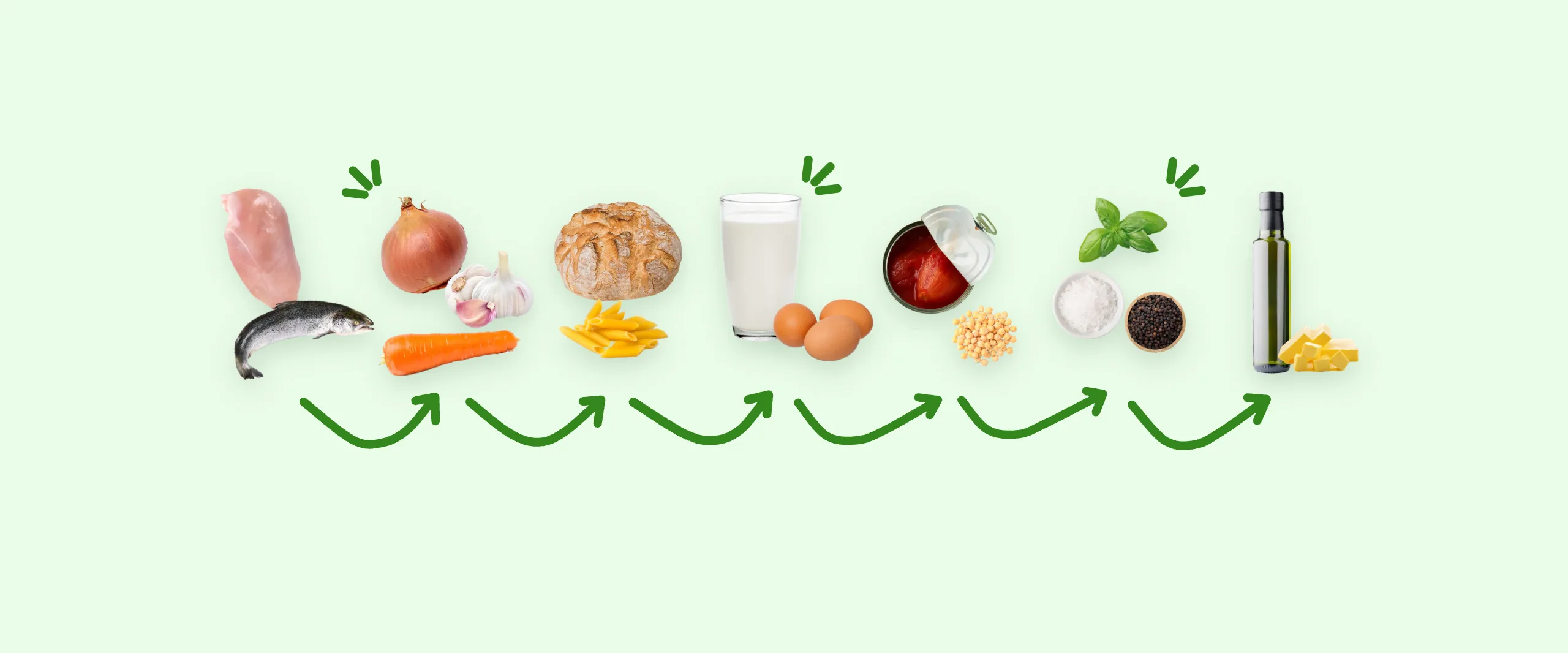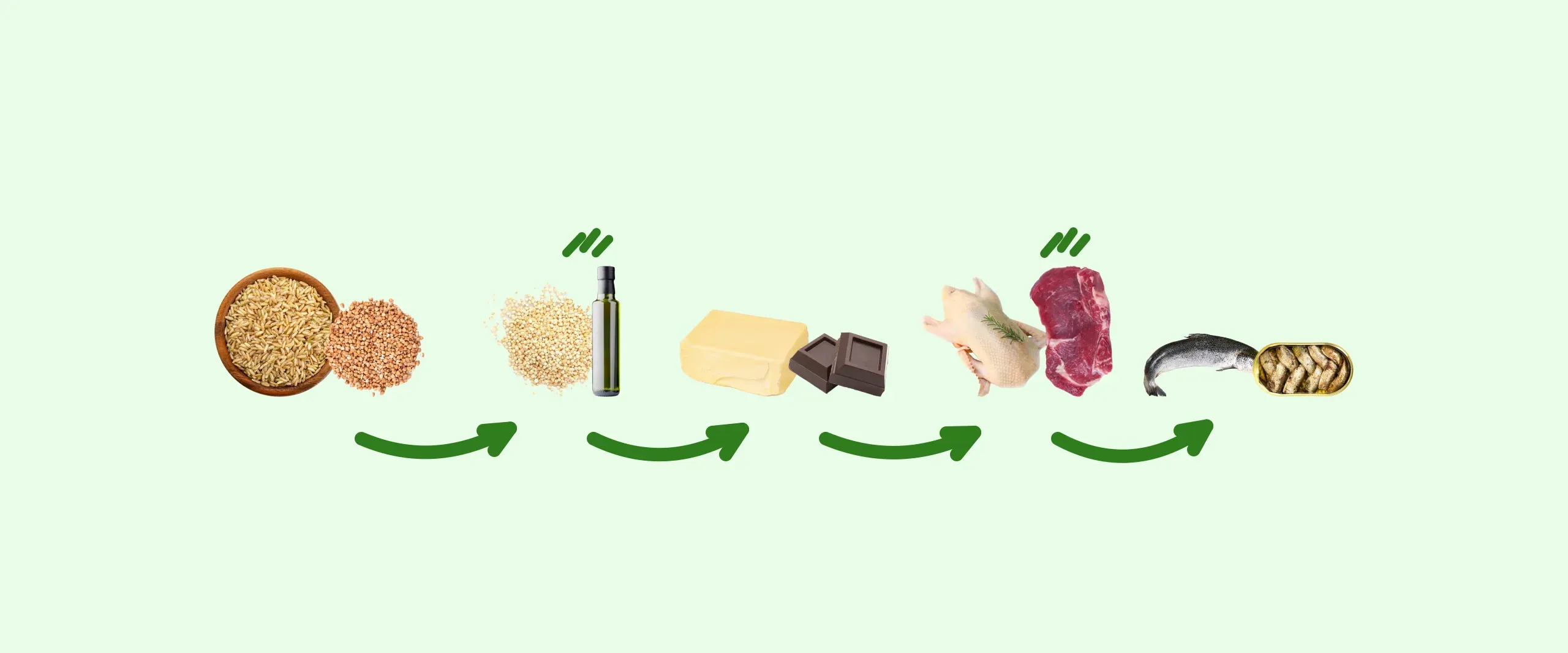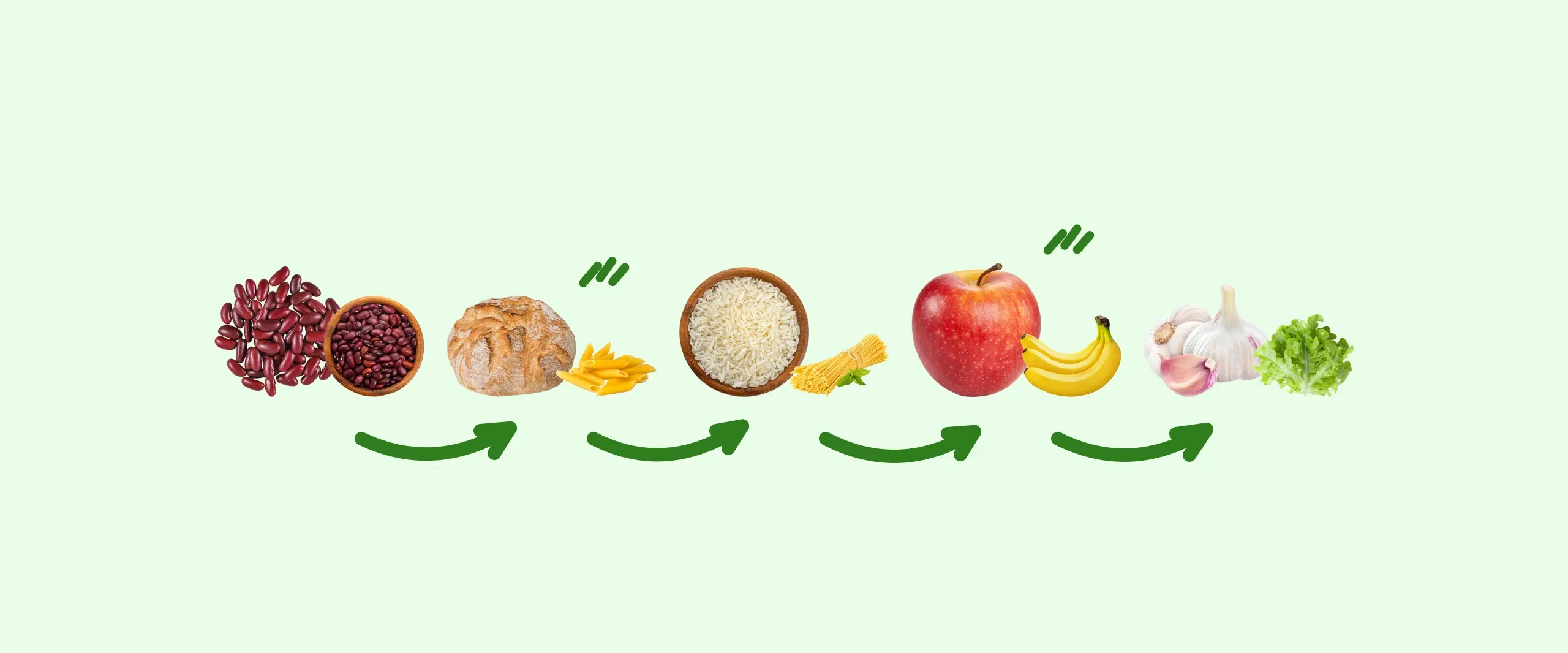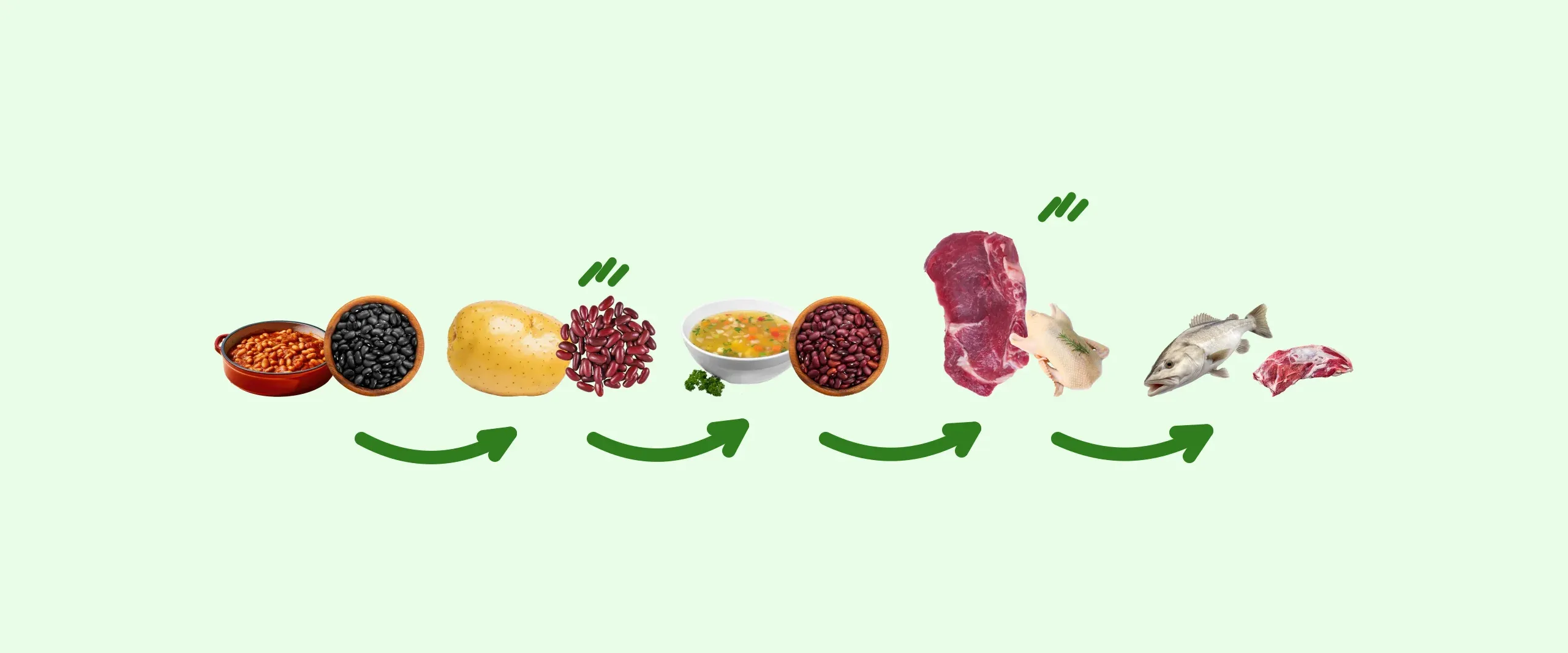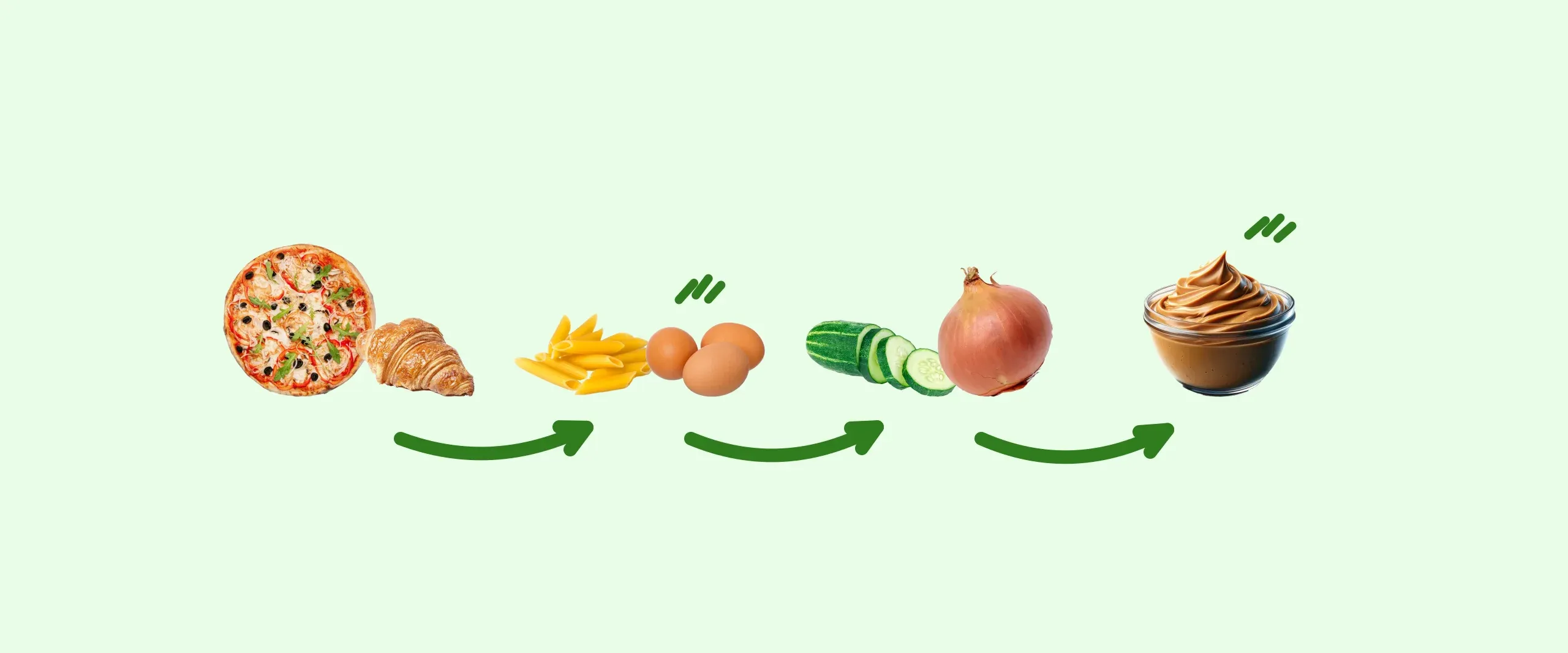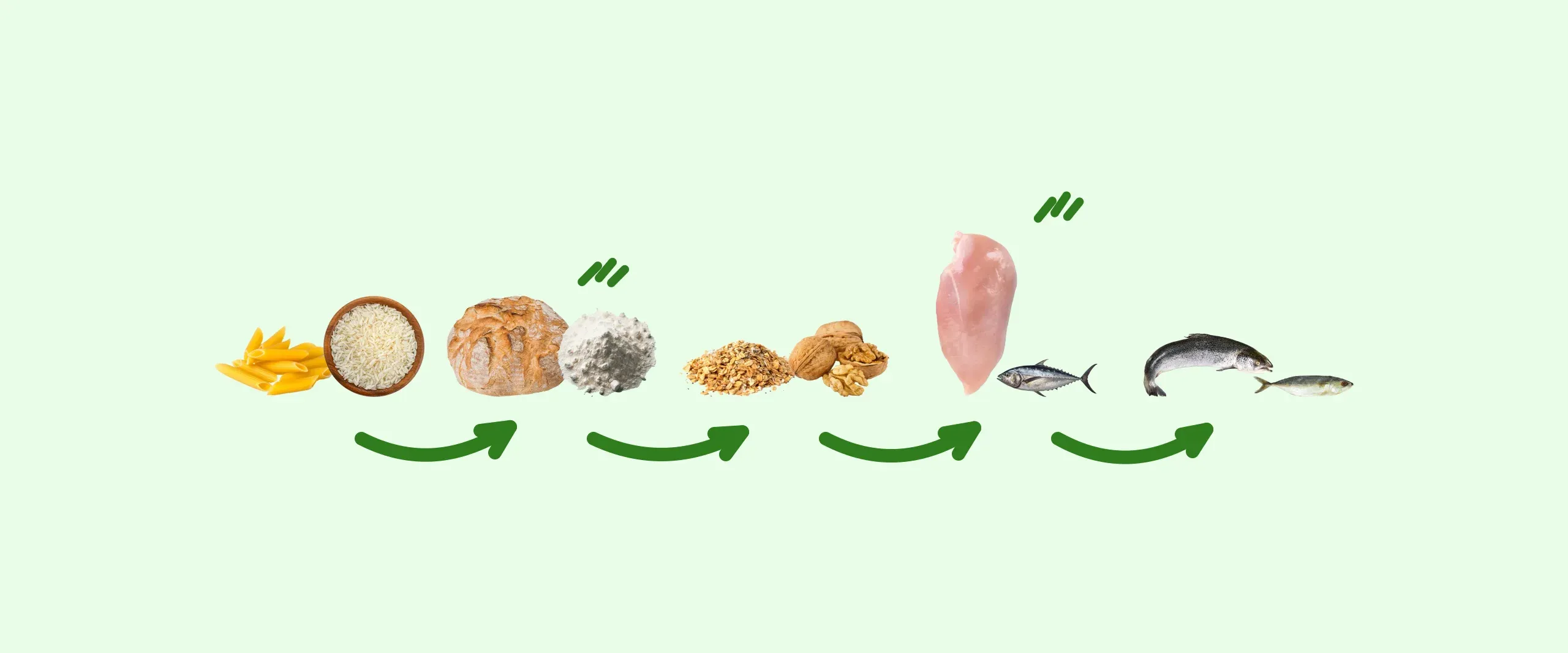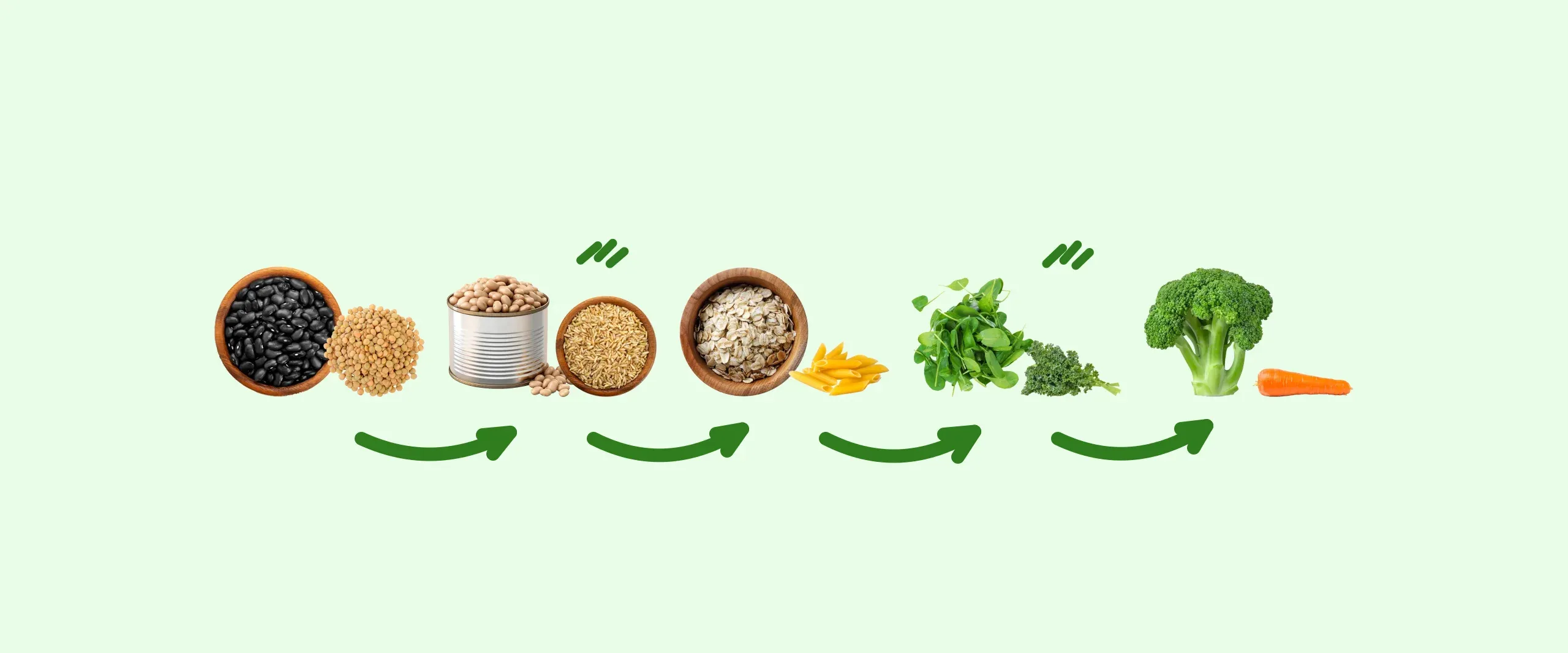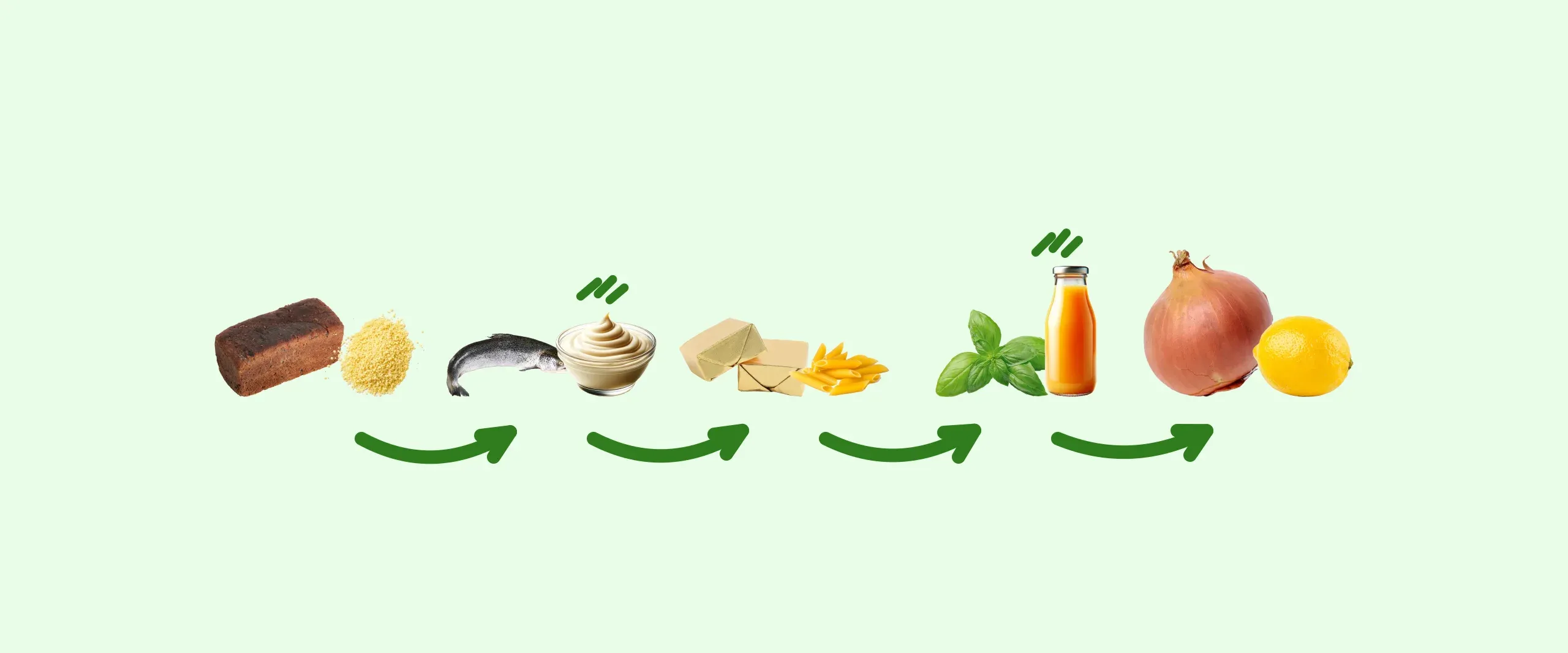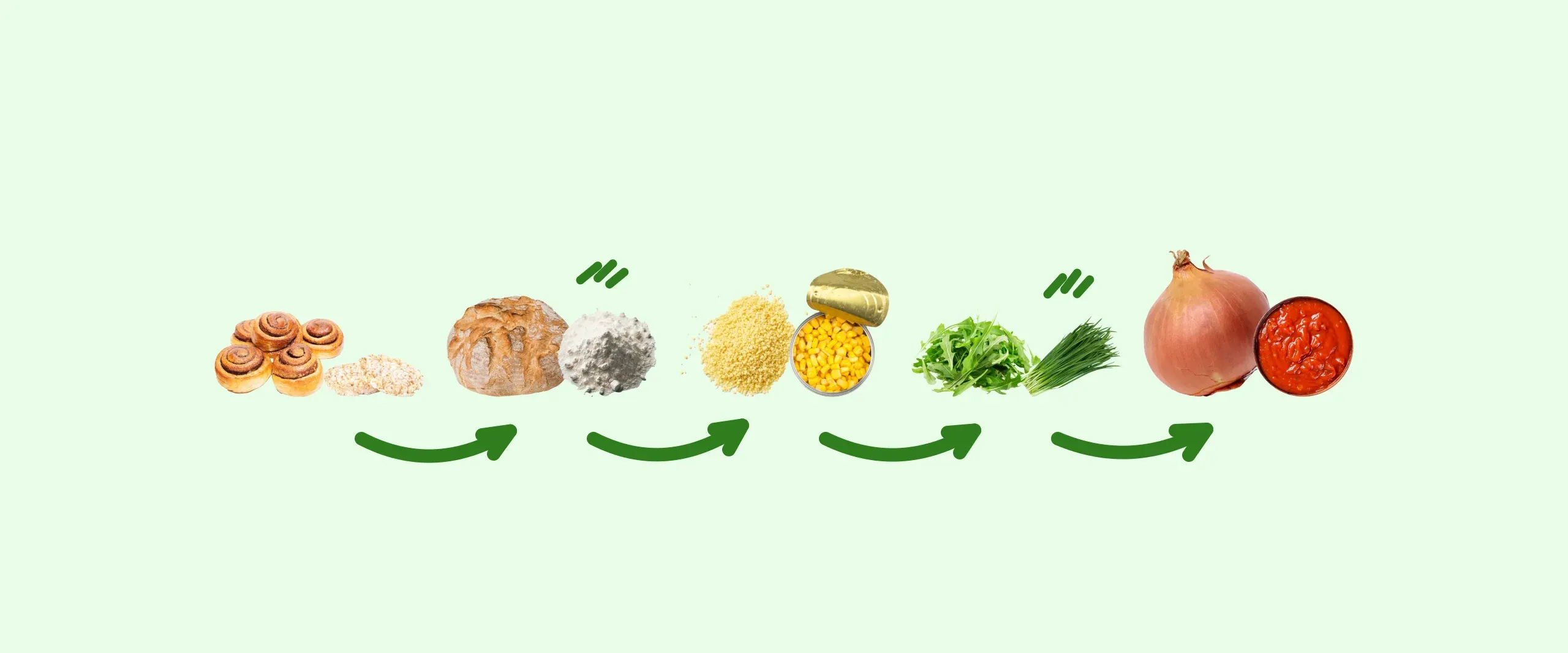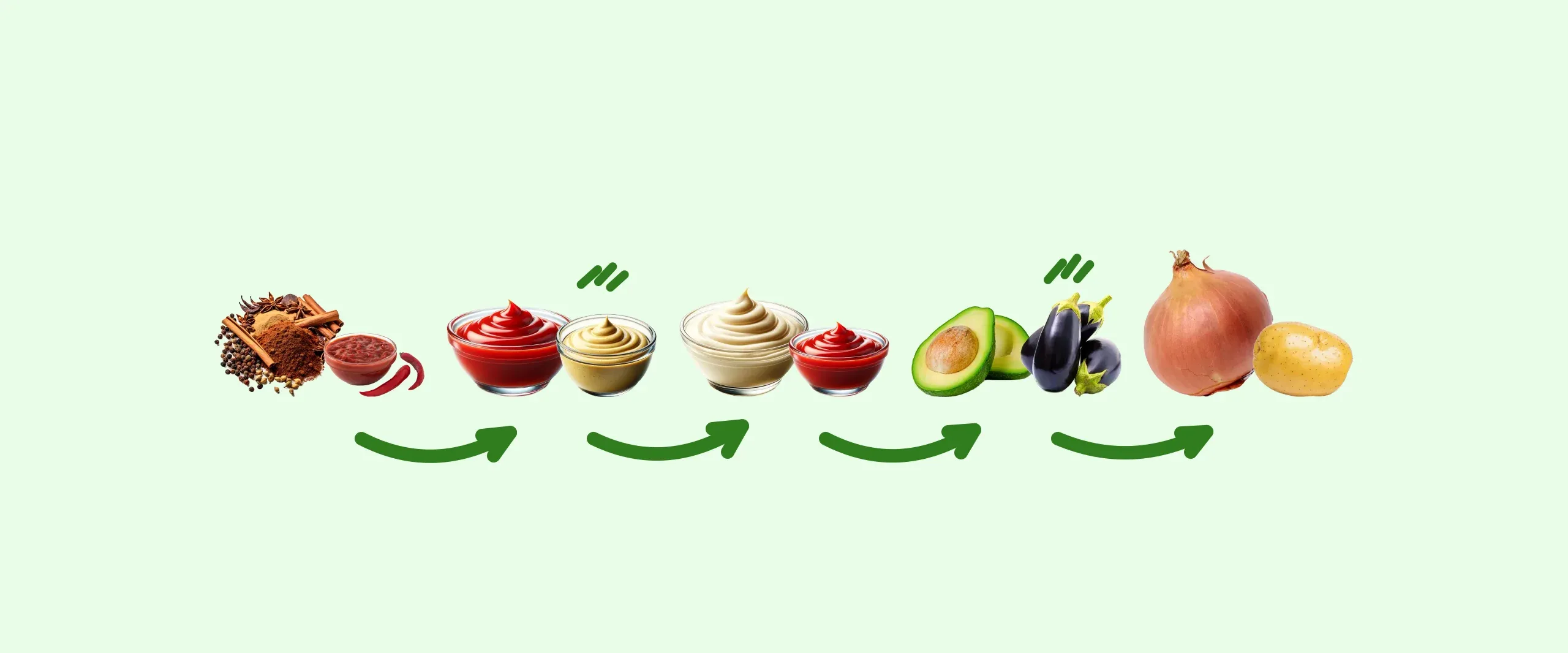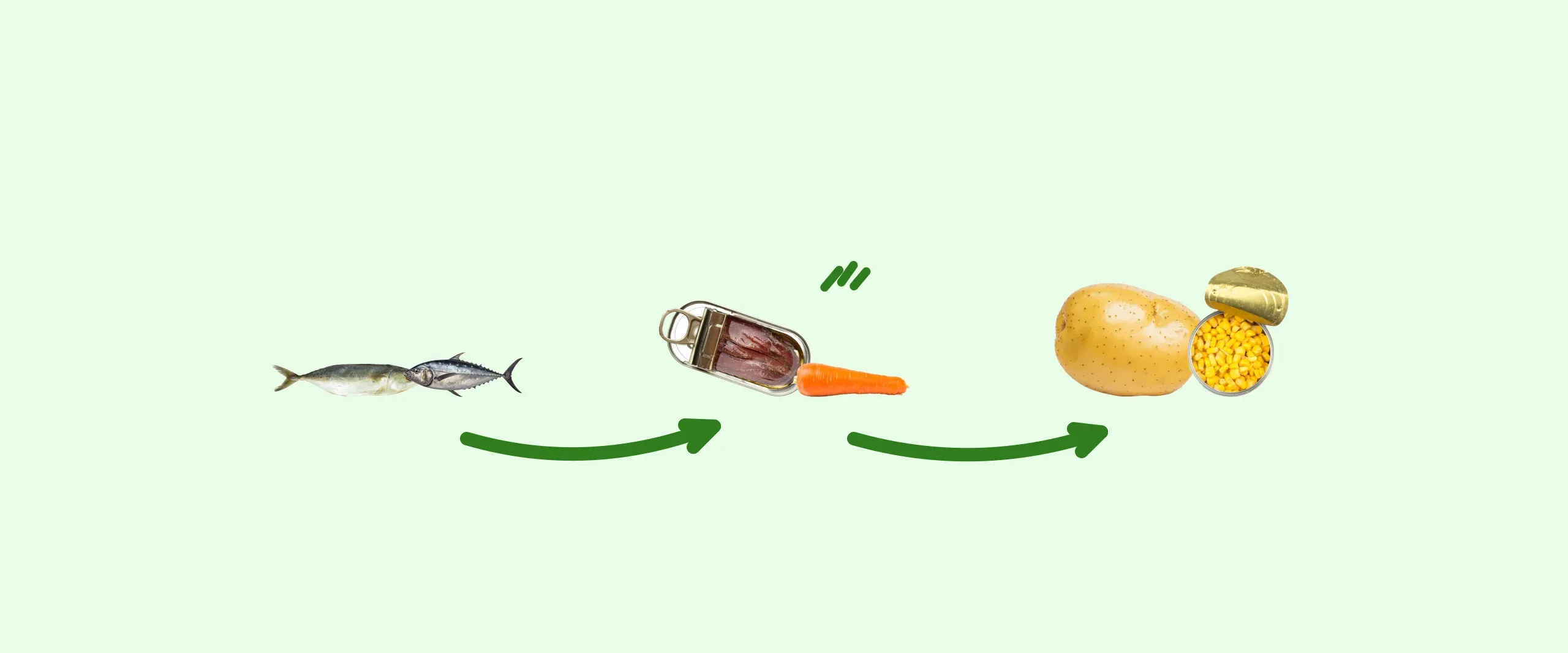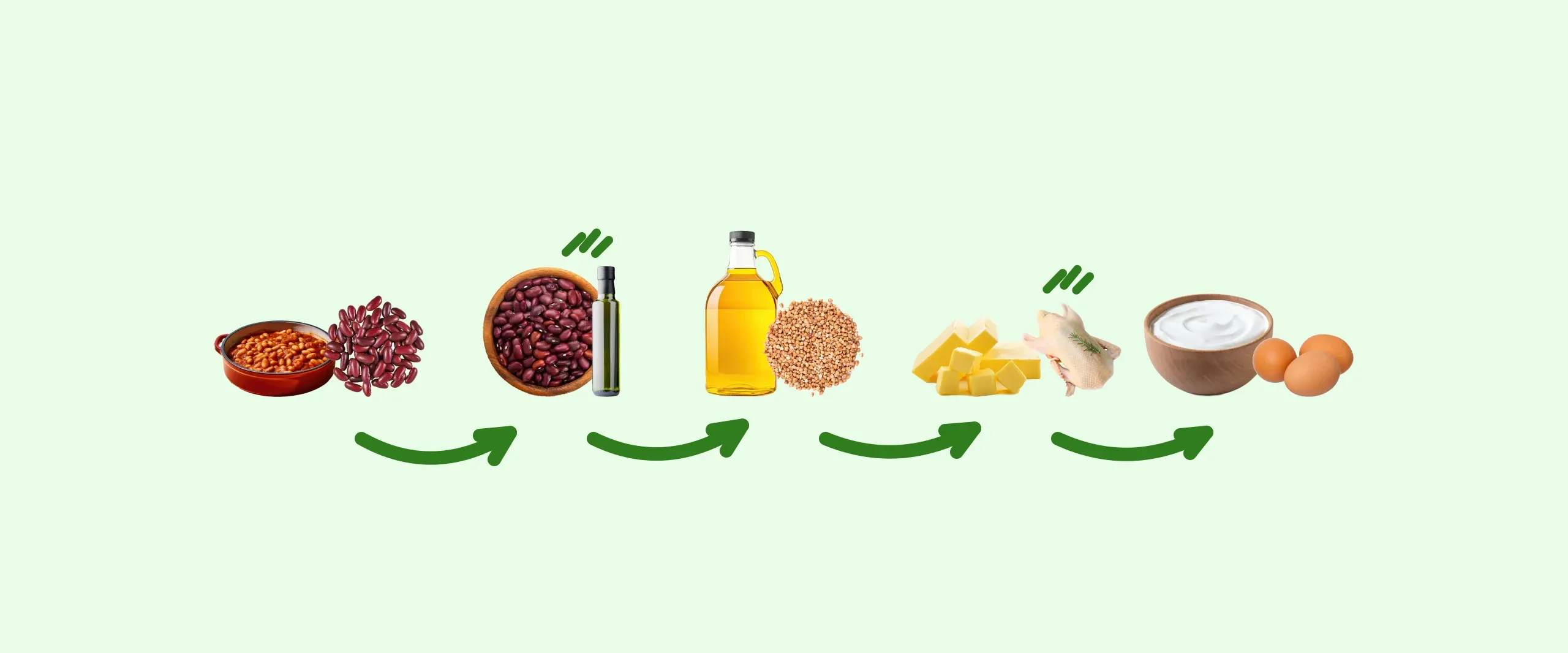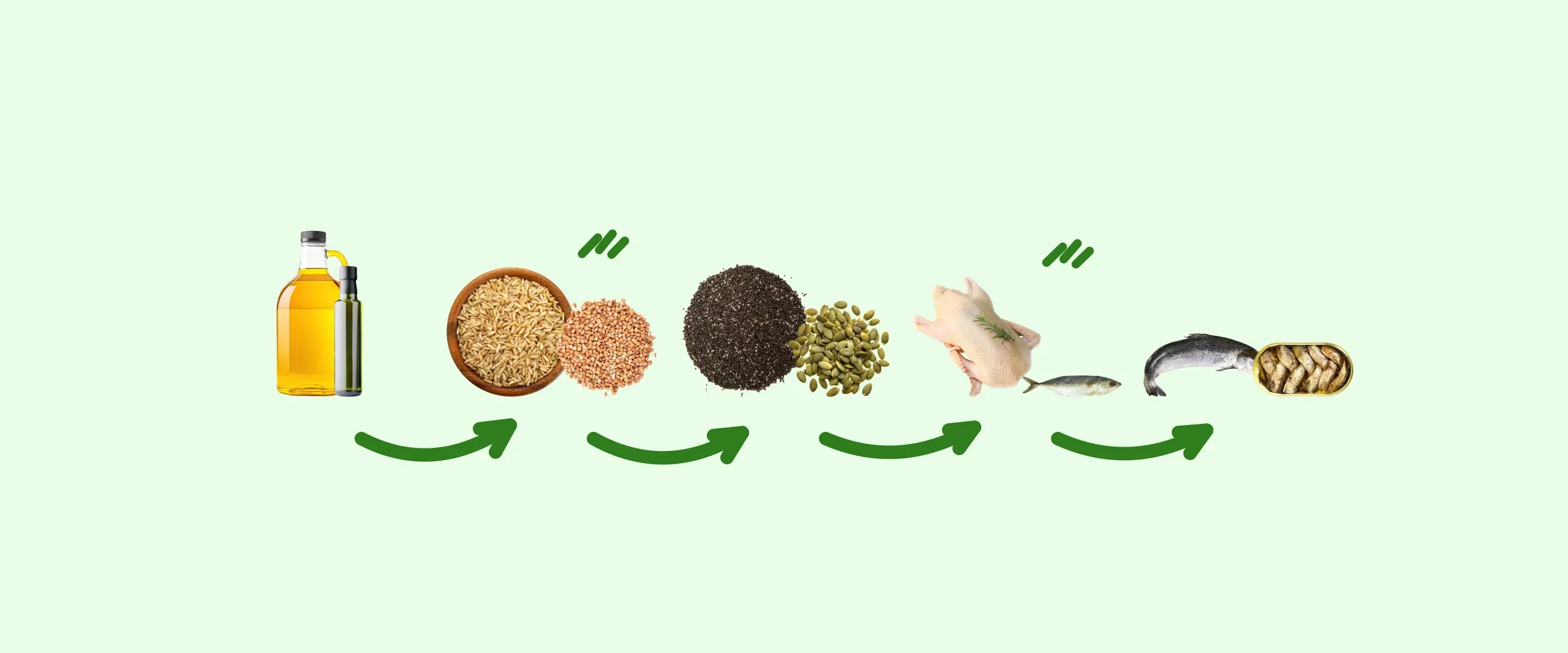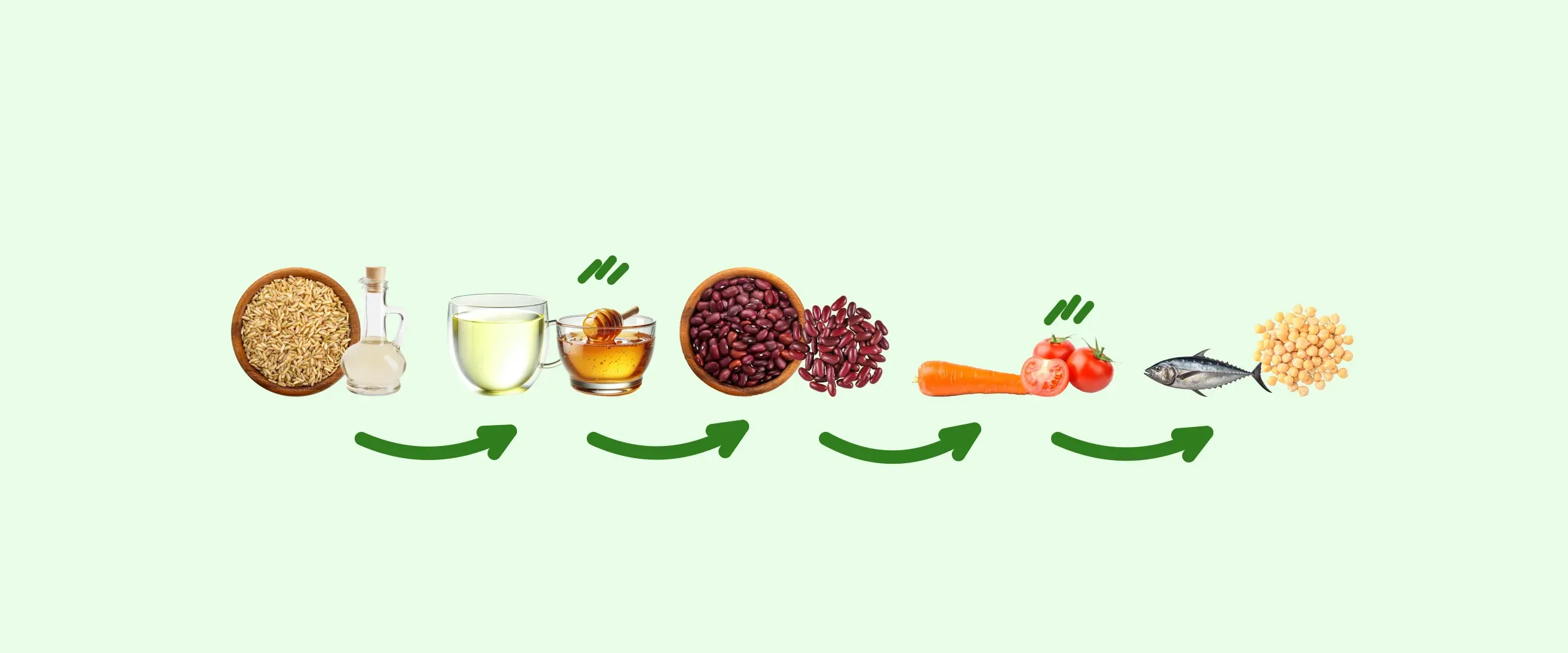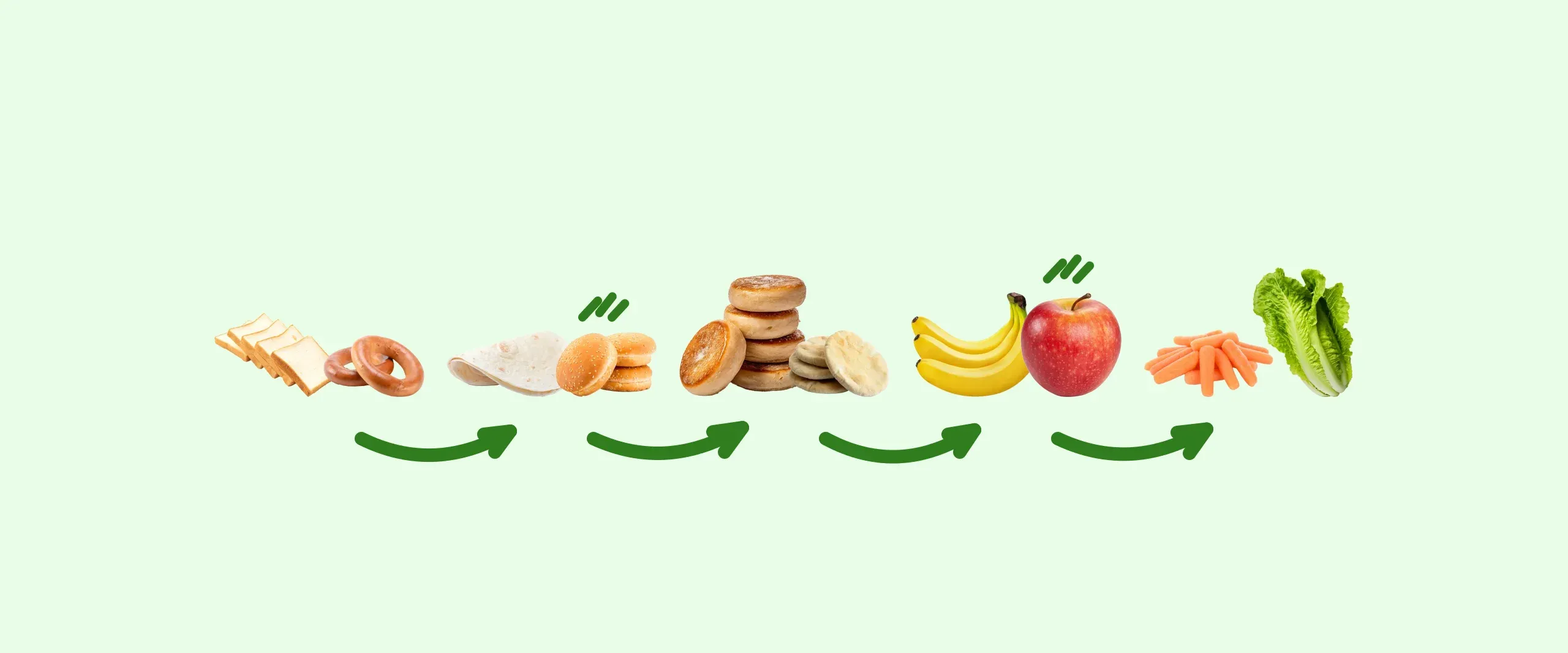
 Produce
 Meat and seafood
 Dairy and eggs
 Bread and bakery
 Pantry staples
 Frozen
 Snacks and drinks
How to build a Walmart grocery list that survives the store
Start at the fridge, not at the list. Open it, open the freezer, open the cupboard where the pasta lives, and write down what is missing. Skip that and you come home with a second jar of something you already own.
Then decide the meals. Five or six dinners is enough for a week, because a couple of nights turn into leftovers no matter what you planned. Write the dinners down the side of the page and pull the ingredients out of them one by one. A list built from meals buys chicken breasts, rice, and a jar of pasta sauce. A list built from habit buys all three plus whatever looked good in the aisle.
Group the result the way the store is laid out: produce, meat and seafood, dairy and eggs, bread, pantry, frozen, snacks and drinks, then paper goods and cleaning. A big store punishes a jumbled list. You walk the width of the building for the sour cream you forgot, and you pass four displays on the way back.
Put a count next to anything that is not obvious. Milk is milk, but chicken breasts with no number is how you end up cooking for three when five people are eating.
The ten items the week actually runs on
If the cart only had room for ten things, these are the ones that still turn into dinner.
-
 Large eggs 155 kcal
-
 Milk 42 kcal
-
 Butter 717 kcal
-
 Sandwich bread 265 kcal
-
 Chicken breasts 165 kcal
-
 Ground beef 250 kcal
-
 Rice 130 kcal
-
 Spaghetti 158 kcal
-
 Yellow onions 40 kcal
-
 Bananas 89 kcal
What is worth buying in a big pack and what is not
The warehouse question is not whether a pack is big. It is whether you will get to the bottom of it.
Things that reward a big pack: paper towels, toilet paper, trash bags, laundry detergent, rice, spaghetti, canned black beans, coffee, frozen berries, and frozen broccoli. None of them go off in a cupboard and none of them need space in the fridge.
Things that do not: bagged salad, berries, sandwich bread, milk, deli turkey, and anything with a short date you are buying because the pack is big rather than because you will eat it. A large bag of spinach is a small bag of spinach and some compost.
Meat sits in the middle. A big pack works if you split it the day you get home, portion it into bags, and freeze it. It does not work if it goes into the fridge whole and waits for you to decide.
The other limit is storage. Before a warehouse run, look at the shelf, the freezer, and the cabinet under the sink. If a case of paper towels has nowhere to live, it lives in the hallway.
Where Trader Joe’s and Whole Foods fit
Most households shop one store for the bulk of the list and a second store for something short and specific. Decide which is which before you leave, or you end up doing both shops at both stores.
A supercenter handles the long middle of the list: staples, household goods, frozen, and the everyday fresh food. A warehouse club handles the repeat items you burn through, in packs you only buy every few weeks. Trader Joe’s is a short-list store, the frozen meals and snacks and sauces people go there for on purpose. Whole Foods tends to be the trip for produce, meat, fish, and the specialty ingredient a recipe calls for and the other stores do not stock.
The practical move is one list with the sections above, and a mark next to the handful of items that belong to the second store. Everything else goes in one cart, on one trip. Nothing here is tied to a particular store’s aisle numbers, so the order is a route you adapt rather than a layout you follow.
The mistakes that turn one trip into three
Shopping without checking what you have. It is how a second bottle of soy sauce arrives in a cupboard that already had one.
Shopping without counts. Greek yogurt is fine when one person eats it and useless as an instruction when three do.
Leaving the household section off the grocery list. Trash bags, dish soap, and paper towels run out on their own schedule, and forgetting them is an easy way to be back in the store two days later.
Buying for the week you wish you had. The list that ends as a drawer of limp produce is usually written on a Sunday by someone imagining a Wednesday with time to cook.
And shopping hungry, which turns the snack aisle into a second cart. Eat first. The list does the rest.