MIND Diet Food List and Shopping List + PDF
The MIND diet (Mediterranean-DASH Intervention for Neurodegenerative Delay) is an eating pattern designed to slow age-related cognitive decline, with 10 food groups to eat and 5 to limit. This list turns its weekly servings into a shopping list, and a 2023 trial found no added cognitive benefit over a control diet.
- Shopping list
- 52
- Store categories
- 10
- Type
- Diets for health conditions
MIND diet shopping list
52 of 52 items
 Meats
 Fish & seafood
 Fresh grocery
 Dry goods
 Plant based
 Bakery
 Frozen
 Cans & jars
 Snacks & sweets
 Spices & sauces
How the MIND diet works
The MIND diet was developed by researchers at Rush University and the Harvard T.H. Chan School of Public Health and introduced in 2015. It is partly based on the Mediterranean and DASH diets and scores your eating on 15 components, for a maximum of 15 points: 10 brain-healthy food groups and 5 groups to limit.
Every group has a target for how often to eat it, not for how much. The research sets frequencies, such as 6 or more servings of leafy greens a week, but no portion sizes and no fixed meal plan, so you build your own meals around the foods below.
The 5 groups to limit are ceilings, not bans: staying under the number is what counts. Red meat, for example, stays within the diet at fewer than 4 servings a week.
The score counts only one drink: wine, about 1 glass a day in the original version, which later MIND trials left out for safety reasons. Water, tea and coffee are not part of the score either way.
What can you eat on the MIND diet
-

Leafy greens
Aim for 6 or more servings a week of spinach, kale, collard greens, romaine, arugula and chard. The MIND score counts them as their own group, separate from other vegetables.
-

Other vegetables
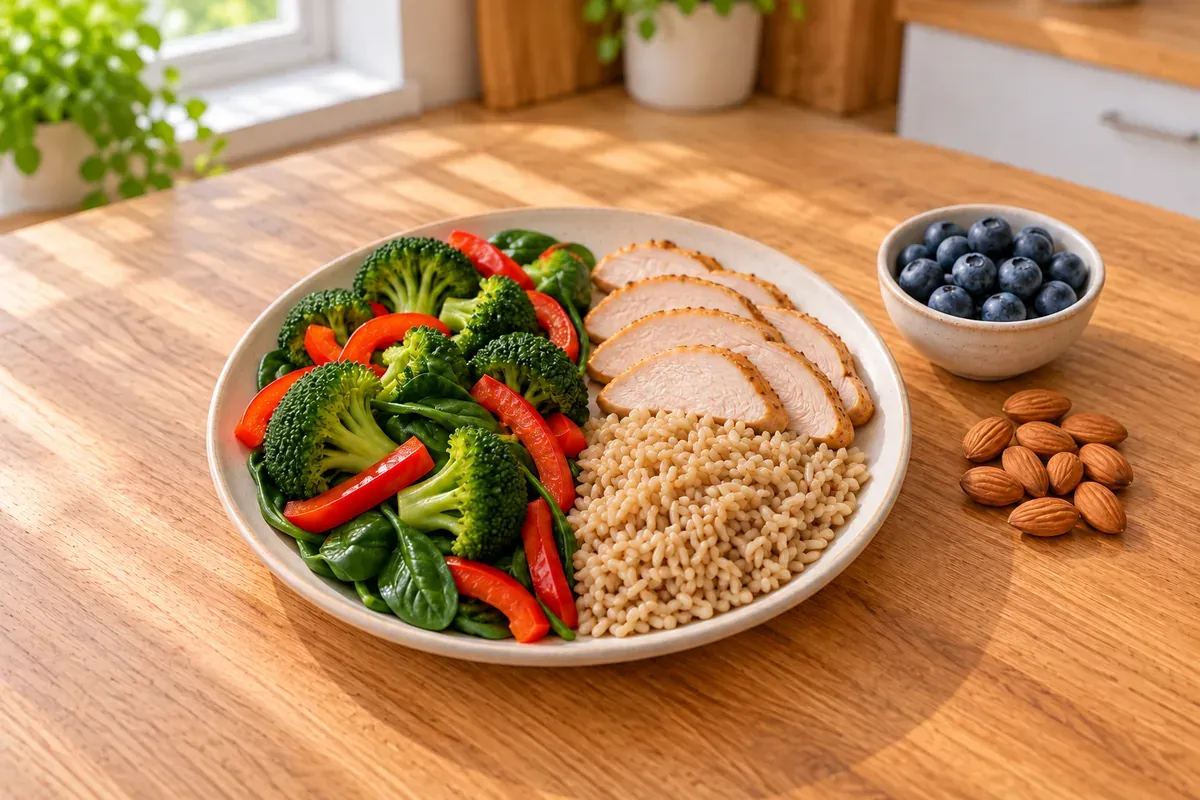
Add at least 1 serving a day of any other vegetable, such as broccoli, carrots, peppers, tomatoes or zucchini. Fresh and frozen both work.
-
Berries
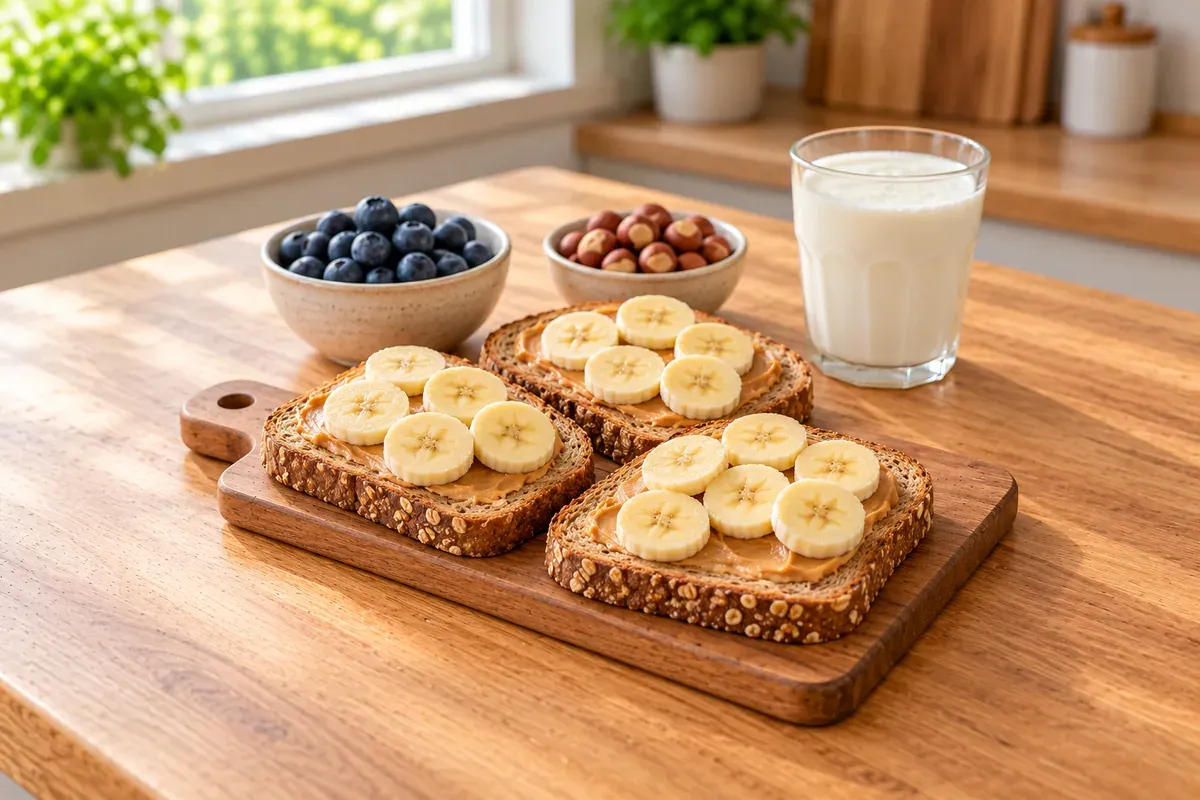
Eat berries at least 2 times a week, fresh or frozen: blueberries, strawberries, raspberries or blackberries. The score counts berries specifically, not fruit in general.
-

Nuts
Eat nuts at least 5 times a week, for example walnuts, almonds, pistachios or pecans. Plain, unsalted ones keep out the extra sodium and sugar of salted or candied nuts.
-

Beans and lentils
Have beans, lentils or chickpeas at more than 3 meals a week, so 4 or more. Dried or canned, they are the usual picks for this group.
-
Whole grains
Eat 3 or more servings of whole grains a day: oats, brown rice, quinoa, barley, and whole wheat bread or pasta. It is the group with the highest daily target in the score.
-
Fish and poultry
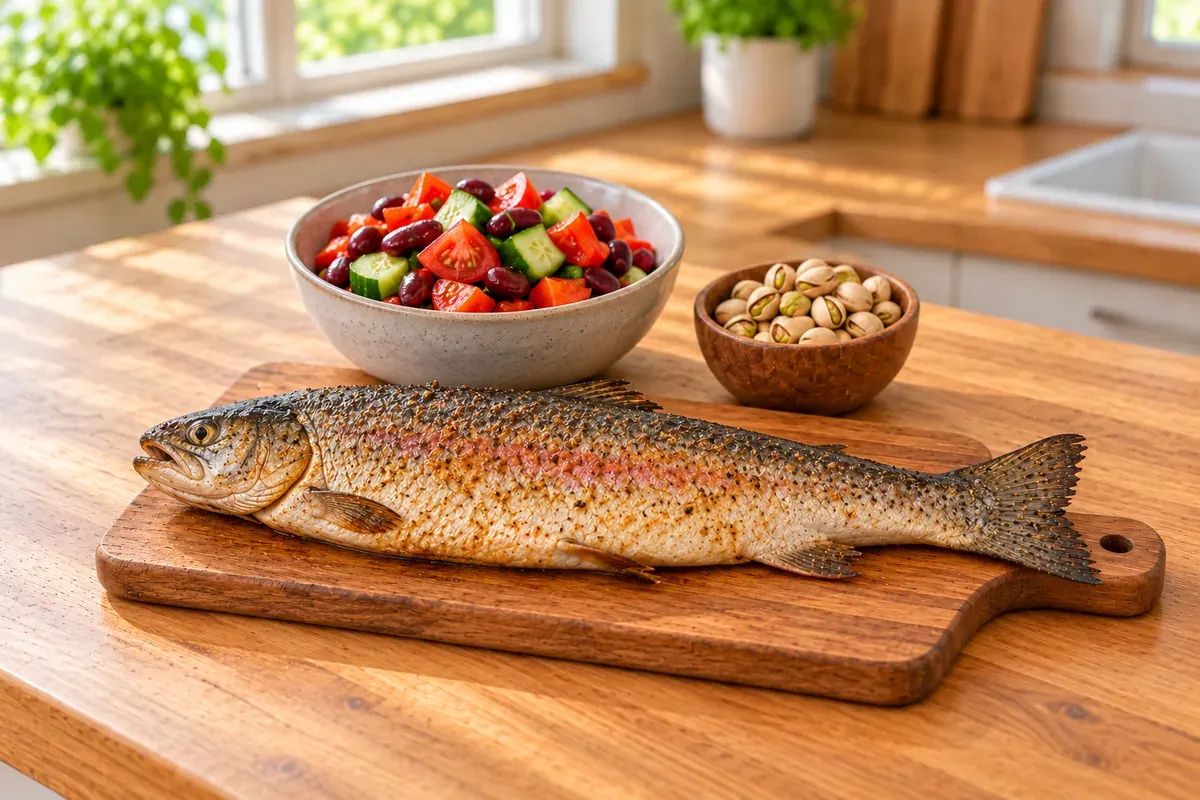
Eat fish at least once a week and poultry at least twice a week. Salmon, trout, cod, chicken and turkey fit, and fried versions fall under the fried-food limit instead.
-

Olive oil
Use olive oil as your main added fat for cooking and dressings. Extra virgin olive oil is the usual choice.
Foods to limit on the MIND diet
On the MIND diet, keep these 5 groups under their limits:
- Red meat. Aim for fewer than 4 servings a week of beef, pork, lamb and products made from them. A limit is not a ban, so a few servings a week still stay within it.
- Butter and stick margarine. Keep them under 1 tablespoon a day. Olive oil is the diet's main added fat instead.
- Cheese. Eat fewer than 1 serving of cheese a week. The score has no other dairy rule, so this limit applies to cheese only.
- Pastries and sweets. Keep cakes, cookies, pastries, candy and similar sweets under 5 servings a week.
- Fried and fast food. Aim for fewer than 1 serving a week of fried food and fast food, such as french fries, fried chicken and drive-through meals.
Downsides to know about
- No added benefit in the 2023 trial. In a 3-year trial of 604 older adults, cognition improved by 0.205 standardized units on the MIND diet and 0.170 on a control diet with the same mild calorie cut, a gap that was not statistically significant (P = 0.23). Brain MRI changes did not differ between the groups either.
- Most supporting evidence is observational. The 2015 finding of a 53% lower Alzheimer's rate in the top third of MIND scores (35% in the middle third) came from 923 adults aged 58 to 98, followed for 4.5 years on average. It shows an association, not that the diet caused the difference.
- The long-term effect is still open. The trial's authors say an effect may take longer than 3 years to show, and that the control group improved its own diet too: its MIND score rose 0.7 points, against 3.3 in the MIND group.
- It takes planning. The diet comes with no meal plans or portion sizes, so you build your own meals and recipes, which can be harder if you don't cook much.
People also ask
How do I build a 7-day MIND diet plan?
The MIND diet sets weekly frequencies, not a fixed menu, so a 7-day plan is any week that meets them. That means leafy greens on 6 days, nuts on 5, beans at 4 meals, poultry at 2 meals, berries on 2 days and fish at 1 meal, with 3 servings of whole grains and 1 of other vegetables every day, while keeping red meat under 4 servings, and cheese and fried food under 1 each.
Does the MIND diet include wine?
The original MIND score counted about 1 glass of wine a day as one of its 10 brain-healthy groups, but later MIND trials left wine out for safety reasons. You can follow the diet without it, which is why wine is not on this shopping list.
How is the MIND diet different from the Mediterranean and DASH diets?
The MIND diet is a hybrid of the two, and it names specific foods instead of broad categories. It gives leafy greens and berries their own targets, and its score does not count fruit other than berries or dairy other than cheese.