SIBO Diet Food List and Shopping List + PDF
A SIBO diet is a short-term, low-FODMAP style eating plan that some providers suggest alongside treatment for small intestinal bacterial overgrowth, to help manage bloating and gas. Antibiotics are the standard treatment, and the evidence for diet is limited. Below: foods to choose, foods to limit, and a shopping list.
- Shopping list
- 58
- Store categories
- 12
- Type
- Diets for digestive health
SIBO diet shopping list
58 of 58 items
 Meats
 Fish & seafood
 Fresh grocery
 Dry goods
 Dairy & eggs
 Plant based
 Bakery
 Frozen
 Cans & jars
 Snacks & sweets
 Spices & sauces
 Beverages
How the SIBO diet works
There is no official SIBO diet. Cleveland Clinic says providers may recommend an existing eating plan, and one it describes is the low-FODMAP diet. FODMAPs are fermentable carbohydrates, such as the lactose in milk and the fructans in wheat, onion, and garlic. Bacteria feed on these carbohydrates and make gas, so the aim is to lower both.
The strict phase lasts about 3 to 4 weeks, during SIBO treatment. After that, high-FODMAP food groups are added back one at a time, so you can see which ones trigger symptoms. Cleveland Clinic advises against staying on the strict version long term, because fermentable foods also feed the gut microbiome.
Portions matter. Low-FODMAP foods can still cause symptoms when you eat a lot of them at once, and hard cheeses fit only in small amounts. Read labels on sauces, dressings, and packaged foods, where honey, inulin, wheat, and high-fructose corn syrup can appear.
For drinks, water, coffee, and tea are on the list. Sugar-free gum and mints are often sweetened with sorbitol or xylitol, which are limited. A liquid-only elemental diet is a separate option, explained in the FAQ.
What can you eat on the SIBO diet
-
Lean protein
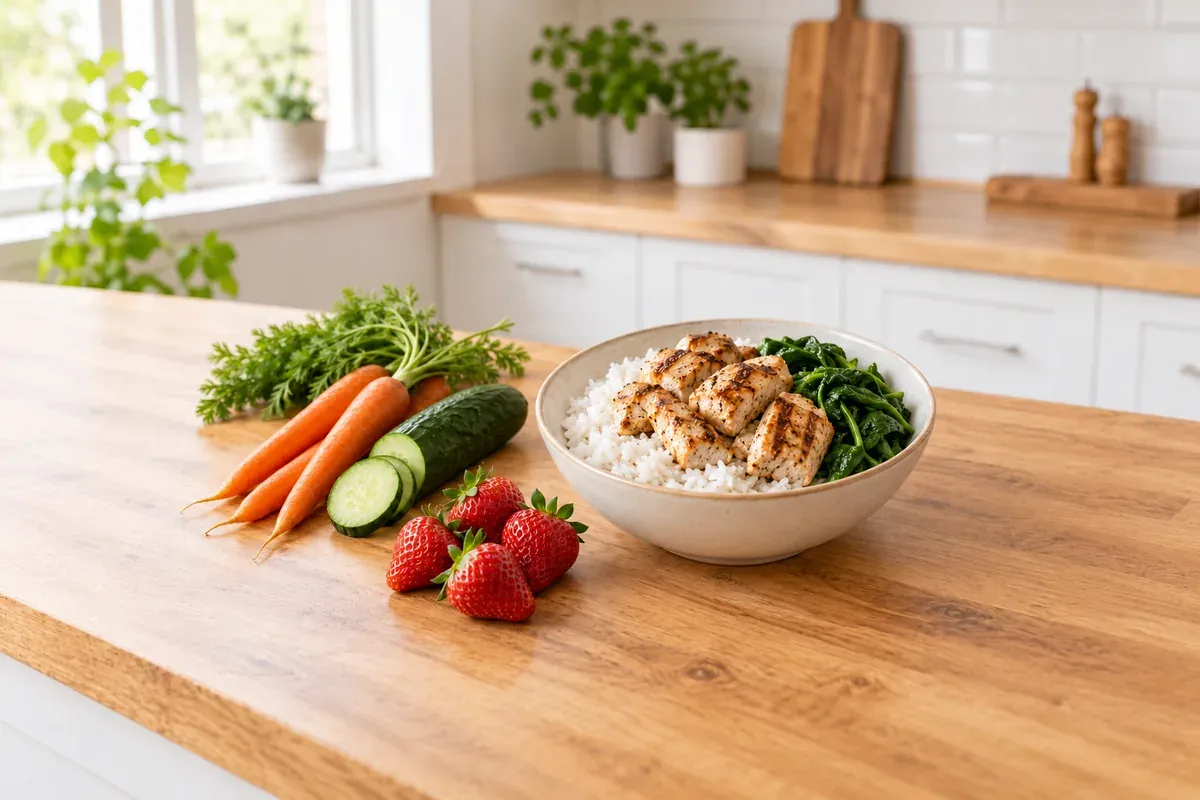
Plain-cooked chicken, turkey, beef, pork, fish, shellfish, and eggs contain little fermentable carbohydrate. Cleveland Clinic lists eggs, plain cooked meats, poultry, and seafood as low-FODMAP, so keep the seasoning and sauces simple.
-

Vegetables
Carrots, cucumbers, and tomatoes are the standard picks. Bell peppers, lettuce, spinach, potatoes, butternut squash, and eggplant also fit.
-

Fruit
Grapes, oranges, and strawberries are the usual examples, and blueberries, kiwi, pineapple, and mandarins also fit. Keep portions modest, since large servings of low-FODMAP foods can still cause symptoms.
-
Grains
Rice, quinoa, and oats are low-FODMAP, as are wheat-free bread, pasta, and crackers. The goal is to avoid wheat, not gluten as such, so check that gluten-free products don't contain inulin or soy.
-
Dairy and dairy alternatives
Lactose-free milk and yogurt fit, as do small amounts of hard cheeses such as cheddar and Parmesan. Almond milk and rice milk work as non-dairy options.
-

Nuts and seeds
Walnuts, almonds, pumpkin seeds, and flaxseeds are suitable choices. Pistachios and cashews are on the limit side.
-
Beverages
Water, coffee, and tea are fine. Fruit and vegetable juices are limited unless they come from low-FODMAP produce, and any drink sweetened with high-fructose corn syrup is out.
-
Herbs and spices
Most herbs and spices are fine, and olive oil, mustard, and pure maple syrup are on the list. Check dressings and sauces for garlic, onion, honey, and high-fructose corn syrup.
Foods to limit on the SIBO diet
On a SIBO diet built on low-FODMAP eating, leave out or limit:
- Onion and garlic. Both are rich in fructans, a fermentable carbohydrate. They also turn up in sauces, stock, and seasoning mixes, so check labels.
- Wheat and rye. This covers bread, pasta, crackers, pastries, and other wheat-based snacks. Spelt, semolina, and durum count as wheat here.
- Beans, lentils, and hummus. Legumes are high in galactans, another fermentable carbohydrate. Cleveland Clinic lists beans and lentils among the foods to limit.
- Apples, pears, and stone fruit. Also cherries, mango, peaches, plums, nectarines, watermelon, avocado, and dried or canned fruit.
- Cauliflower, mushrooms, and similar vegetables. Cleveland Clinic names cauliflower and mushrooms. A hospital handout based on Stanford guidance adds asparagus, artichokes, beets, leeks, broccoli, cabbage, and Brussels sprouts.
- Milk, yogurt, and soft cheese. Cow's milk, ice cream, yogurt, cottage cheese, ricotta, and other soft cheeses contain lactose. Lactose-free versions are the swap.
- Honey and sugar alcohols. Honey, agave, and high-fructose corn syrup are high in fructose. Sorbitol, mannitol, xylitol, and maltitol appear in sugar-free gum, mints, and snacks.
Downsides to know about
- Little proof it works for SIBO. The diet comes from irritable bowel syndrome (IBS) research. A 2022 review found no low-FODMAP studies in people with SIBO and called its benefit for SIBO largely hypothetical, and Cleveland Clinic calls the evidence inconclusive.
- It does not treat the overgrowth. Antibiotics, most often rifaximin, are the standard treatment. A diet is an add-on for symptoms, and no diet is an established cure for SIBO.
- Not meant for the long term. Cleveland Clinic does not recommend long-term low-FODMAP eating, because fermentable foods feed the gut microbiome. The 2022 review also raised concern that long restriction could worsen the microbial imbalance in SIBO.
- Restrictive, with less fiber. The diet cuts many everyday foods, and it also limits fiber because some high-fiber foods are high in FODMAPs. Food lists differ between sources, so a food allowed in one handout can be limited in another.
People also ask
Is the SIBO diet the same as the low-FODMAP diet?
In practice, mostly yes. Cleveland Clinic says there is no official SIBO diet, so providers use an existing plan such as low-FODMAP for a few weeks during treatment. That plan is better studied in IBS, and a 2022 review found that its low-FODMAP studies did not include people with SIBO.
What is an elemental diet for SIBO?
It is a liquid-only diet of a powder or ready-made formula with nutrients in a predigested form, used for about 2 to 3 weeks during treatment. Cleveland Clinic says research shows it works only if people stick with it, and taste, hunger, and missing social meals make that hard. It replaces food entirely, so this shopping list does not apply while you are on it.
Does SIBO come back after treatment?
It can. Cleveland Clinic says at least 50% of people may experience recurring SIBO, and symptoms often return several months after antibiotics, especially when an underlying cause remains. Providers also look for and treat that cause, so antibiotics are not always the whole plan.